RV and Boat Storage Near Eagle: What to Check Before You Park |
| RV AND BOAT STORAGE NEAR EAGLE: WHAT TO CHECK BEFORE YOU PARK
⏱ 13 min read ·
📄 #2,408 words
Find the best RV and boat storage near Eagle, CO. Learn what to check for covered protection, security, electric hookups, and month-to-month leases in 2026.
|
B efore parking your RV or boat at any storage facility near Eagle, Colorado, verify five critical factors: covered protection from snow and hail, 24/7 gated access with security cameras, electric hookups for battery maintenance, paved surfaces to prevent tire damage, and flexible month-to-month leases. Facilities in the Vail Valley charge between $150 and $460 per month depending on space size and amenities.
| Key Points: | |
|---|---|
| • | Covered storage is essential in Eagle County where annual snowfall exceeds 150 inches and hail events occur 3 to 5 times per summer |
| • | Electric hookups (20-amp or 50-amp) cost $20 per month extra and prevent battery failure during storage |
| • | Security features should include gated entry with individual codes, UHD cameras, and perimeter fencing |
| • | Month-to-month leases without deposits offer flexibility for seasonal RV and boat owners |
| • | Paved asphalt surfaces prevent flat spots on tires and protect undercarriages from gravel damage |
Why Storage Location Matters in Eagle County
Eagle County sits at 6,500 feet elevation along the Interstate 70 corridor, exposing stored vehicles to extreme UV radiation, temperature swings from negative 20 to 95 degrees Fahrenheit, and heavy precipitation. According to the Extra Space Storage guide on RV and boat storage, climate conditions directly impact which storage type you need and how much protection your vehicle requires.
The Gypsum area near Eagle offers strategic advantages for storage. Proximity to Vail Eagle Airport (EGE), Costco, and easy access to both I-70 and Highway 6 means you can retrieve your RV or boat quickly before heading to Dillon Reservoir, Ruedi Reservoir, or campgrounds throughout Summit County.
Facilities closer to the airport corridor typically offer better road access for large vehicles. Narrow mountain roads and tight turns can damage extended RVs and boat trailers, so choosing a location with wide lanes and easy maneuvering space saves time and prevents accidents.
Covered vs. Uncovered Storage: The Colorado Weather Factor
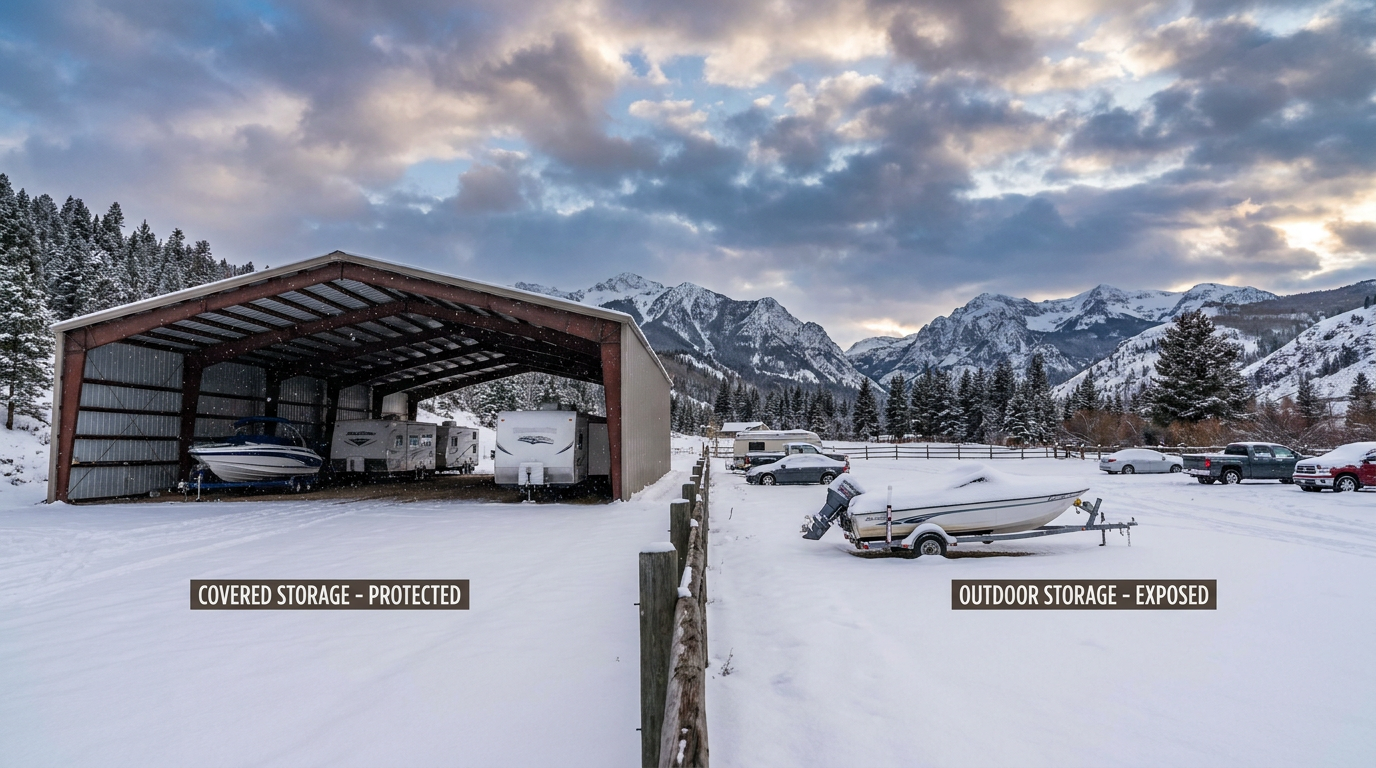
Colorado mountain weather destroys unprotected RVs and boats within 3 to 5 years. The National Weather Service reports that Eagle County receives an average of 156 inches of snow annually, with individual storms dumping 24 inches or more. Heavy snow loads crack fiberglass roofs, collapse awnings, and damage rubber seals.
Hail presents an even greater threat during summer months. The Colorado State University Extension documents that Colorado experiences more hail events than any other state, with golf ball sized hail causing $5,000 to $15,000 in damage to RV exteriors. Covered canopy structures rated for 90 pounds per square foot or higher provide essential protection.
UV radiation at high altitude accelerates paint fading, rubber deterioration, and plastic cracking. A study by the Recreational Vehicle Industry Association found that RVs stored without cover in mountain climates show 40% more exterior degradation after five years compared to covered vehicles.
| Storage Type | Monthly Cost (12x35 space) | Weather Protection | Best For |
|---|---|---|---|
| Open Parking | $150/month | None | Short-term summer storage only |
| Covered Canopy | $320/month | Snow, hail, UV protection | Year-round Colorado storage |
| Enclosed Building | $450 to $600/month | Full protection including wind | Classic vehicles, premium boats |
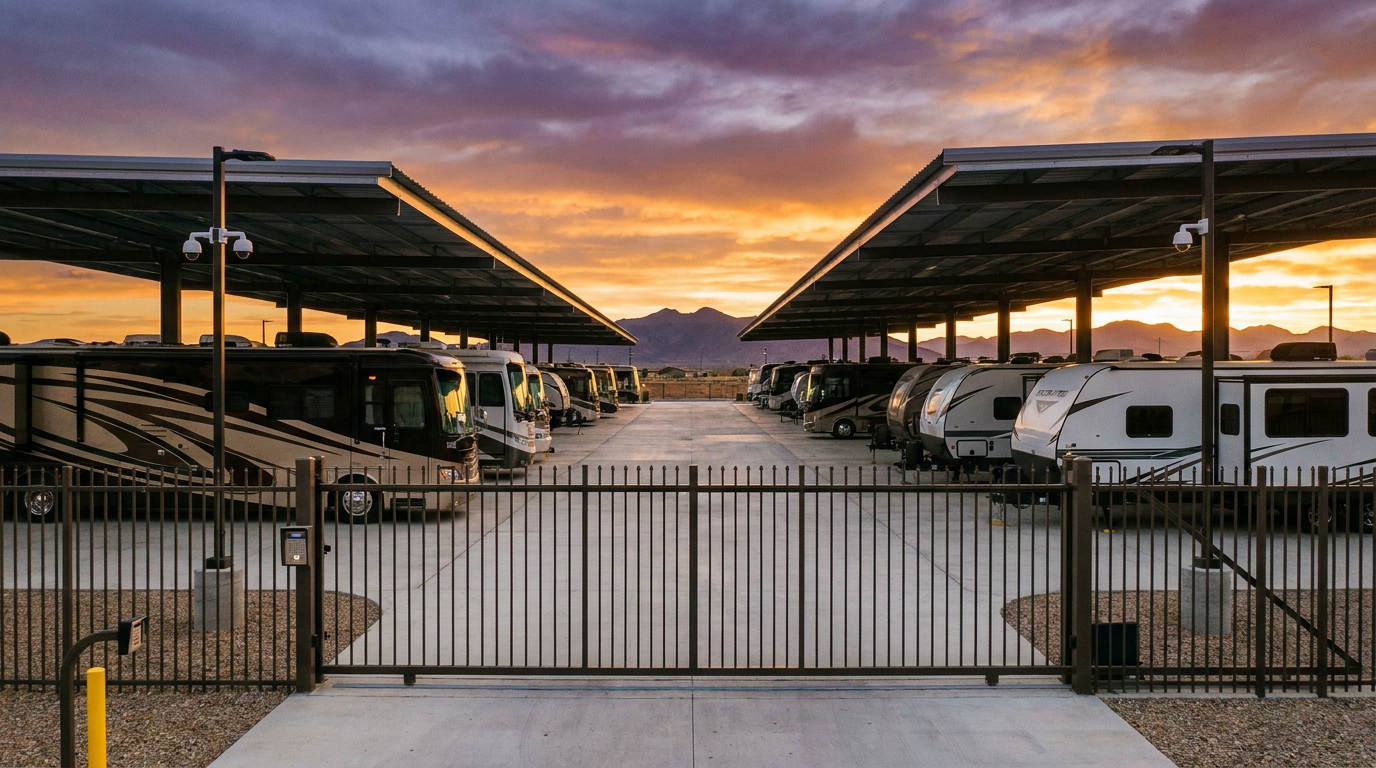
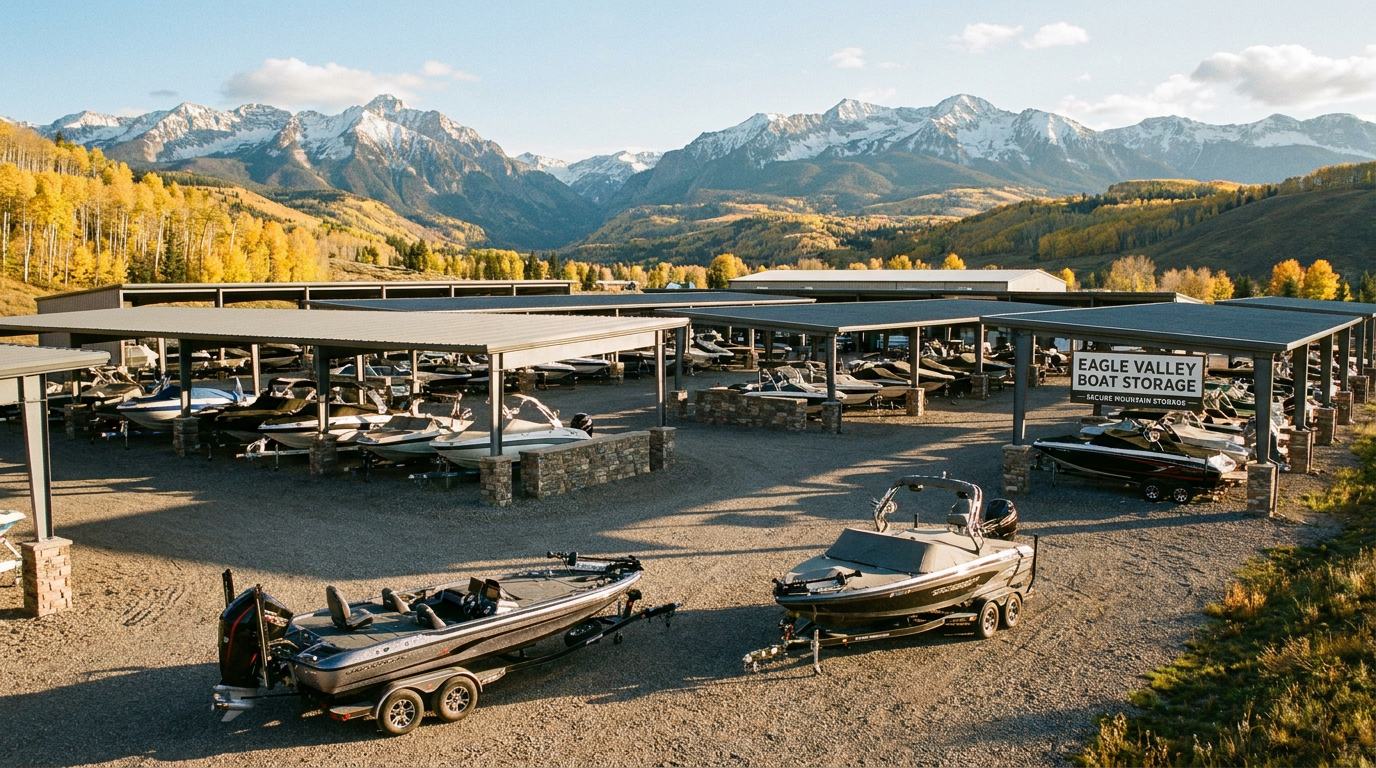
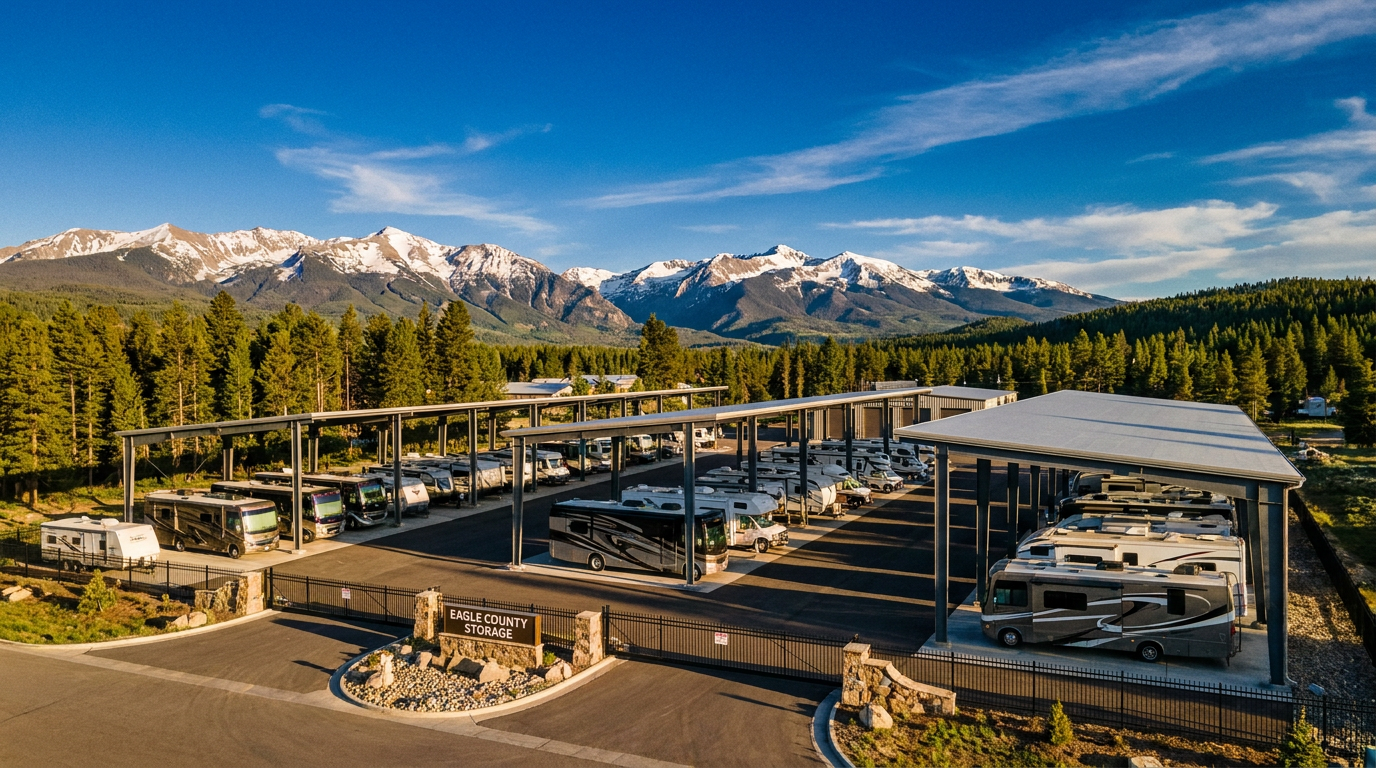
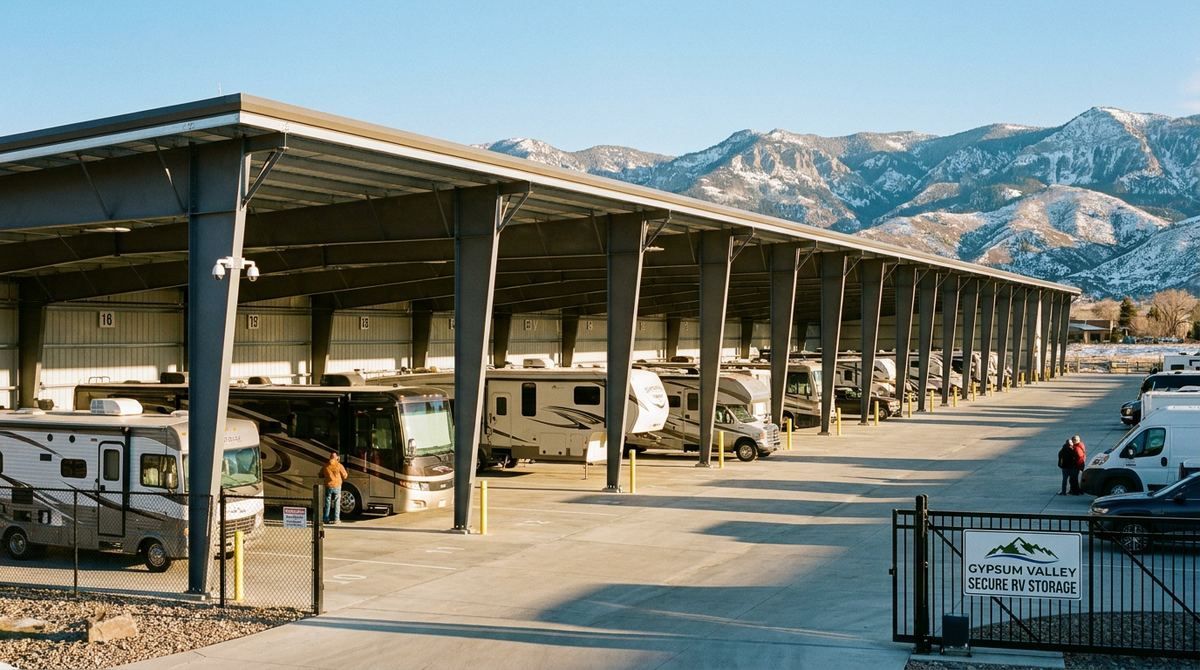
For most RV and boat owners in the Vail Valley, covered canopy storage provides the optimal balance of protection and cost. Covered RV storage in Colorado with steel canopy structures shields vehicles from direct precipitation and sun exposure while maintaining ventilation that prevents moisture buildup.
Security Features Every Storage Facility Should Have
RV and boat theft costs owners an average of $45,000 per incident according to the National Insurance Crime Bureau. The NICB reports that recreational vehicle thefts increased 17% between 2022 and 2025, with Colorado ranking in the top 15 states for RV theft. Proper security features deter criminals and provide evidence if theft occurs.
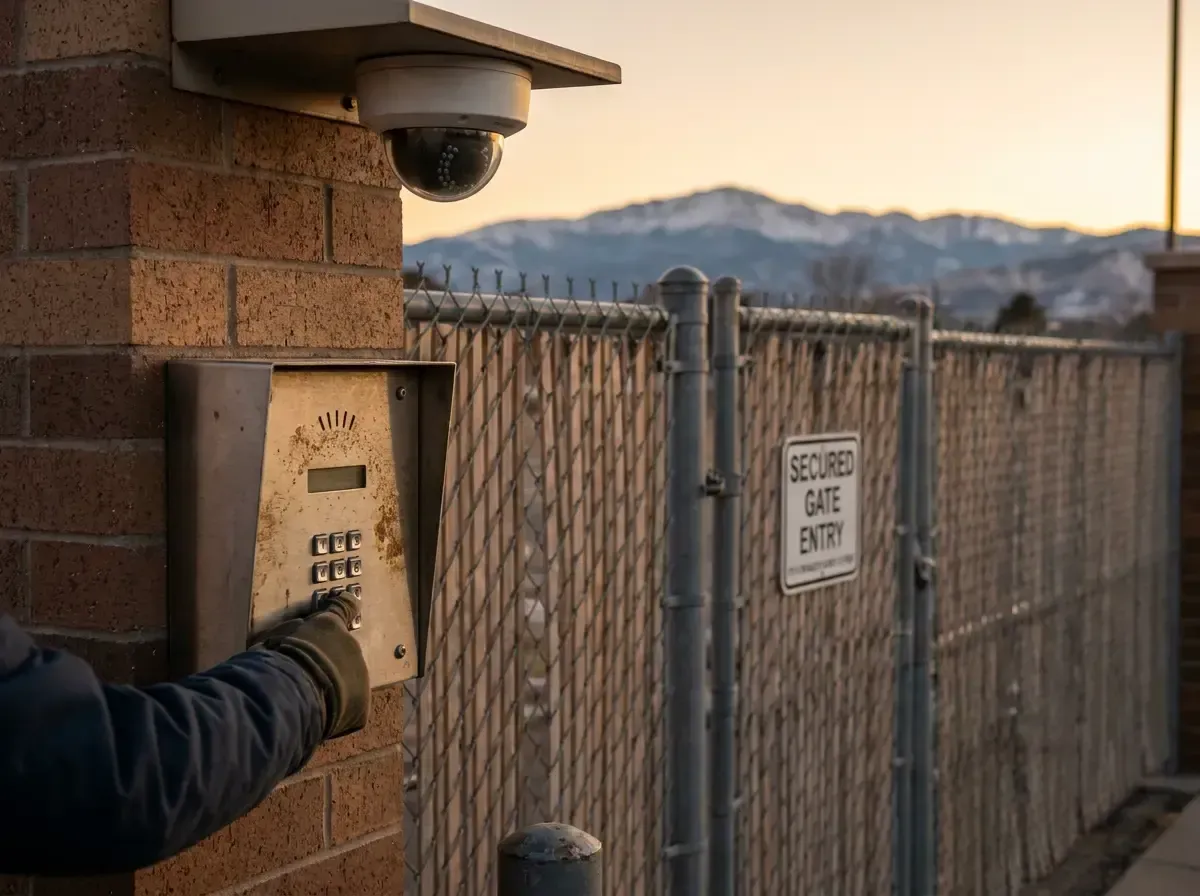
Gated access with individualized entry codes tracks who enters and exits the facility. Shared gate codes create security vulnerabilities because former tenants or unauthorized users can access the property. Individual codes can be deactivated immediately when a tenant moves out.
Camera systems should include UHD resolution (4K or higher) with night vision capability. Lower resolution cameras fail to capture license plates or facial features needed for law enforcement investigations. Look for facilities with 12 or more cameras covering entry points, aisles, and perimeter areas.
Perimeter fencing with a minimum height of 6 feet and barbed wire or anti-climb features adds physical deterrence. The Compass Self Storage vehicle storage guide recommends verifying that fencing extends to ground level to prevent crawling underneath.
Security Checklist for RV and Boat Storage
- Gated entry with individual access codes (not shared combinations)
- UHD security cameras with 30-day minimum footage retention
- Perimeter fencing at least 6 feet tall with anti-climb features
- LED flood lighting throughout the facility for nighttime visibility
- On-site manager or regular security patrols
Eagle Canopy's locally owned facility features 16 UHD security cameras, a 9-foot barbed wire perimeter fence, and individualized gate access codes for every tenant. These security measures protect vehicles valued at $50,000 to $500,000 or more.
Electric Hookups: Why Battery Maintenance Matters
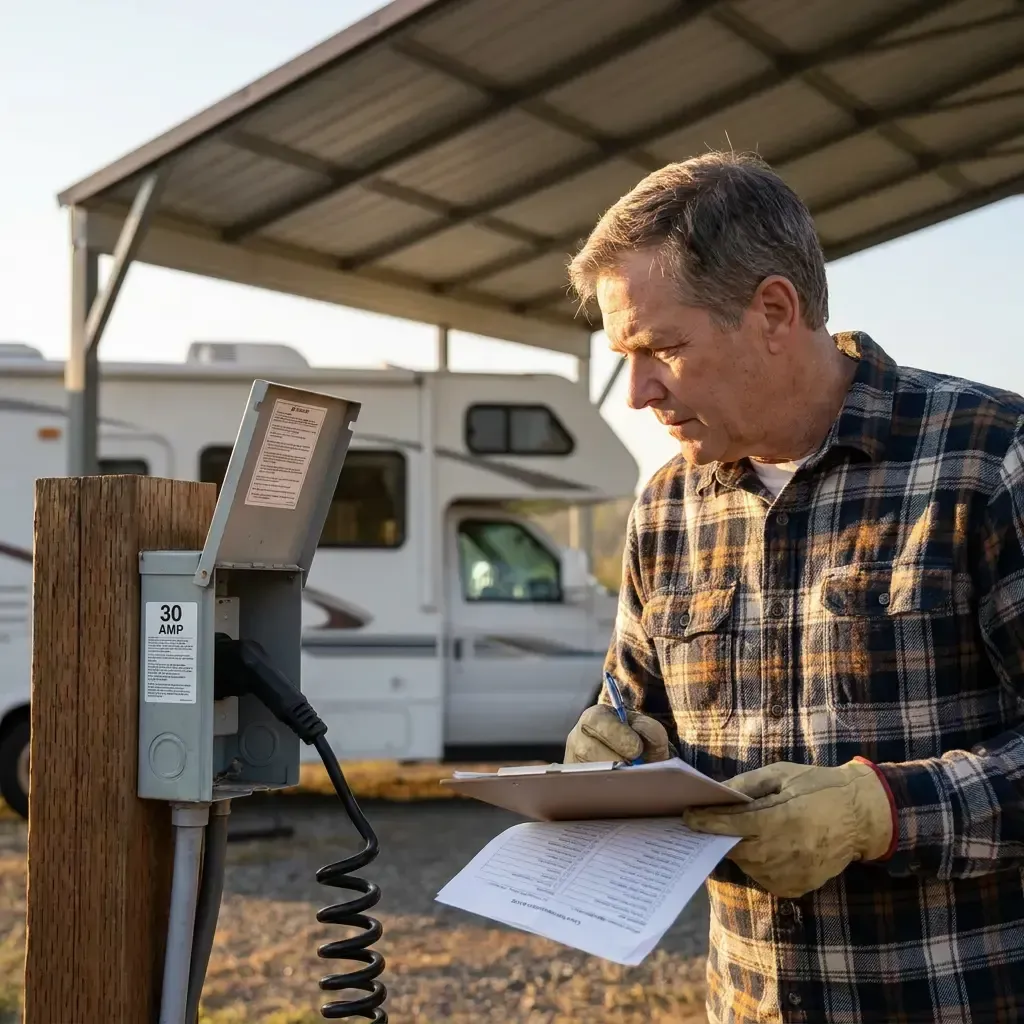
RV and boat batteries lose 5% to 15% of their charge per month when sitting idle, according to Interstate Batteries technical specifications. In cold Colorado winters, discharge rates increase because chemical reactions slow in low temperatures. A fully charged 12-volt battery can drop to unusable levels within 3 to 4 months without maintenance charging.
Replacing a dead RV house battery bank costs $400 to $1,200. Marine deep-cycle batteries for boats range from $150 to $400 each, with most boats requiring 2 to 4 batteries. A $20 per month electric hookup that allows trickle charging prevents hundreds of dollars in battery replacement costs.
Storage facilities offer two primary electrical options. Standard 20-amp hookups support trickle chargers and battery maintainers for most RVs and boats. Larger motorhomes with residential refrigerators or multiple battery banks may require 50-amp service, which typically costs $30 to $50 more per month.
Before selecting a space, verify that electrical outlets are positioned within reach of your vehicle's shore power connection. Some facilities place outlets at the front of spaces while others position them at the rear. Measure your power cord length (typically 25 to 50 feet for RVs) to ensure compatibility.
Surface Type: Paved vs. Gravel Storage Lots
Tire flat spots develop when vehicles sit on hard surfaces for extended periods, but gravel lots create worse problems. Sharp rocks puncture sidewalls, uneven surfaces stress suspension components, and dust infiltrates engine compartments and HVAC systems. The Tire Industry Association recommends paved surfaces for any storage exceeding 30 days.
Gravel lots also cause undercarriage damage. Rocks thrown by other vehicles chip paint, crack fiberglass, and damage propellers on boat trailers. A single rock strike to a stainless steel boat propeller can cost $200 to $800 to repair.
Fully paved asphalt facilities minimize these risks while providing better drainage during rain and snowmelt. Look for lots with proper grading that prevents water pooling, which can freeze and create hazardous conditions during winter months.
Access Hours and Convenience Factors
Spontaneous camping trips and early morning fishing excursions require 24/7 facility access. Many budget storage facilities restrict access to business hours (8 AM to 6 PM) or charge extra fees for after-hours entry. Verify that your lease includes unrestricted access before signing.
Gate systems should allow entry within 30 seconds. Older mechanical gates or systems requiring staff assistance create frustrating delays, especially when towing a 35-foot trailer. Modern electronic gates with keypad or app-based entry provide the fastest, most reliable access.
Aisle width determines how easily you can maneuver large vehicles. The minimum recommended aisle width for RVs over 30 feet is 60 feet, allowing adequate turning radius without multiple back-and-forth adjustments. Visit the facility in person and drive through with your RV or boat trailer before committing.
Location convenience extends beyond the storage facility itself. Proximity to fuel stations, dump stations, and supply stores saves time when preparing for trips. RV dump stations near Gypsum include the Edwards facility, which offers convenient access for tenants storing vehicles in the Eagle area.
Lease Terms: Month-to-Month vs. Long-Term Contracts
Seasonal RV and boat owners benefit most from month-to-month leases without long-term commitments. According to Neighbor's RV storage marketplace data, flexible lease terms allow owners to store vehicles only during off-seasons, saving 4 to 6 months of fees compared to annual contracts.
Long-term contracts (6 to 12 months) sometimes offer 5% to 15% discounts, but these savings disappear if you need to relocate or sell your vehicle. Calculate the total cost of both options based on your actual storage needs before choosing.
Deposit requirements vary significantly between facilities. Some charge first and last month's rent plus a security deposit equal to one month's fee. Others, like facilities offering no-deposit rentals, reduce upfront costs by $300 to $900 depending on space size.
Review cancellation policies carefully. Standard notice periods range from 14 to 30 days. Facilities with automatic renewal clauses may charge for an additional month if you miss the cancellation window. Storage FAQ pages typically outline these policies in detail.
Insurance and Protection Plans
Standard auto and boat insurance policies often exclude coverage for vehicles in storage, or they reduce coverage limits significantly. The Insurance Information Institute recommends verifying your policy's storage provisions before assuming you have adequate protection.
Comprehensive coverage (not collision) protects against theft, vandalism, fire, and weather damage while in storage. Deductibles typically range from $500 to $2,500. For vehicles worth $100,000 or more, consider lowering deductibles during storage periods when theft risk is highest.
Facility-offered tenant protection plans provide supplemental coverage for $15 to $50 per month. These plans typically cover burglary, fire, water damage, and certain natural disasters. Tenant protection options through SafeLease and similar providers fill gaps that standard insurance may not cover.
Document your vehicle's condition before storage with dated photographs and video. Record the odometer reading, note any existing damage, and keep copies of recent maintenance records. This documentation proves invaluable if you need to file an insurance claim.
Preparing Your RV or Boat for Storage
Proper preparation extends vehicle life and prevents expensive repairs. The RV Industry Association recommends completing these tasks before any storage period exceeding 30 days.
RV Storage Preparation Checklist
- Drain and flush holding tanks at a dump station before storing
- Winterize plumbing if temperatures will drop below 32 degrees Fahrenheit
- Disconnect batteries or connect to trickle charger via electric hookup
- Check tire pressure and inflate to maximum sidewall rating
- Cover tires to prevent UV damage and dry rot
- Clean interior thoroughly to prevent mold, mildew, and pest infestations
- Remove all food items including canned goods that can freeze and burst
For Colorado mountain storage, professional RV winterization services in the Vail Valley ensure proper antifreeze treatment of water lines, water heater bypass, and battery conditioning. Professional winterization costs $150 to $300 but prevents thousands in freeze damage repairs.
Boat Storage Preparation Checklist
- Flush engine with fresh water to remove salt or lake sediment
- Add fuel stabilizer and run engine for 10 minutes to distribute
- Fog the engine with fogging oil to prevent cylinder corrosion
- Drain all water from engine block, manifolds, and live wells
- Disconnect battery or connect to maintenance charger
- Apply marine-grade wax to gelcoat surfaces
- Cover boat with breathable cover to prevent moisture buildup
Boats stored near Dillon Reservoir or Ruedi Reservoir face particular challenges from altitude. Lower air pressure affects carburetor tuning, and rapid temperature changes stress fiberglass. The Dillon Reservoir boating guide provides additional tips for high-altitude boat care.
Comparing Storage Facilities Near Eagle
The Eagle County storage market includes several options ranging from basic open lots to premium covered facilities. Use this comparison framework when evaluating your choices.
| Feature | Budget Facilities | Mid-Range Facilities | Premium Facilities |
|---|---|---|---|
| Coverage Type | Open air only | Partial canopy | Full steel canopy |
| Electric Hookups | Not available | Limited spaces | Every covered space |
| Surface | Gravel | Partial paving | Fully paved asphalt |
| Security Cameras | 0 to 4 | 6 to 10 | 12 or more UHD |
| Access Hours | Business hours only | Extended hours | 24/7 gated access |
| Monthly Cost (12x35) | $100 to $175 | $200 to $275 | $300 to $400 |
The cost difference between budget and premium storage typically equals $150 to $250 per month. Over a 6-month storage season, premium facilities cost $900 to $1,500 more. Compare this to a single hail damage repair ($5,000 to $15,000) or battery replacement ($400 to $1,200) to determine true value.
Questions to Ask Before Signing a Storage Lease
Visiting a facility in person reveals details that websites and phone calls cannot. Bring your RV or boat trailer to verify that you can navigate the aisles and access your assigned space comfortably.
Ask these specific questions during your visit:
- What is the snow load rating on covered canopy structures?
- How quickly are aisles cleared after snowstorms?
- What happens if my vehicle is damaged by another tenant?
- Can I access my vehicle during severe weather events?
- What is the process for reporting security concerns?
- Are there any restrictions on vehicle maintenance performed on-site?
- What notice is required to change space sizes or cancel?
- Is there a waiting list for covered spaces?
Request a copy of the lease agreement to review before signing. Pay attention to liability waivers, insurance requirements, and rules about what you can and cannot store alongside your vehicle. Some facilities prohibit fuel storage, propane tanks, or hazardous materials.
Making Your Final Decision
The best storage facility balances protection, security, convenience, and cost for your specific situation. A $50,000 travel trailer deserves better protection than a $5,000 utility trailer, but both benefit from secure, accessible storage.
For RV and boat owners in Eagle County, covered storage with electric hookups provides the best long-term value. The combination of snow protection, hail resistance, UV shielding, and battery maintenance capability prevents the most common and expensive storage-related damage.
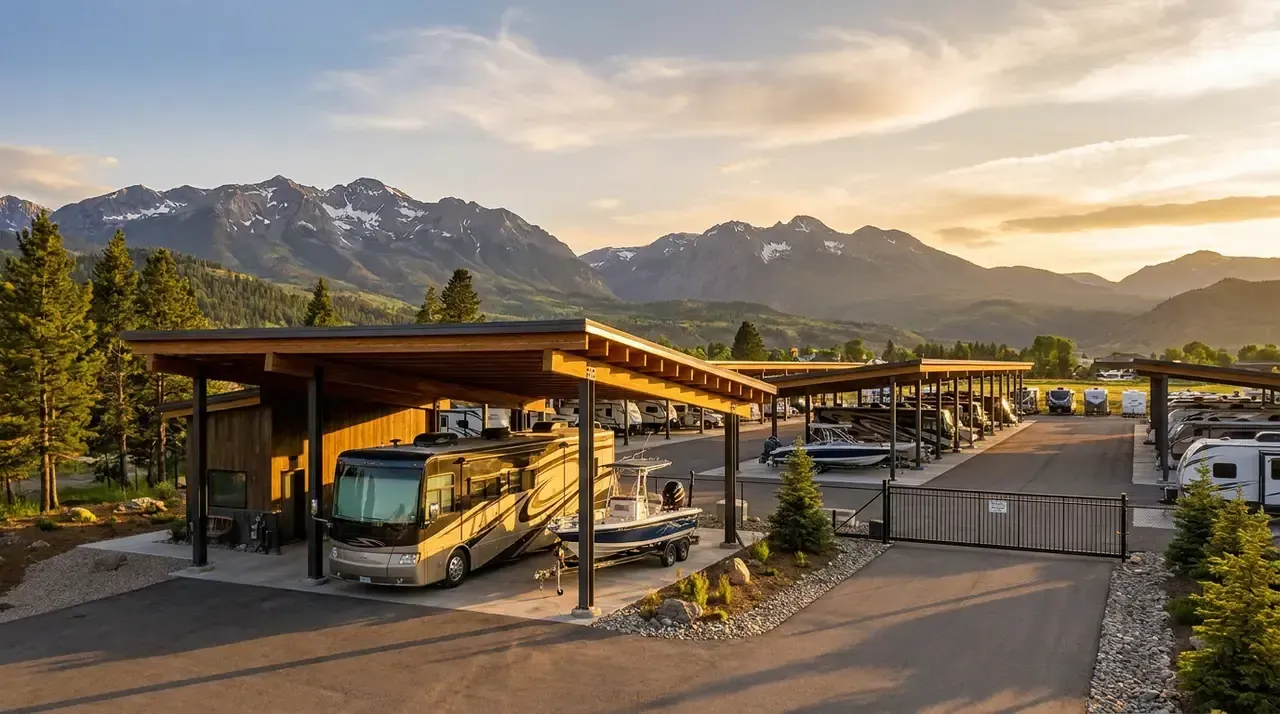
Eagle Canopy RV Storage in Gypsum offers covered steel canopy spaces from 12x15 to 12x50 feet, with 20-amp and 50-amp electric options, 24/7 gated access, and month-to-month leases starting at $230 per month. The facility's location near Costco and Vail Eagle Airport provides convenient access for residents throughout the Vail Valley and I-70 corridor.
Online rental takes approximately 60 seconds with immediate move-in capability. No deposits are required, and tenants can upgrade or downsize spaces with minimal notice. Contact the facility at 970-212-0912 or visit the website to check current availability and reserve your space.
|