Covered RV and Boat Storage in Eagle, Colorado: Rental Guide |
| COVERED RV AND BOAT STORAGE IN EAGLE, COLORADO: WHAT TO KNOW BEFORE YOU RENT
⏱ 14 min read ·
📄 #2,615 words
Find covered RV and boat storage near Eagle, CO. Learn about pricing ($150-$460/mo), security features, weather protection, and what to check before signing a lease.
|
C overed RV and boat storage in Eagle County, Colorado costs $150 to $460 per month depending on space size, with most facilities requiring month-to-month leases. Before signing, verify the canopy can handle 90+ pound snow loads, confirm 24/7 access availability, and check whether electric hookups are included for battery maintenance during Colorado's extreme temperature swings.
| Key Points: | |
|---|---|
| • | Covered storage in Eagle County ranges from $150/month (10x20 open) to $460/month (12x50 covered with 20-amp power) |
| • | Steel canopy structures rated for 90+ lbs/sq ft snow loads protect against Colorado's 300+ inches of annual mountain snowfall |
| • | Electric hookups (20-amp or 50-amp) are essential for trickle charging batteries during storage periods exceeding 30 days |
| • | UV radiation at 6,500+ feet elevation degrades RV roofing and seals 40% faster than sea-level exposure |
| • | Month-to-month leases offer flexibility for seasonal RV owners who travel between May and October |
Why Covered Storage Matters in Eagle County's Mountain Climate
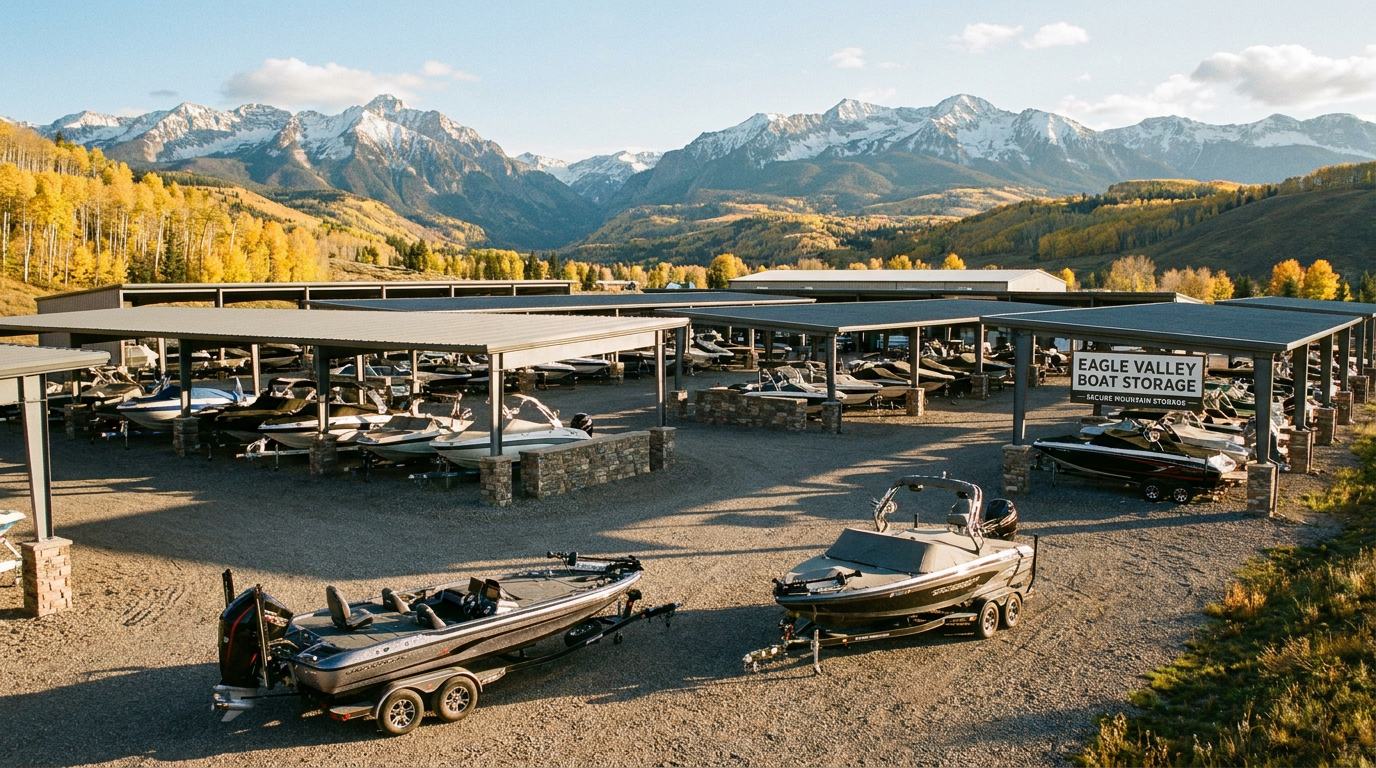
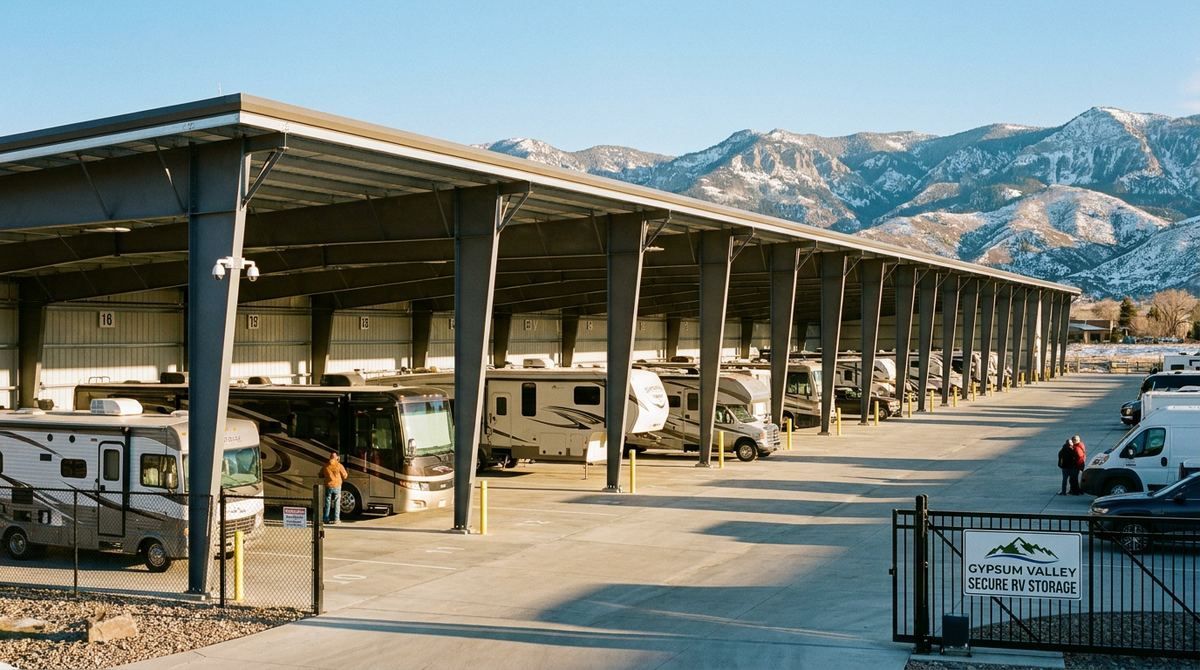
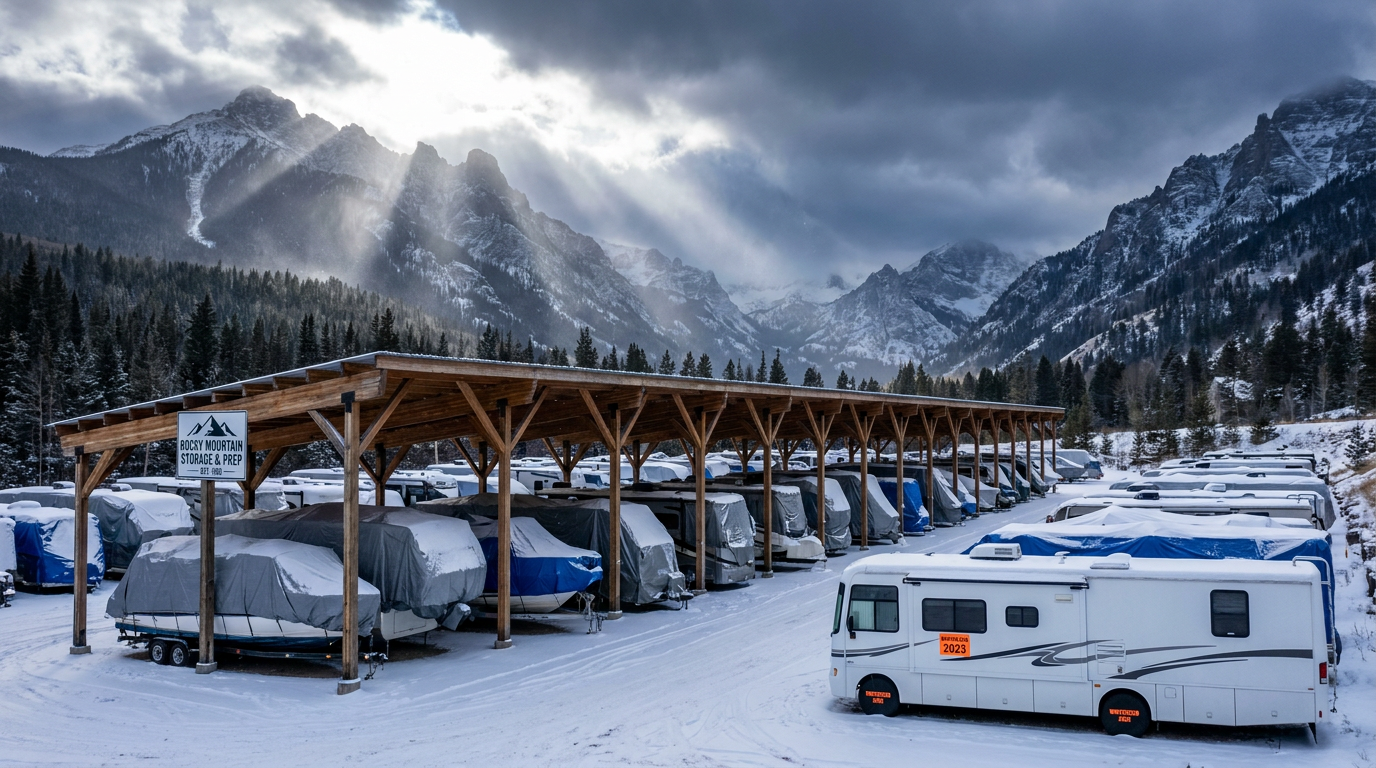
Eagle County sits at 6,500 feet elevation, exposing vehicles to weather conditions that accelerate deterioration. According to the Eagle Canopy RV Storage facility, the combination of heavy snow loads, intense UV radiation, and frequent hailstorms creates a hostile environment for unprotected RVs and boats. The region receives an average of 150 inches of snow annually in valley locations, with mountain areas exceeding 300 inches.
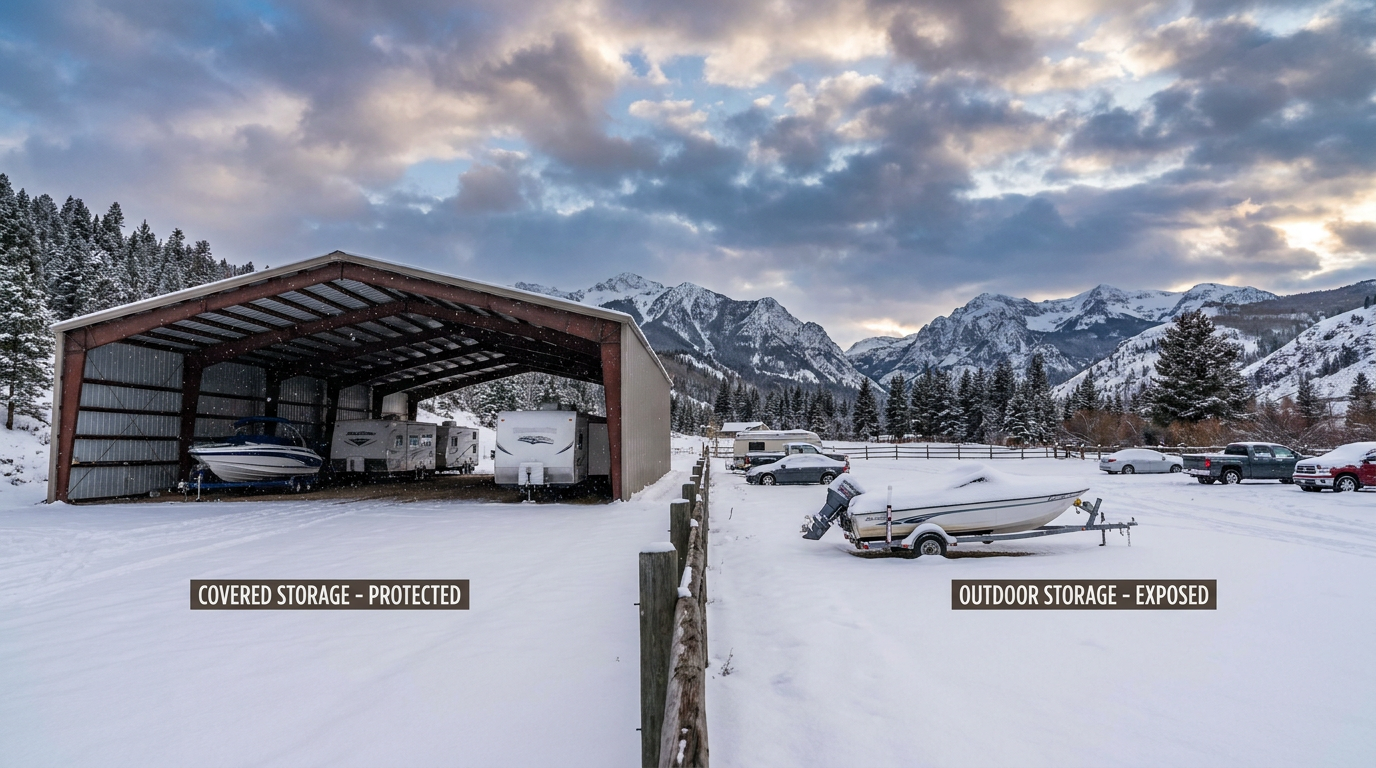
Uncovered storage leaves vehicles vulnerable to three primary damage sources. Snow accumulation on RV roofs can exceed 50 pounds per square foot during major storms, stressing structural components. Hail events occur 3 to 5 times per summer in the Vail Valley, with stones frequently reaching golf-ball size. UV intensity at high altitude is 25% stronger than at sea level, breaking down rubber seals and fading exterior finishes within 2 to 3 years.
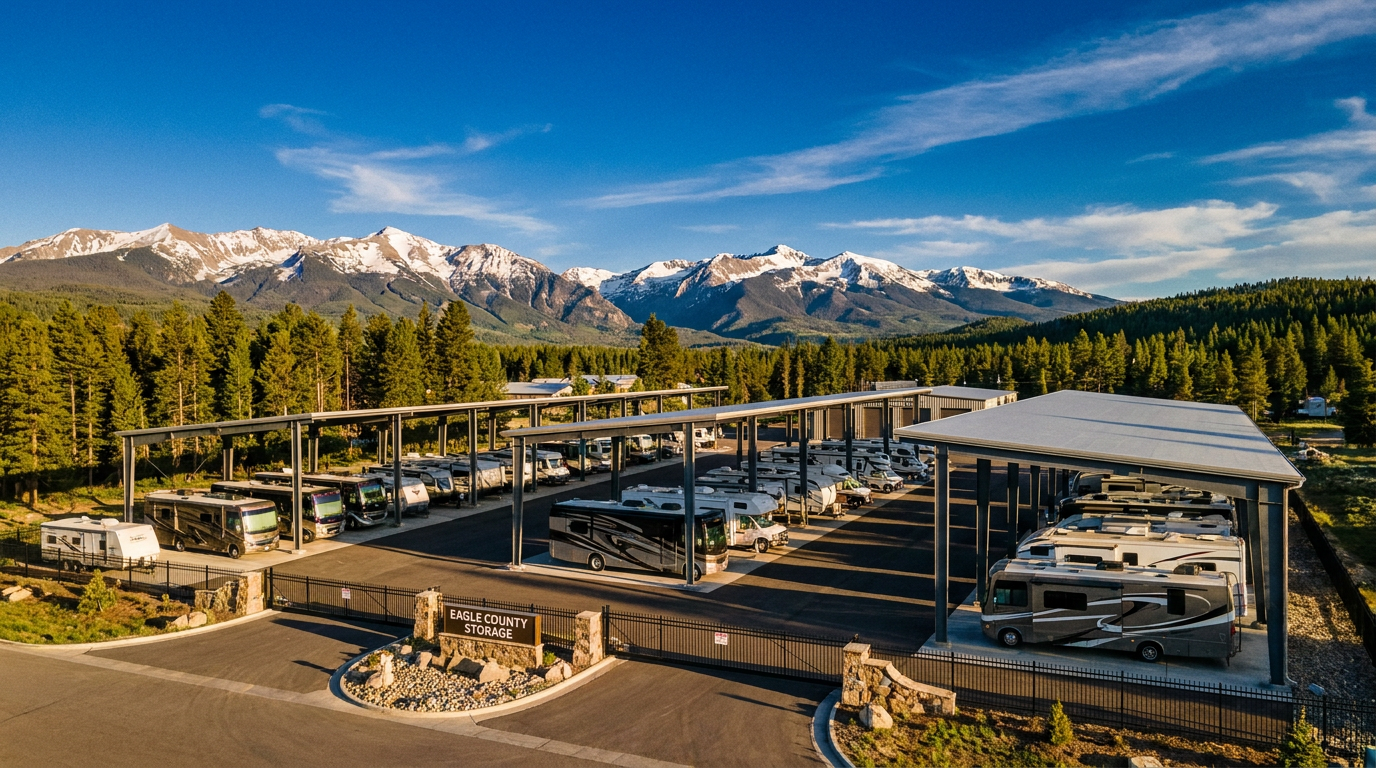
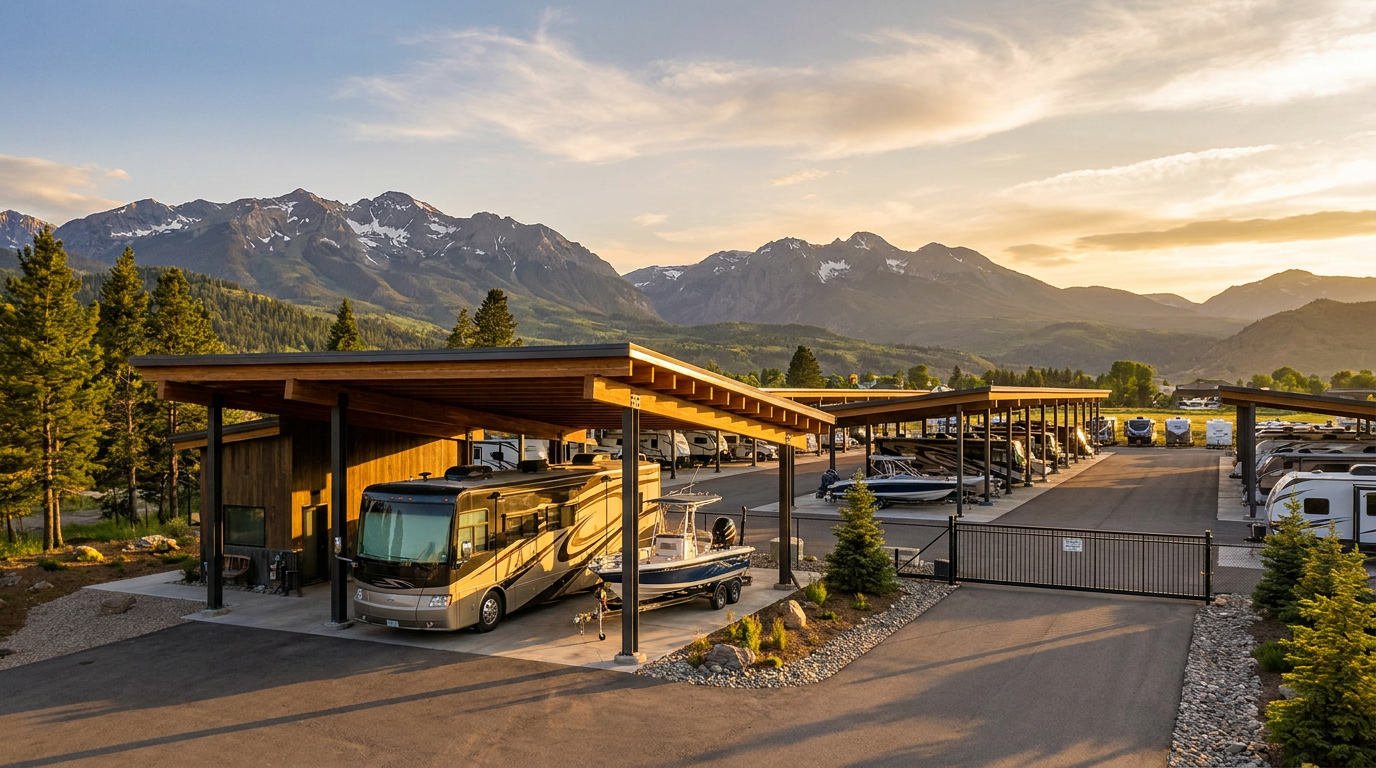
Covered canopy structures rated for 90+ pound snow loads provide protection that extends vehicle lifespan by 5 to 10 years compared to outdoor exposure. Heavy-duty steel construction withstands wind gusts exceeding 80 mph, common during spring months in the Eagle River Valley.
Storage Space Sizes and Pricing in the Eagle Area
Storage facilities near Eagle offer spaces ranging from compact 10x20 spots to extended 12x50 units for large Class A motorhomes. Pricing varies based on coverage type, electrical capacity, and total square footage. Understanding your vehicle's dimensions prevents overpaying for unused space or cramming into an inadequate unit.
| Space Size | Monthly Cost | Power | Best For |
|---|---|---|---|
| 10x20 Open | $150 | None | Motorcycles, small trailers, jet skis |
| 12x15 Covered | $230 | 20-amp | Cars, small boats under 15 feet |
| 12x25 Covered | $270 | 20-amp | Travel trailers, boats 18-22 feet |
| 12x35 Covered | $320-$360 | 20 or 50-amp | Class C motorhomes, large boats |
| 12x45 Covered | $390-$450 | 20 or 50-amp | Class A motorhomes, fifth wheels |
| 12x50 Covered | $460 | 20-amp | Extended Class A units, toy haulers |
Measure your RV or boat with mirrors, antennas, and trailer tongue extended. Add 2 feet to length and 1 foot to width for maneuvering clearance. A 35-foot fifth wheel with a 10-foot truck requires a minimum 45-foot space when hitched.
Essential Security Features to Verify Before Signing
RV theft in Colorado increased 23% between 2022 and 2024, according to the National Insurance Crime Bureau. Storage facilities in Eagle County vary significantly in security infrastructure. Before committing to a lease, inspect the property and verify specific protective measures are operational.
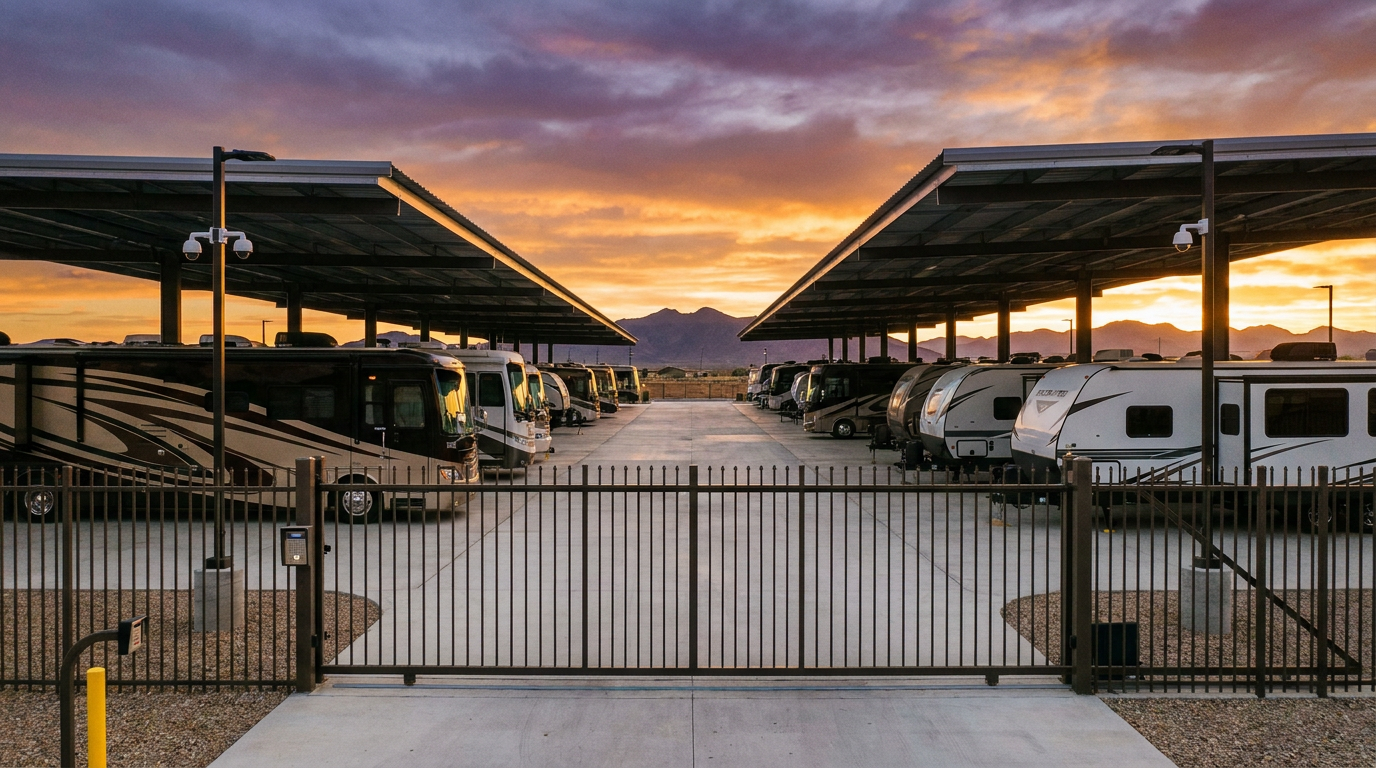
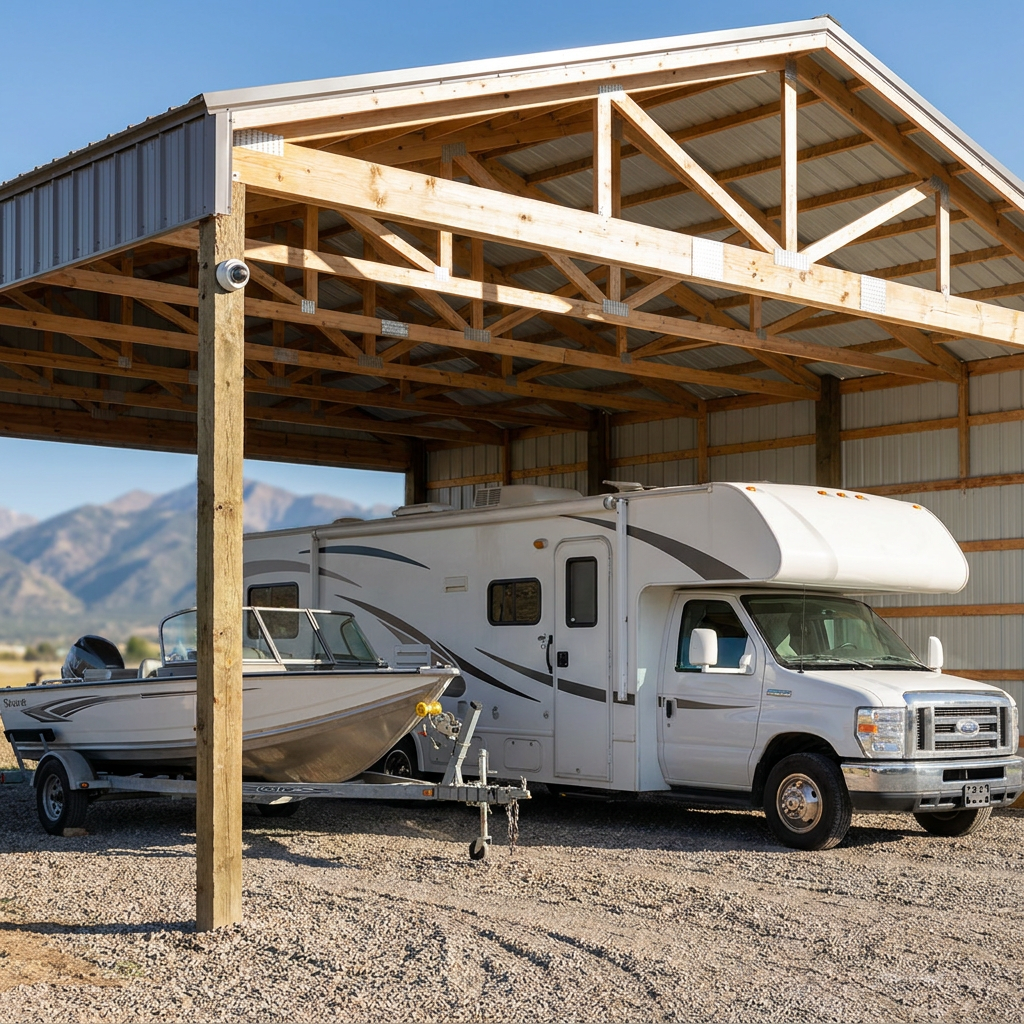
Gated access with individualized codes prevents unauthorized entry and creates an audit trail of who accessed the facility and when. Facilities using shared codes or physical keys offer weaker protection. The Eagle Canopy FAQ page confirms their facility uses individualized access codes for each tenant, allowing 24/7 entry while maintaining security logs.
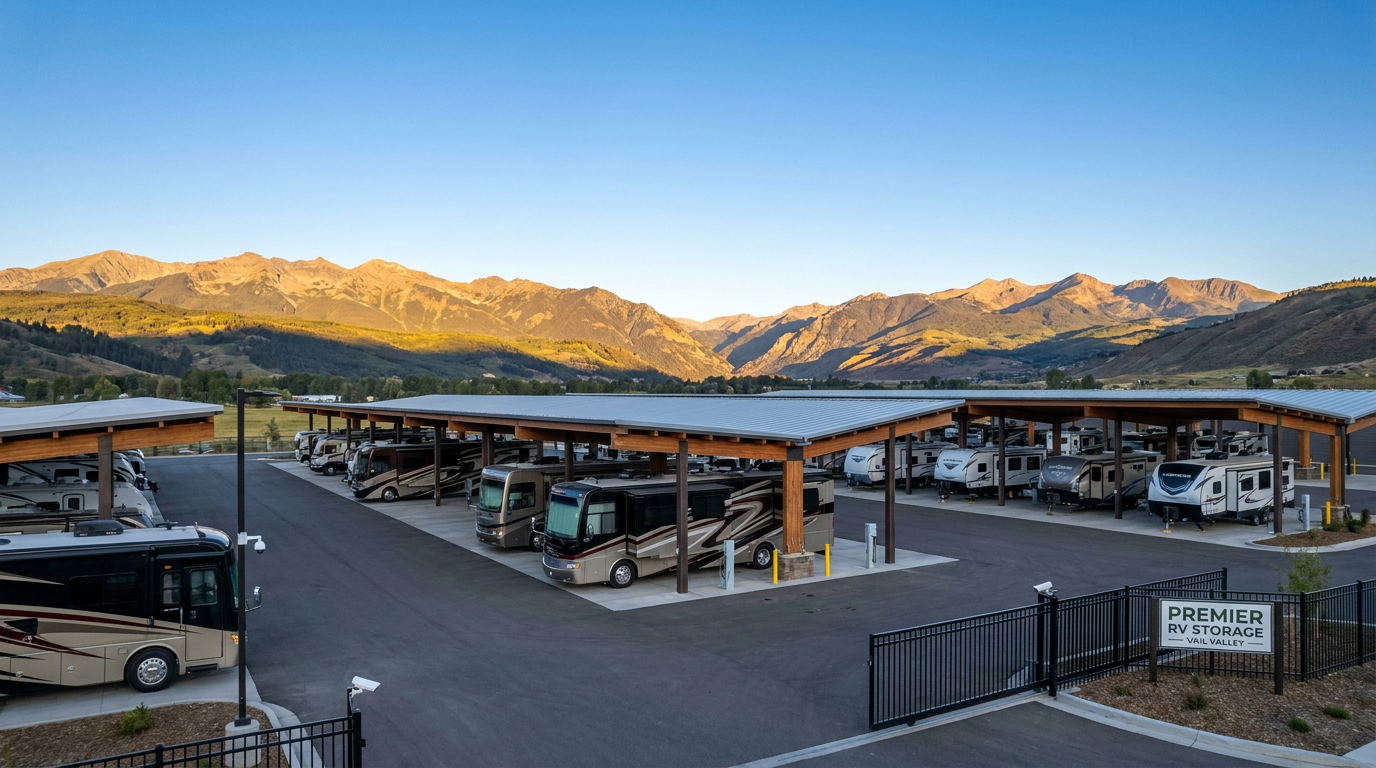
Camera coverage should include entry points, perimeter fencing, and individual storage rows. High-definition systems with 16 or more cameras provide adequate coverage for facilities with 50+ spaces. Ask whether footage is stored on-site or in cloud backup, and how long recordings are retained. Most facilities keep 30 to 90 days of footage.
Perimeter fencing height matters more than material type. Standard 6-foot chain link deters casual trespassers but not determined thieves. Nine-foot fencing with barbed wire or razor ribbon at the top significantly reduces break-in attempts. Well-lit perimeters with motion-activated lighting add another deterrent layer.
Electric Hookups: Why 20-Amp vs 50-Amp Matters
Battery maintenance during storage prevents the most common post-storage RV problem: dead batteries requiring replacement. Lead-acid batteries lose 5% to 15% of their charge monthly when disconnected, with faster discharge in cold temperatures. Lithium batteries fare better but still benefit from periodic charging.
A 20-amp hookup provides sufficient power for trickle chargers, battery maintainers, and small dehumidifiers. This amperage handles most travel trailers, Class B vans, and boats with single battery banks. Monthly electricity costs for trickle charging typically run $5 to $15.
A 50-amp hookup becomes necessary for Class A motorhomes with dual air conditioners, residential refrigerators, or multiple battery banks. If you plan to run climate control systems during storage to protect interior components, 50-amp service is essential. The price difference between 20-amp and 50-amp spaces at Eagle Canopy is $40 to $60 per month.
Verify the outlet type matches your RV's shore power cord. Most facilities provide standard NEMA 14-50 outlets for 50-amp service and TT-30 or standard 120V outlets for 20-amp service. Bring your own adapter if your RV uses a different configuration.
Location Factors That Affect Convenience and Cost
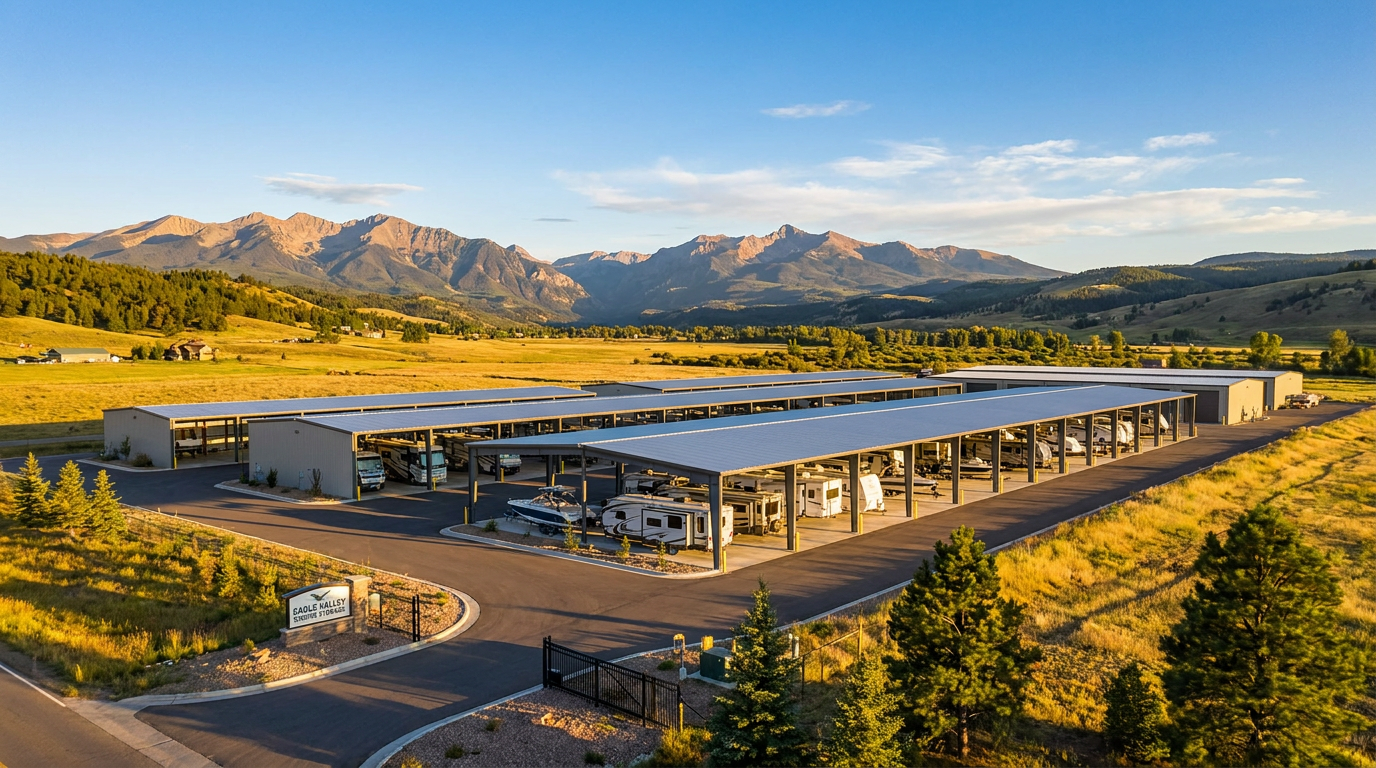
Storage facilities near Eagle cluster in two areas: Gypsum (5 miles west) and Edwards (12 miles east). Each location offers distinct advantages depending on your travel patterns and access needs.
Gypsum facilities sit adjacent to Highway 6 and Interstate 70, providing direct access to both eastbound travel toward Denver (100 miles) and westbound routes to Grand Junction (130 miles). The proximity to Eagle County Regional Airport (EGE) makes Gypsum convenient for owners who fly in to retrieve their RVs for weekend trips. Costco's Gypsum location allows one-stop provisioning before departing on camping trips.
Edwards facilities position closer to Vail (15 miles) and Beaver Creek (8 miles), appealing to owners who primarily travel east into Summit County or Rocky Mountain National Park. Drive times from Edwards to Dillon Reservoir run 35 to 45 minutes versus 50 to 60 minutes from Gypsum.
Fuel costs between locations differ by $0.10 to $0.20 per gallon, with Gypsum typically offering lower prices due to proximity to I-70 truck stops. For a 100-gallon RV fuel tank, this translates to $10 to $20 savings per fill-up.
Weather Protection: What Canopy Construction Actually Provides
Not all covered storage offers equal protection. Canopy construction varies from lightweight fabric structures to heavy-duty steel frames, with significant differences in durability and weather resistance.
Steel canopy structures with snow load ratings of 90+ pounds per square foot withstand the heaviest Colorado storms without risk of collapse. This rating means the roof can support 90 pounds of snow, ice, or debris per square foot of surface area. A 12x40 space (480 square feet) can theoretically hold 43,200 pounds of snow before structural failure.
Fabric or tensioned membrane structures typically carry ratings of 20 to 40 pounds per square foot. These designs work in mild climates but pose collapse risks during heavy snow events. Several fabric structures in Summit County failed during the 2023 winter storms, damaging stored vehicles underneath.
Partial overhead coverage (canopy without side walls) protects against direct snowfall, hail, and UV exposure while allowing airflow that prevents moisture buildup. Fully enclosed structures offer more protection but can trap humidity, promoting mold growth on RV interiors if not properly ventilated.
Lease Terms and Flexibility Considerations
Storage lease structures in Eagle County fall into three categories: month-to-month, 6-month contracts, and annual agreements. Each offers different trade-offs between flexibility and cost savings.
Month-to-month leases provide maximum flexibility for seasonal RV owners who store vehicles only during winter months (November through April). This structure allows cancellation with 30 days notice, avoiding payment during months when the RV is in active use. Eagle Canopy and several competitors offer month-to-month terms with no long-term commitment required.
Six-month contracts typically offer 5% to 10% discounts compared to month-to-month rates. For a $320 monthly space, this translates to $96 to $192 in annual savings. The downside: early termination often forfeits any prepaid amounts or incurs penalty fees equal to 1 to 2 months rent.
Annual agreements maximize savings (10% to 15% discount) but lock you into a specific facility regardless of service quality changes, personal circumstances, or better options becoming available. Calculate whether the $384 to $576 annual savings on a mid-size space justifies 12 months of commitment.
Move-In Promotions Worth Asking About
Most facilities offer move-in specials to fill vacant spaces. Common promotions include first month free, 50% off the first two months, or waived administrative fees. Eagle Canopy currently advertises 2 months at 50% off for new tenants, representing $160 to $230 in savings depending on space size.
Ask whether promotional rates apply only to new customers or if existing tenants can access similar deals when upgrading to larger spaces. Some facilities restrict promotions to specific unit sizes or require minimum lease commitments to qualify.
Insurance and Protection Plan Requirements
Storage facilities require proof of insurance or purchase of their protection plan before move-in. Understanding coverage gaps prevents unexpected out-of-pocket expenses if damage or theft occurs.
Your existing RV or boat insurance policy may already cover stored vehicles. Contact your insurance provider (Progressive, Good Sam, National General, or GEICO are common RV insurers) to verify storage coverage limits and any exclusions. Some policies reduce coverage when vehicles remain stationary for extended periods or require notification of storage location changes.
Facility-offered protection plans like SafeLease tenant protection cover burglary, fire, water damage, vandalism, and vehicle damage with deductibles typically ranging from $100 to $500. Monthly costs run $15 to $45 depending on coverage limits. These plans often cover scenarios that standard RV insurance excludes, such as damage from facility equipment or other tenants' vehicles.
Document your vehicle's condition with dated photographs before storage. Capture all four sides, the roof (if accessible), interior compartments, and any existing damage. This documentation proves invaluable if disputes arise about when damage occurred.
Pre-Storage Preparation Checklist
Proper preparation before storage prevents the most common post-storage problems: dead batteries, flat-spotted tires, pest infestations, and plumbing damage. Complete these tasks before leaving your RV or boat in storage for 30+ days.
Battery maintenance: Fully charge batteries before storage. Connect a trickle charger or battery maintainer to the facility's power hookup. For lithium batteries, store at 50% to 80% charge if no power hookup is available.
Tire protection: Inflate tires to maximum sidewall pressure (not normal driving pressure). This prevents flat spots from developing during stationary periods. For storage exceeding 3 months, consider tire covers to block UV exposure or place plywood under tires to prevent moisture absorption from asphalt.
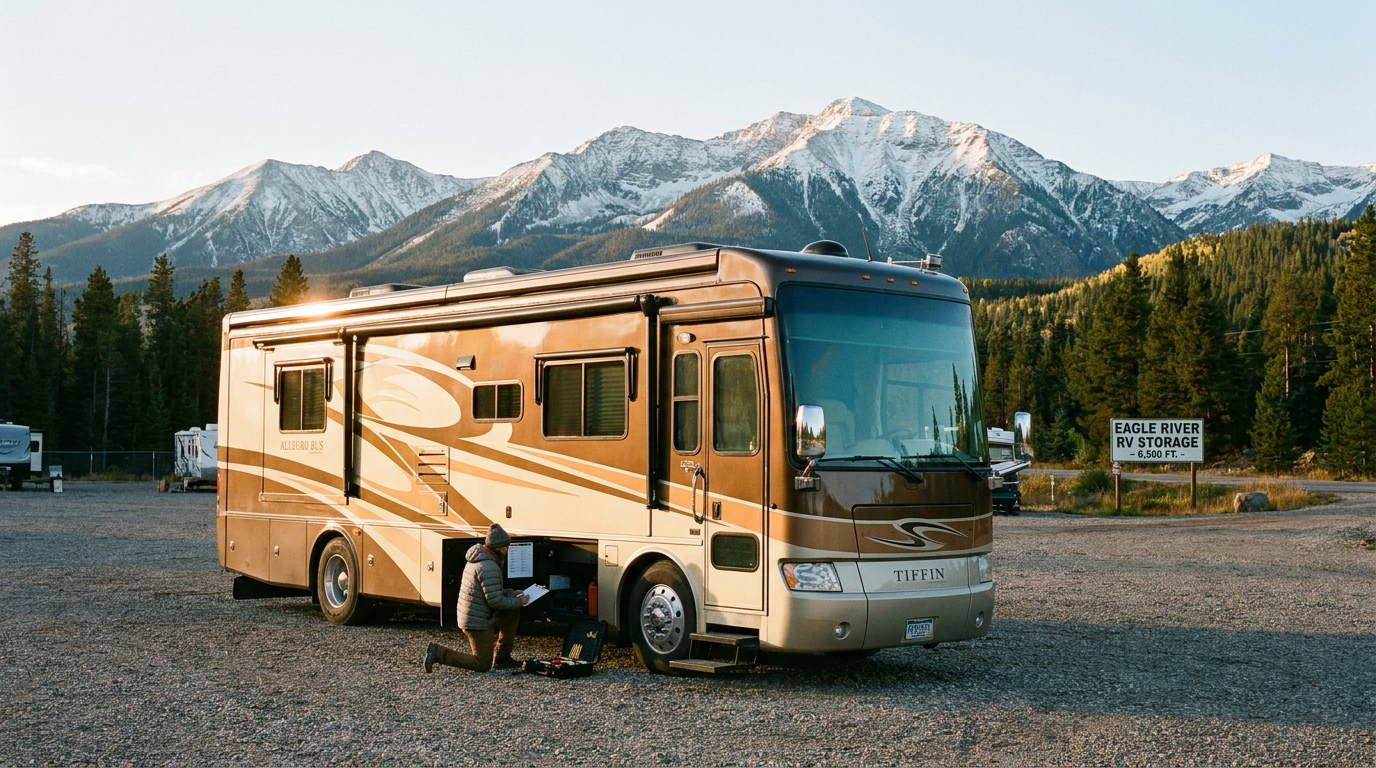
Plumbing winterization: Drain all water tanks, lines, and water heater. Add RV antifreeze to P-traps and toilet bowls. For professional winterization services in the Vail Valley, RV2GO offers winterization and de-winterization for vehicles stored at Eagle Canopy.
Pest prevention: Remove all food items, including canned goods that can freeze and burst. Place mothballs or peppermint oil sachets in cabinets and storage compartments. Seal any exterior gaps larger than 1/4 inch with steel wool or expanding foam.
Fuel system: Fill fuel tanks to 95% capacity and add fuel stabilizer. This prevents condensation buildup and fuel degradation during storage. Run the engine for 10 minutes after adding stabilizer to circulate treated fuel through the system.
Questions to Ask Before Signing a Storage Lease
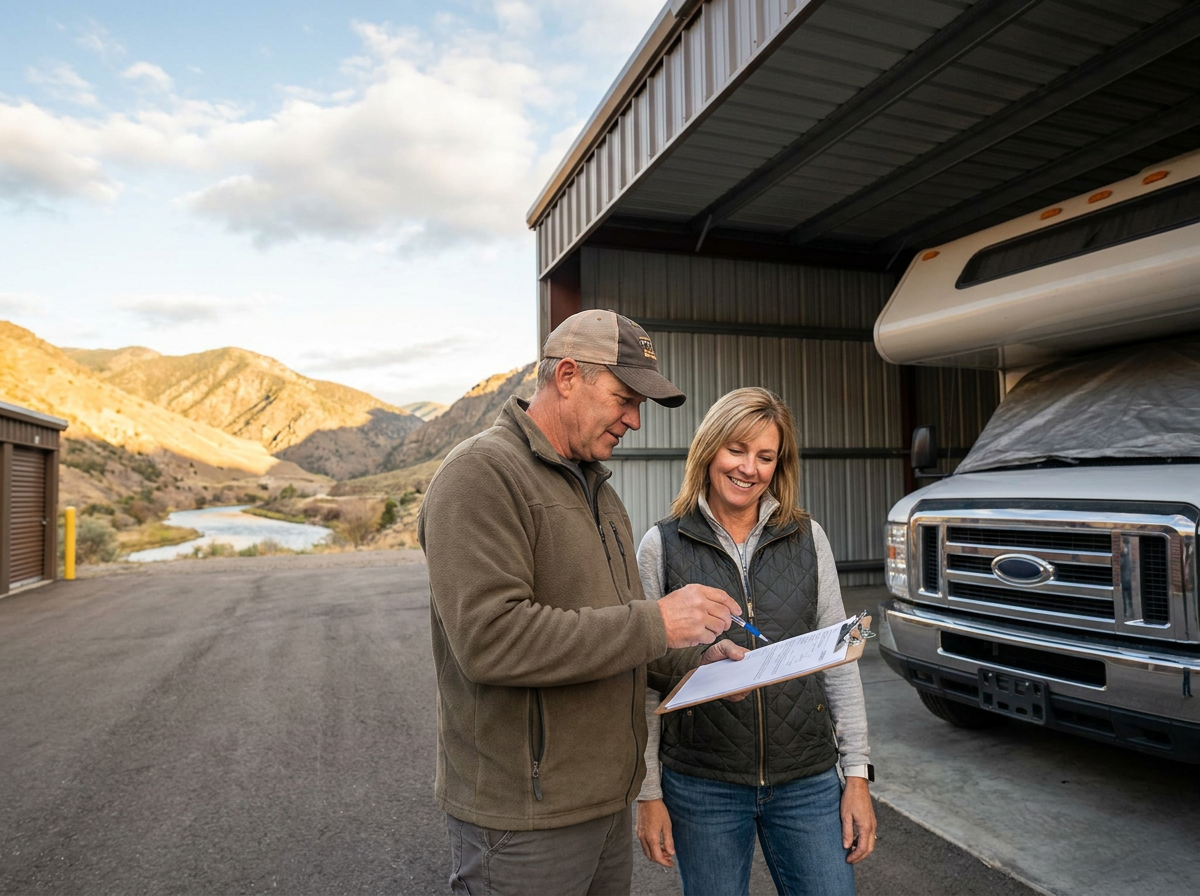
Visiting the facility in person reveals conditions that photos and websites cannot convey. During your visit, ask these specific questions and observe the property's actual state.
Access hours and procedures: Is access truly 24/7, or are there restricted hours? How long does gate code activation take for new tenants? What happens if the gate malfunctions after hours?
Surface conditions: Is the lot fully paved with asphalt or concrete, or are some areas gravel? Gravel lots create dust that infiltrates RV seals and can damage boat trailers. Check for potholes, drainage issues, and adequate lighting throughout the facility.
Maneuvering space: Can your specific vehicle navigate the aisles and turn into your assigned space? Large Class A motorhomes and vehicles towing boats require 60+ feet of turning radius. Ask to drive through the facility before signing.
On-site services: Does the facility offer dump station access, propane filling, or maintenance services? The nearest RV dump station to Gypsum is in Edwards, 25 to 30 minutes away. Facilities with on-site dumps save significant time during move-out.
Payment and communication: What payment methods are accepted? Is there an online tenant portal for payments and access code management? How are rent increases communicated, and how much notice is provided?
Comparing Eagle County Storage Options
The Eagle County storage market includes facilities ranging from basic uncovered lots to full-service operations with covered canopies and electric hookups. This comparison helps identify which features justify premium pricing.
| Feature | Basic Lot | Standard Covered | Premium Covered |
|---|---|---|---|
| Monthly Cost (12x35) | $100-$150 | $200-$280 | $320-$360 |
| Canopy Protection | None | Fabric/Light Steel | Heavy Steel (90+ lb rating) |
| Electric Hookup | Rarely | Sometimes | Every space |
| Surface Type | Gravel | Mixed | Fully Paved |
| Security Cameras | 0-4 | 4-8 | 16+ UHD |
| Perimeter Fence | 6-foot chain link | 6-foot with barbed wire | 9-foot with barbed wire |
| Access Hours | Limited | Extended | 24/7 |
The $170 to $210 monthly premium for covered storage with electric hookups pays for itself within 2 to 3 years through avoided repairs. A single hail event can cause $5,000 to $15,000 in RV roof and sidewall damage. Battery replacement costs $200 to $800 for lead-acid systems and $1,500 to $4,000 for lithium banks.
Frequently Asked Questions
Can I access my RV or boat anytime at covered storage facilities?
Most premium facilities offer 24/7 gated access with individualized entry codes. Budget facilities may restrict access to business hours (7 AM to 7 PM) or require advance notice for after-hours entry. Verify access policies before signing, especially if you plan early morning departures for camping trips.
Do I need covered storage if I already have an RV cover?
Fabric RV covers provide UV protection but offer minimal defense against hail, snow loads, or wind damage. Covers also trap moisture against exterior surfaces, potentially accelerating oxidation and seal degradation. Covered storage eliminates these risks while reducing the labor of installing and removing covers.
What size storage space do I need for a 30-foot travel trailer?
A 30-foot travel trailer requires a minimum 12x35 space, providing 5 feet of clearance for the tongue and maneuvering. If you store the trailer hitched to a tow vehicle, add the vehicle length plus 3 feet. A 30-foot trailer with a 20-foot truck needs a 12x55 or larger space.
How far in advance should I reserve covered storage in Eagle County?
Peak demand occurs in October and November as RV owners prepare for winter storage. Facilities with electric hookups often reach capacity by mid-October. Reserve 4 to 6 weeks before your planned move-in date during fall months. Spring and summer availability is typically better, with some facilities offering move-in specials to fill vacancies.
Is WiFi at storage facilities actually useful?
Free WiFi allows you to update RV navigation systems, download entertainment content, or check vehicle monitoring systems without using cellular data. Signal strength varies by facility; ask about coverage in the actual storage area rather than just the office. Some facilities advertise WiFi but only provide coverage near the entrance.
|