R
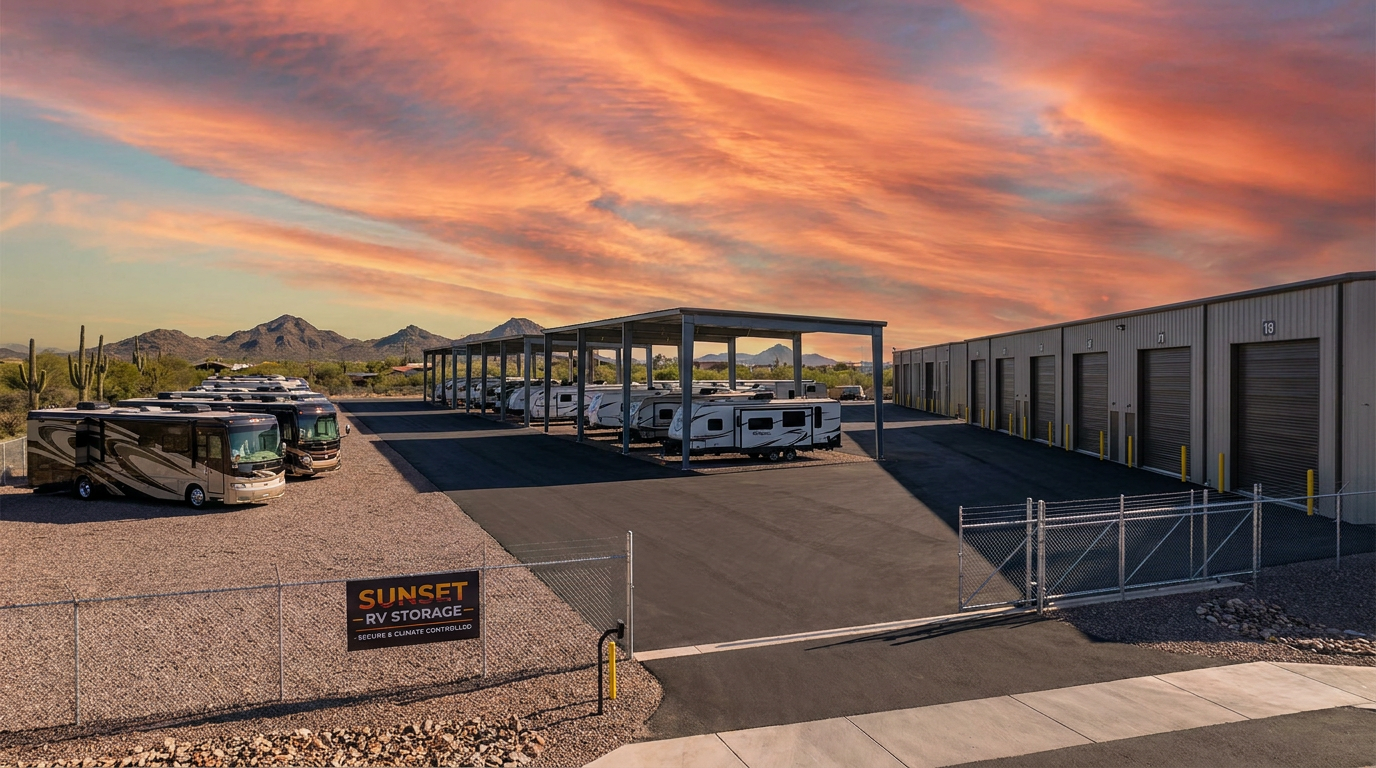
V storage costs between $30 and $460 per month in 2026, with the national average sitting around $150 for a standard covered space. Outdoor uncovered lots run $30 to $150 monthly, covered canopy storage ranges from $150 to $400, and fully enclosed indoor units cost $200 to $600 or more depending on size and climate control features.
RV Storage Pricing by Type: Complete Comparison
According to Extra Space Storage's 2026 pricing guide, RV storage rates vary significantly based on the level of protection offered. Understanding these categories helps you match your budget to your RV's protection needs.
The Neighbor storage marketplace
reports that covered storage delivers the strongest value proposition for most RV owners. You pay 50% to 100% more than uncovered options but gain protection from UV damage, hail, snow loads, and general weathering that can cost thousands in repairs.
RV Storage Costs by Size
Your RV's length directly determines your storage costs. A Class A motorhome measuring 35 to 45 feet requires significantly more space than a 20-foot travel trailer, and facilities price accordingly. Most storage facilities offer spaces in 5-foot increments from 15 feet to 50 feet or longer.
When measuring your RV, add 3 to 5 feet beyond your total length to account for hitches, bike racks, and maneuvering room. A 32-foot fifth wheel with a hitch extension needs at least a 35-foot space for comfortable access.
What Affects RV Storage Prices?
Seven primary factors determine what you will pay for RV storage. Understanding these variables helps you find the best value in your area and negotiate better rates when possible.
Geographic Location
Storage costs vary dramatically by region. According to Gold Eagle's state-by-state analysis, Alabama averages $99 per month for indoor storage while Alaska charges $600 for an eight-month seasonal rate. Colorado mountain communities like Vail, Aspen, and Breckenridge command premium rates due to limited land availability and high demand from seasonal residents.
Urban areas near major metropolitan centers charge 25% to 50% more than rural locations 30 miles away. However, the convenience of nearby storage often justifies the premium for frequent RV users who want easy access before weekend trips.
Security Features
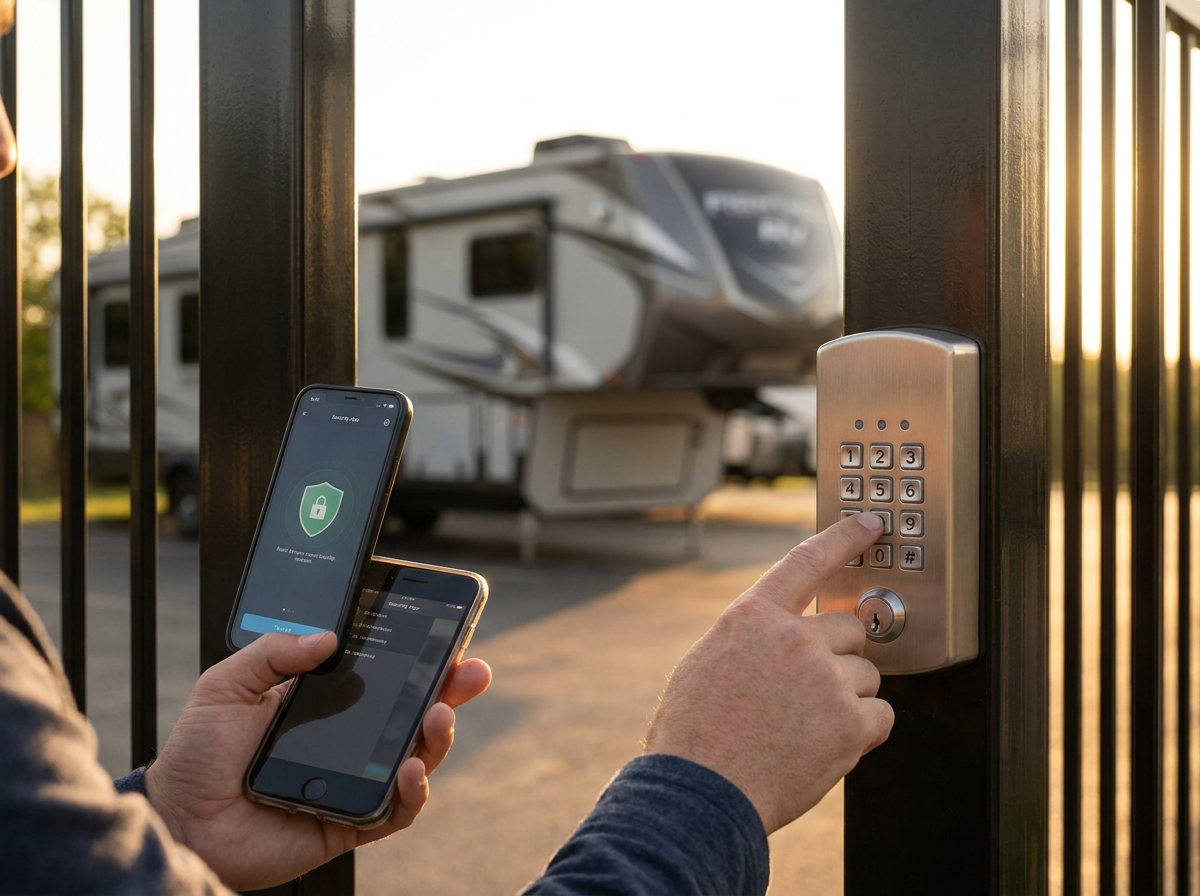
Facilities with comprehensive security systems charge $25 to $75 more per month than basic lots. Premium security typically includes 24/7 video surveillance with 16 or more HD cameras, individual gate access codes, perimeter fencing with barbed wire, and on-site management during business hours. These features protect your $50,000 to $500,000 investment and often reduce insurance premiums.
Access Hours and Convenience
Facilities offering 24/7 access typically charge 10% to 15% more than those with limited hours. For RV owners who frequently depart for early morning trips or return late at night, unrestricted access justifies the additional cost. Some facilities charge extra for after-hours access through separate gate fees.
Electrical Hookups
Electric hookups for battery trickle charging add $15 to $50 per month to your base rate. A 20-amp connection handles most battery maintenance needs, while 50-amp hookups support running climate systems or refrigerators during storage. At covered RV storage facilities in Colorado, electrical hookups prove essential for maintaining batteries through freezing winter months.
Surface Type
Paved asphalt surfaces cost more than gravel or dirt lots but protect your tires and undercarriage. Gravel lots can cause tire damage from sharp rocks and create mud problems during wet seasons. Fully paved facilities typically charge $20 to $40 more monthly but eliminate these risks entirely.
RV Storage Costs by State: Regional Breakdown
Regional pricing differences reflect local real estate costs, climate demands, and RV ownership density. The Recreation Vehicle Industry Association reports that states with higher RV registrations per capita often have more competitive storage pricing due to increased facility supply.
Data from RecNation Storage
confirms that mountain and coastal regions consistently charge 30% to 60% above the national average due to limited buildable land and higher property values.
Hidden Costs to Watch For
The advertised monthly rate rarely tells the complete story. Smart RV owners budget for these additional expenses that can add $50 to $200 to your annual storage costs.
Security Deposits
Many facilities require deposits equal to one or two months' rent. Some facilities, particularly those offering month-to-month leases, waive deposit requirements entirely. Always ask about deposit policies and refund conditions before signing.
Insurance Requirements
Most storage facilities require proof of liability insurance covering $100,000 or more. If your existing RV policy does not meet requirements, you may need to purchase a tenant protection plan
ranging from $15 to $45 monthly. These plans typically cover fire, theft, vandalism, and weather damage up to specified limits.
Administrative Fees
Watch for one-time administrative fees of $25 to $75 at move-in. Some facilities also charge annual rate increases of 3% to 8%, which compounds significantly over multi-year storage periods.
Late Payment Penalties
Late fees typically range from $25 to $50 or 10% of your monthly rate, whichever is greater. Setting up autopay eliminates this risk and sometimes qualifies for a 5% to 10% discount on your base rate.
How to Find Cheap RV Storage Near You
Finding affordable RV storage requires research and flexibility. These strategies consistently help RV owners reduce their monthly costs by 15% to 35%.
Compare Multiple Facilities
Request quotes from at least five facilities within your acceptable driving radius. Online marketplaces like SpareFoot, Neighbor, and StowIt aggregate pricing from multiple providers, making comparison shopping faster. Prices for identical storage types can vary by $75 to $150 monthly within the same city.
Consider Location Trade-offs
Facilities 15 to 20 miles outside city centers often charge 25% to 40% less than urban locations. If you only access your RV monthly, the extra drive time translates to significant annual savings. A $100 monthly savings equals $1,200 per year, enough to cover fuel for several camping trips.
Ask About Discounts
Most facilities offer discounts that they do not advertise prominently. Common discount categories include military and veteran discounts of 5% to 15%, senior discounts for those 55 and older, prepayment discounts of 5% to 10% for paying 6 to 12 months upfront, and referral bonuses worth one free month. Always ask what promotions are currently available.
Time Your Move Strategically
RV storage demand peaks from October through December as owners prepare for winter. Facilities often offer move-in specials during slower months from January through March. Signing during off-peak periods can lock in rates 10% to 20% below peak season pricing.
Outdoor vs. Covered vs. Indoor: Which Is Worth It?
Choosing the right storage type depends on your RV's value, your local climate, and how long you plan to store. Each option presents distinct trade-offs between cost and protection.
When Outdoor Storage Makes Sense
Outdoor uncovered storage works for RVs valued under $30,000 in mild climates with minimal hail risk. If you store for less than six months annually and have comprehensive insurance, the cost savings often outweigh the increased weather exposure. Budget $500 to $1,000 annually for additional detailing and minor repairs from sun and weather damage.
When Covered Storage Delivers Best Value
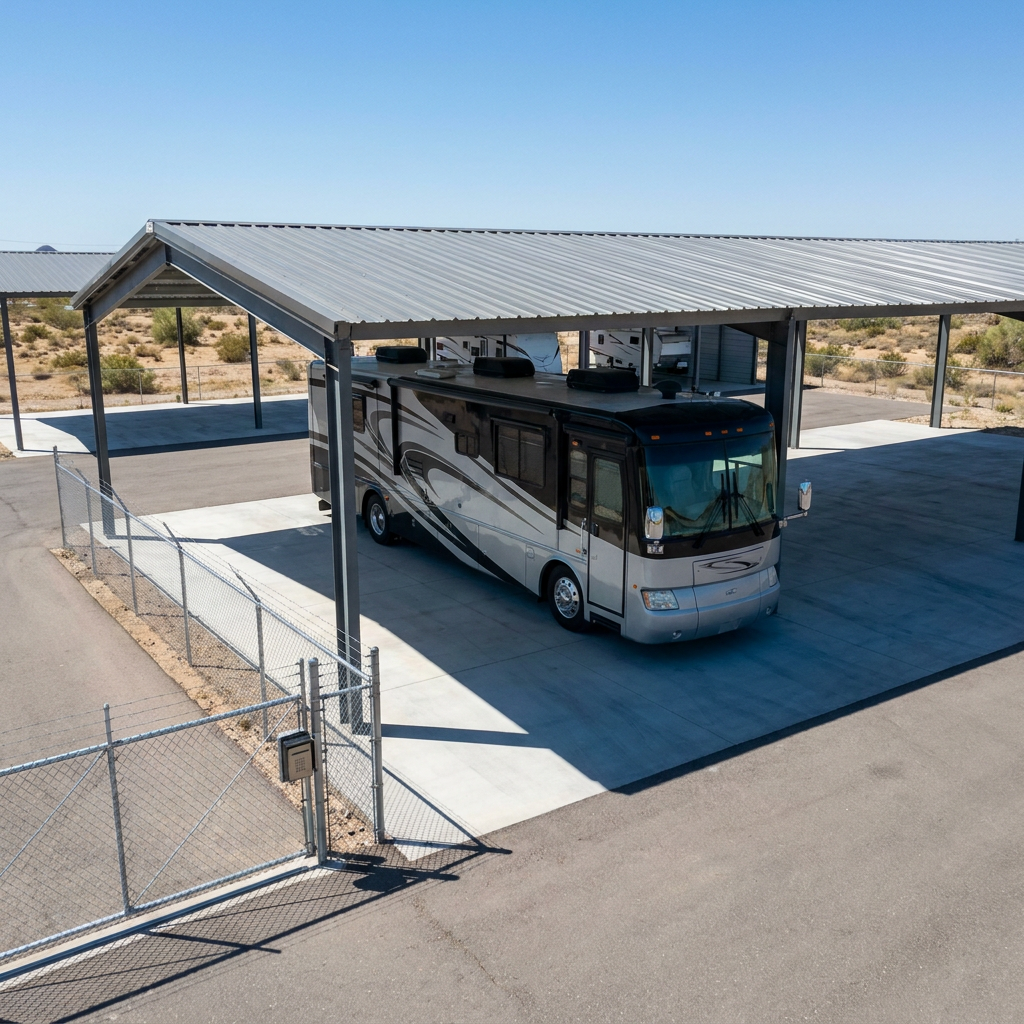
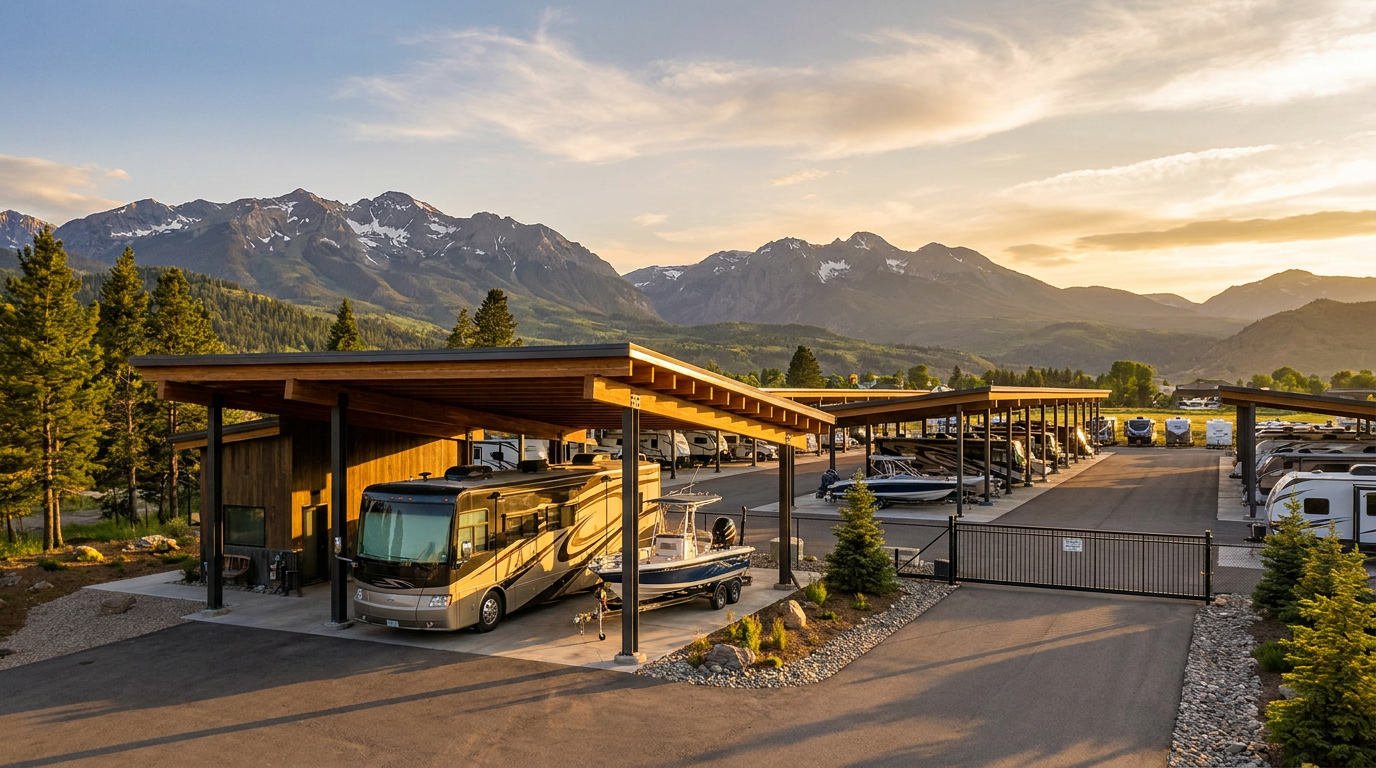
Covered canopy storage provides the optimal balance for most RV owners. Protection from direct sun exposure extends roof life by 5 to 10 years and prevents UV damage to decals, rubber seals, and exterior finishes. In regions with hail, snow loads exceeding 30 pounds per square foot, or intense UV radiation above 6,000 feet elevation, covered storage prevents thousands in potential damage annually.
Colorado's mountain weather makes covered RV storage
particularly valuable. Heavy-duty steel canopies rated for 90+ pounds per square foot snow loads protect against the state's notorious spring hailstorms and winter accumulation.
When Indoor Storage Justifies the Premium
Indoor enclosed storage makes financial sense for RVs valued above $150,000, vintage or collectible units, and owners storing for 12+ months continuously. The 50% to 100% premium over covered storage pays for itself through reduced depreciation, eliminated weather damage, and lower insurance rates. Climate-controlled options maintaining 55 to 75 degrees Fahrenheit prevent freeze damage and humidity-related mold growth.
Frequently Asked Questions About RV Storage Costs
What Is the Average Cost of Storing an RV?
The national average for RV storage is $150 per month for a covered space accommodating a 25 to 30 foot unit. This figure varies significantly by region, with Texas averaging $125 monthly and California averaging $250 or more. Outdoor storage averages $75 to $100 nationally, while indoor storage averages $250 to $350.
What Is the 3-3-3 Rule for RVs?
The 3-3-3 rule is a travel guideline recommending you drive no more than 300 miles per day, arrive at your destination by 3:00 PM, and stay at least 3 nights at each location. This rule reduces driver fatigue, allows time to properly set up camp, and provides meaningful time to explore each destination. It does not directly relate to storage costs but influences how frequently you access stored RVs.
What Is the 444 Rule for RV?
The 444 rule suggests driving no more than 400 miles daily, stopping by 4:00 PM, and staying 4 nights minimum at each campground. This more relaxed variation of the 3-3-3 rule suits RV owners who prefer longer drives between fewer destinations. Both rules emphasize sustainable travel pacing rather than storage considerations.
What Is the Cheapest Way to Live Full-Time in an RV?
Full-time RV living costs $1,500 to $3,000 monthly when optimized for budget. Key strategies include boondocking on free public lands managed by the Bureau of Land Management or National Forest Service, workamping in exchange for free site fees, and choosing RV parks with monthly rates of $400 to $800 instead of nightly fees. Harvest Hosts and Boondockers Welcome memberships provide additional free overnight options for $99 to $179 annually.
Can I Store My RV at Home Instead?
Home storage eliminates monthly fees but faces significant obstacles. Approximately 70% of HOAs prohibit RV parking in driveways or yards. Municipal codes in many cities restrict RV parking to 24 to 72 hours. Even where permitted, home storage exposes your RV to weather damage and potential theft without commercial security systems.
Do Storage Facilities Offer Month-to-Month Leases?
Most RV storage facilities offer month-to-month leases, though some require 3 to 6 month minimums for covered or indoor spaces. Month-to-month flexibility typically costs 5% to 15% more than annual contracts. For seasonal RV users who store only during winter months, month-to-month agreements provide the best value despite the slight premium.
Preparing Your RV for Storage
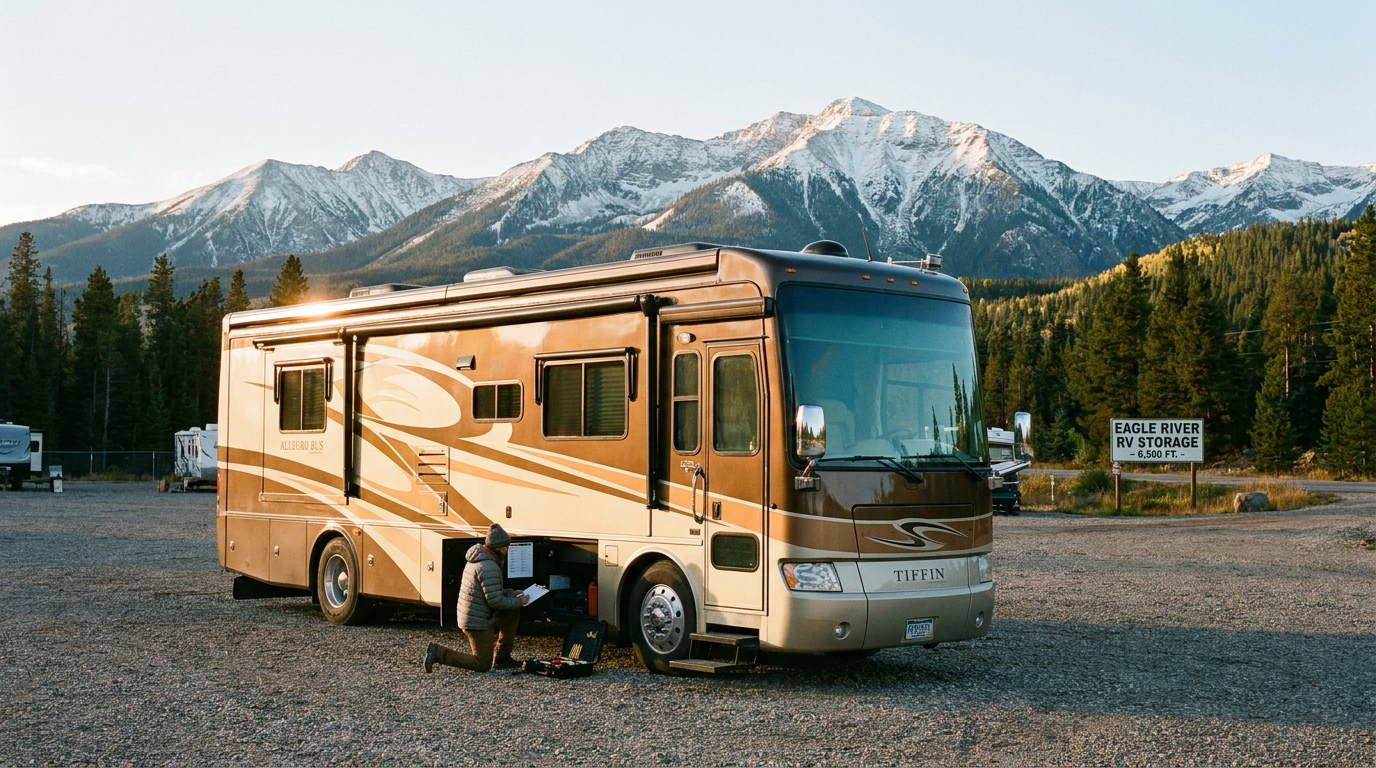
Proper preparation before storage prevents costly repairs and extends your RV's lifespan. Budget 2 to 4 hours for thorough preparation or $150 to $400 for professional RV winterization services in the Vail Valley
and similar mountain regions.
Essential Pre-Storage Checklist
Clean the exterior thoroughly to remove road grime, bird droppings, and tree sap that cause permanent staining. Empty and sanitize holding tanks at an RV dump station
before storage. Remove all perishable food to prevent pest infestations and mold growth.
Disconnect and remove batteries if electrical hookups are unavailable, or connect to a trickle charger at facilities offering power. Add fuel stabilizer to a full gas tank to prevent ethanol separation and fuel system damage. Cover tires or use tire covers to prevent UV deterioration and flat spots.
Climate-Specific Considerations
In freezing climates, winterization is mandatory. This includes draining all water lines, adding RV antifreeze to plumbing systems, and bypassing the water heater. Failure to winterize properly results in burst pipes costing $1,000 to $5,000 to repair. Professional winterization services typically cost $150 to $300 and include comprehensive system protection.
Making Your Final Decision
Calculate your total annual storage cost including base rent, insurance, electrical fees, and potential damage from inadequate protection. A $100 monthly outdoor space costing $1,200 annually may actually cost $2,500 or more when factoring in accelerated depreciation and weather-related repairs.
For RV owners in Colorado's Eagle County, Vail Valley, and surrounding Rocky Mountain communities, Eagle Canopy RV Storage
offers covered steel canopy spaces with verified listed rates from $230 to $460 monthly depending on size and electrical hookup, plus 24/7 gated access and month-to-month leases requiring no deposit. The facility's location near Costco and Vail Eagle Airport provides convenient access for both local residents and seasonal visitors.
Visit the frequently asked questions page
to learn more about sizing options, the rental process, and current availability. Online reservations take approximately 60 seconds with immediate move-in capability.
See covered RV & boat rates in Gypsum
Compare live canopy pricing at Eagle Canopy RV Storage — steel canopy, electric hookups, from $150/mo.
Moving to Eagle County with an RV, fifth wheel, or boat? See how covered parking at Eagle Canopy RV Storage in Gypsum bridges HOA limits and housing gaps.
Drive times from Vail, Edwards, and Avon to Eagle Canopy RV Storage on Lindbergh Dr in Gypsum, with winter I-70 notes and soft rent-online next steps.

Compare Gypsum covered RV storage at Eagle Canopy RV Storage vs hauling to Denver. I-70 drive times, Vail Valley lifestyle fit, and soft rent-online next steps.
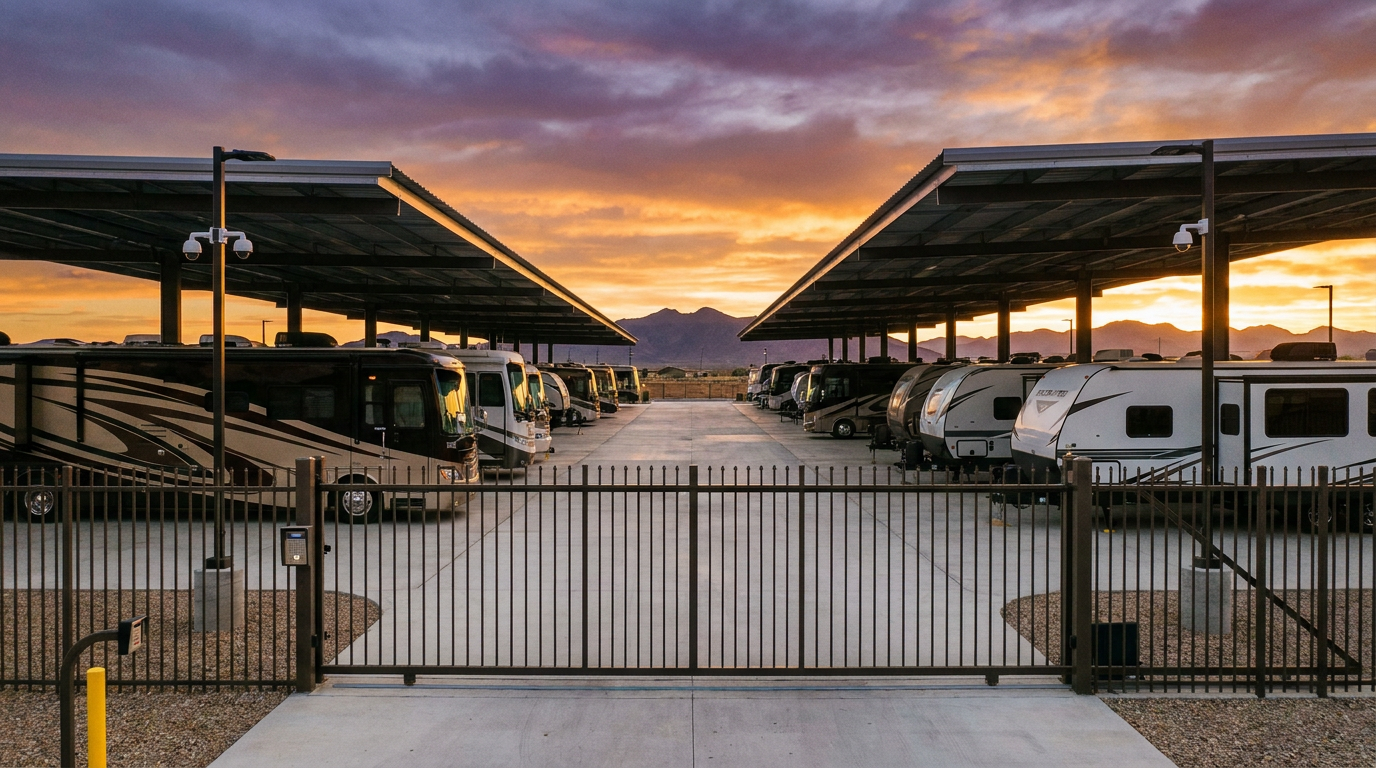
Discover the essential questions to ask when choosing an RV storage facility. Learn about security, access, pricing, and climate protection for your RV.
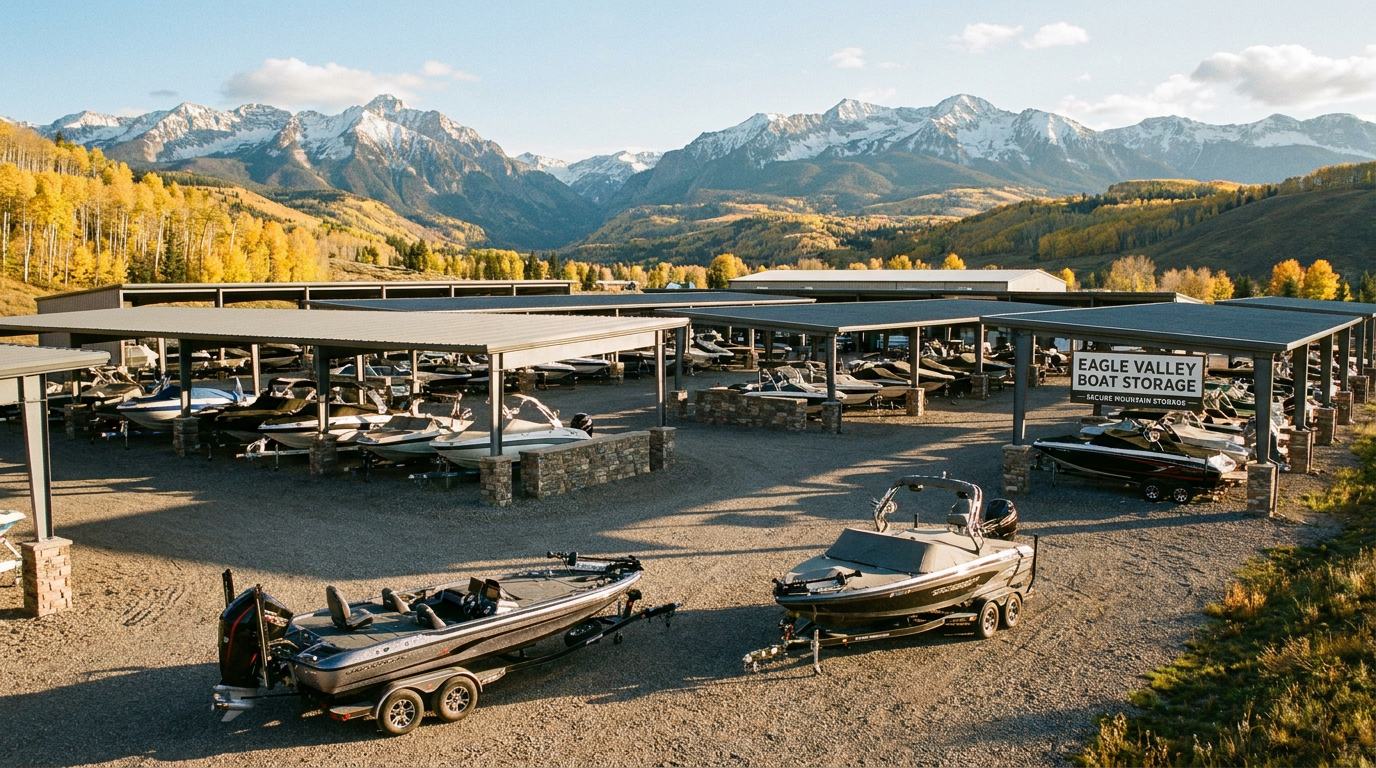
Find secure boat and trailer storage near Eagle and Vail, CO. Compare covered vs open storage, pricing from $150/month, and essential features for mountain storage.
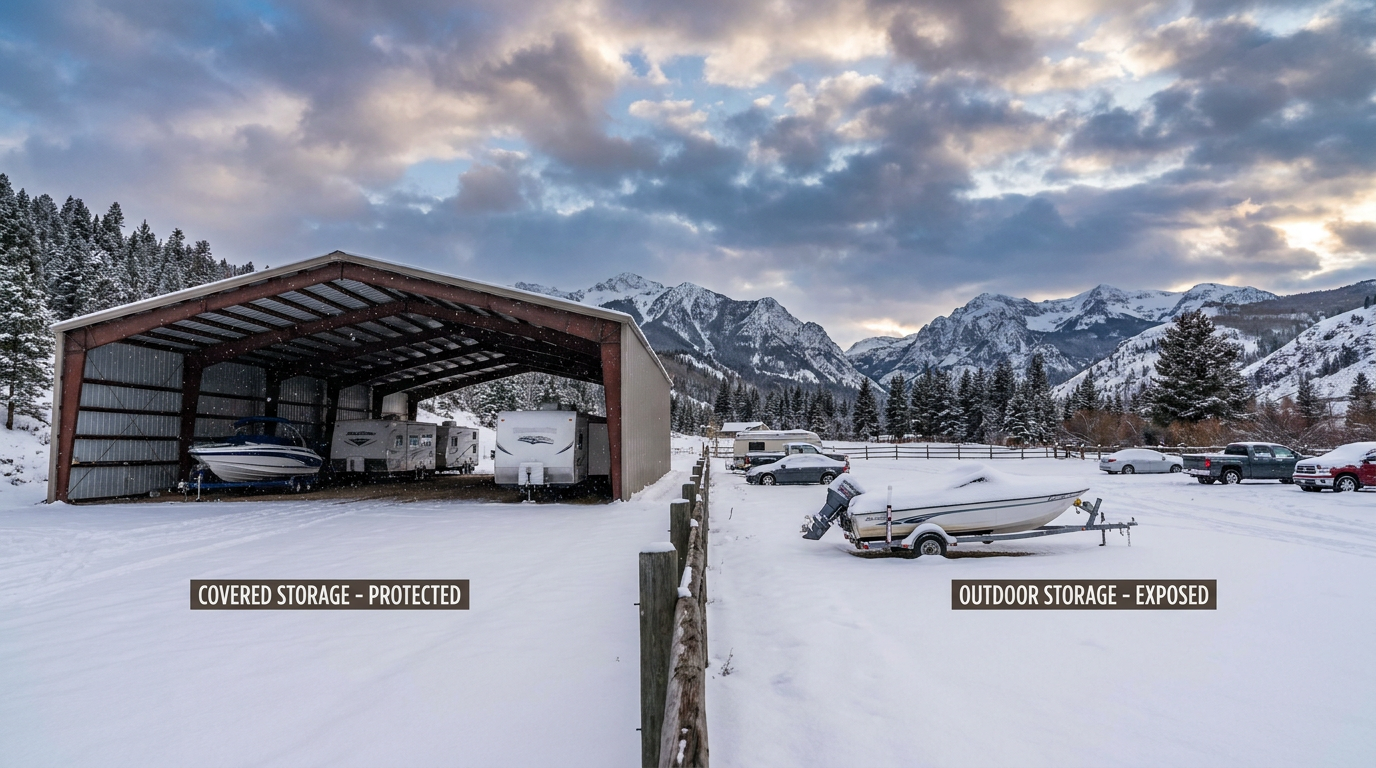
Compare covered and outdoor boat, trailer, and camper storage options in Eagle County. Learn costs, protection levels, and which type suits Colorado weather.
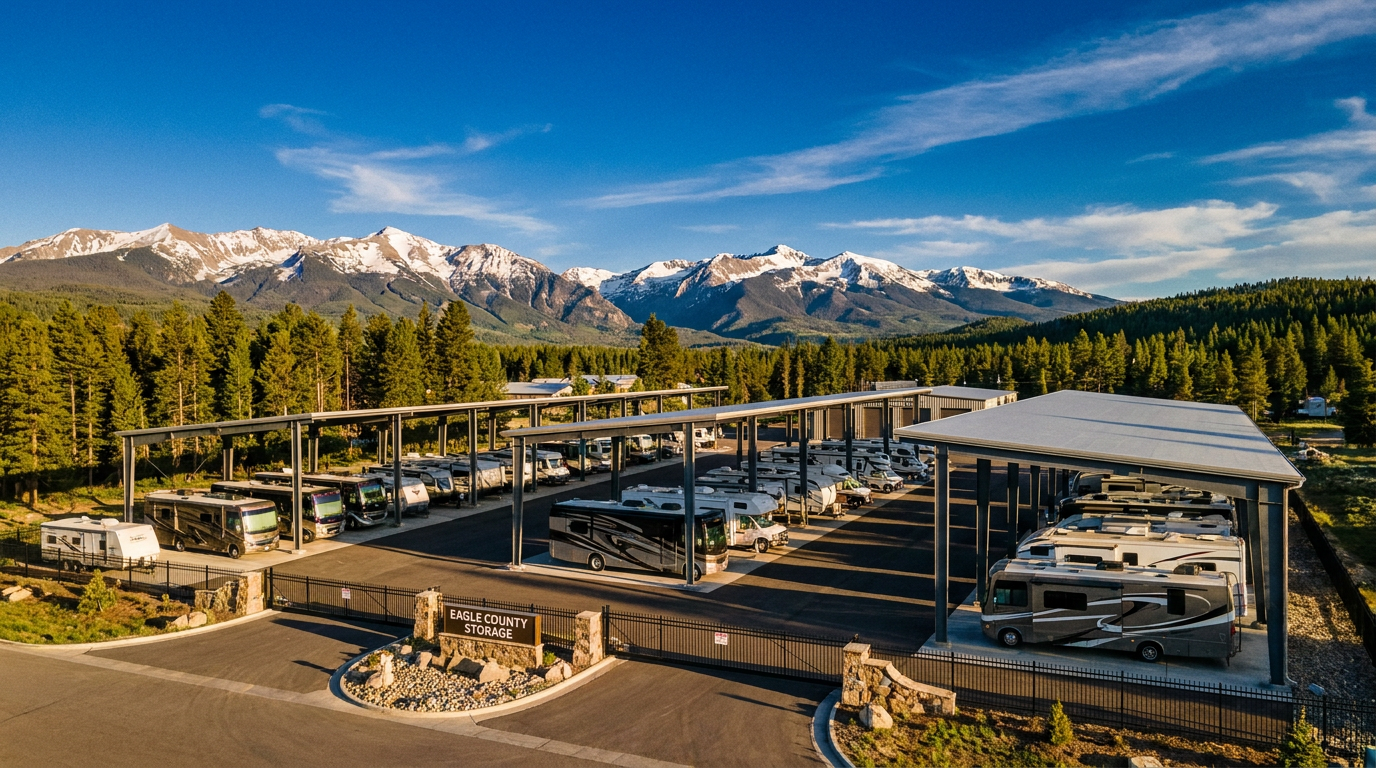
Find secure RV storage near Vail and Eagle County. Compare covered vs. open options, pricing from $150 to $460 per month, and key features for Colorado weather.
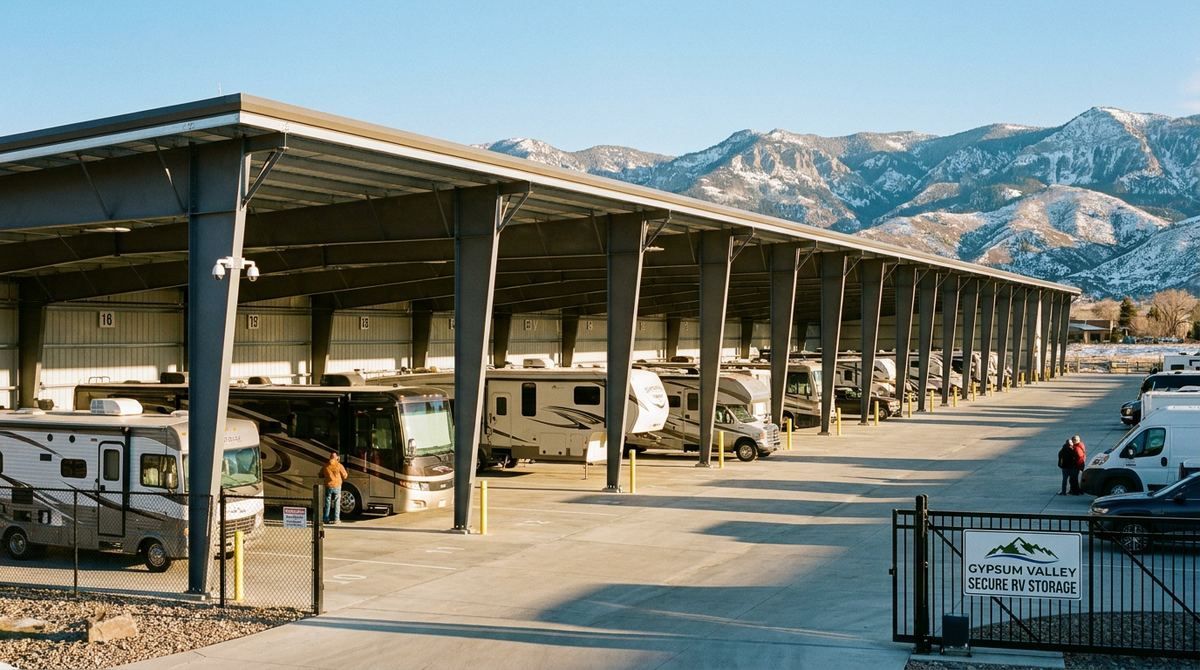
Complete guide to RV storage in Gypsum, Colorado. Learn what to check for covered parking, electric hookups, security features, and prep before you park.
Find the best RV and boat storage near Eagle, CO. Learn what to check for covered protection, security, electric hookups, and month-to-month leases in 2026.
Complete RV storage prep guide for Eagle County. Step-by-step winterization, battery care, pest prevention, and what to do before storing at 6,500+ feet elevation.