Seasonal Vehicle Storage Checklist for Colorado Mountain Owners |
| SEASONAL VEHICLE STORAGE CHECKLIST FOR COLORADO MOUNTAIN OWNERS
⏱ 11 min read ·
📄 #2,030 words
Complete seasonal vehicle storage checklist for Colorado mountain owners. Covers RVs, boats, trailers, and cars with altitude-specific prep steps.
|
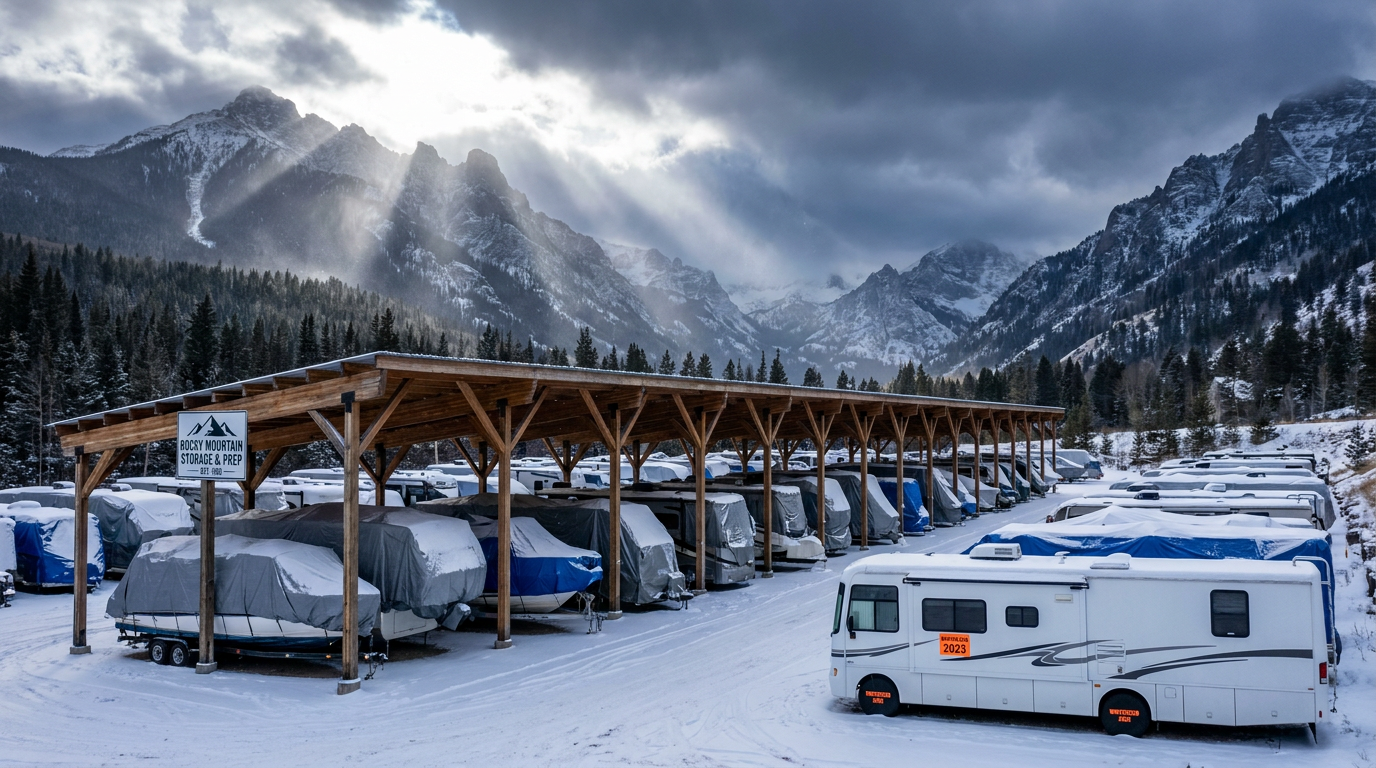
C olorado mountain vehicle storage requires specific preparation beyond standard winterization. At elevations above 6,500 feet, owners face snow loads exceeding 90 pounds per square foot, UV radiation 25% stronger than sea level, and temperature swings of 50 degrees in a single day. This checklist covers every step for RVs, boats, trailers, and seasonal vehicles in Eagle County and the Vail Valley.
| Key Points: | |
|---|---|
| • | Colorado mountain storage prep takes 4 to 6 hours and costs $150 to $400 depending on vehicle type |
| • | Battery discharge accelerates 30% faster at high altitude; trickle charging at $20 per month prevents replacement costs of $200 to $800 |
| • | Covered storage reduces UV damage by 85% and eliminates hail risk during Colorado's 60+ annual hail days |
| • | Rodent damage claims average $2,500 per incident in mountain regions; proper sealing and deterrents are essential |
| • | Freeze-thaw cycles occur 150+ times per year above 6,000 feet, requiring antifreeze rated to minus 50 degrees Fahrenheit |
Why Colorado Mountain Storage Differs from Standard Vehicle Storage
Mountain storage in Colorado presents challenges that coastal and lowland facilities never encounter. According to the Colorado DMV, the state registers over 1.2 million recreational vehicles, many stored seasonally in mountain communities. These vehicles face a unique combination of environmental stressors.
UV radiation at 6,500 feet elevation is approximately 25% more intense than at sea level. This accelerates rubber degradation, paint oxidation, and plastic brittleness. A vehicle stored uncovered in Gypsum or Vail for six months receives UV exposure equivalent to 18 months at sea level.
Temperature volatility compounds the problem. The National Weather Service records average daily temperature swings of 30 to 50 degrees Fahrenheit in Eagle County between October and April. These swings cause repeated expansion and contraction in seals, gaskets, and fluid reservoirs.
Complete Pre-Storage Inspection Checklist
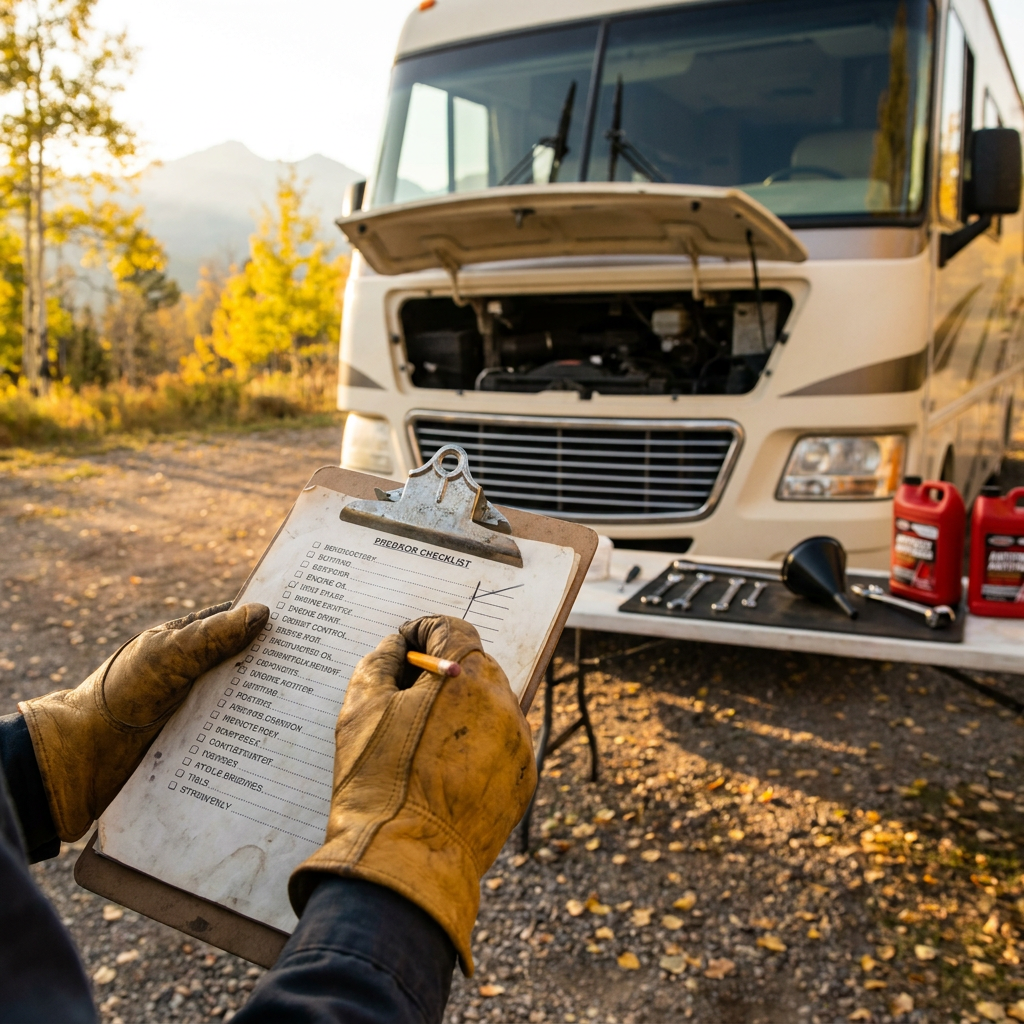
Before beginning any winterization, conduct a thorough inspection. This baseline assessment identifies existing damage and prevents surprises when you retrieve your vehicle in spring. Document everything with dated photographs.
Exterior Inspection Points
Check all roof seams, vents, and skylights for cracks or separation. Colorado's freeze-thaw cycles will turn minor cracks into major leaks. Inspect slide-out seals on RVs for wear or gaps. Examine tire sidewalls for weather checking, which appears as small cracks in the rubber.
Look underneath for rust spots, especially on frame rails and suspension components. Mountain road treatments include magnesium chloride, which accelerates corrosion faster than traditional road salt. Note any areas requiring touch-up or treatment.
Interior and Systems Check
Test all appliances, lights, and electrical systems before storage. Run the generator under load for 30 minutes. Check propane connections with soapy water to detect leaks. Inspect window and door seals for gaps that could admit moisture or rodents.
| Inspection Area | What to Check | Mountain-Specific Concern |
|---|---|---|
| Roof and Seams | Cracks, separation, soft spots | Snow load stress, UV degradation |
| Tires | Sidewall cracks, tread depth, pressure | Ozone damage at altitude, flat-spotting in cold |
| Undercarriage | Rust, corrosion, damage | Magnesium chloride road treatment |
| Seals and Gaskets | Gaps, brittleness, compression | 150+ freeze-thaw cycles annually |
| Battery | Voltage, terminals, case condition | 30% faster discharge at altitude |
Fluid Management for Mountain Storage
Proper fluid preparation prevents the most expensive storage-related failures. According to Carefree of Colorado's RV storage guide, fluid-related damage accounts for over 40% of post-storage repair costs.
Engine and Drivetrain Fluids
Change engine oil before storage, not after. Used oil contains acids and contaminants that corrode internal components during extended storage. Use manufacturer-recommended viscosity; thinner oils provide better cold-weather protection during occasional winter starts.
Fill the fuel tank to 95% capacity and add fuel stabilizer rated for the storage duration. A full tank minimizes condensation, which is critical when temperatures fluctuate between 20 and 70 degrees Fahrenheit. STA-BIL and Sea Foam are common stabilizer brands effective for 12 to 24 months.
Check antifreeze concentration with a refractometer or test strips. Colorado mountain storage requires protection to minus 50 degrees Fahrenheit minimum. Standard 50/50 antifreeze mix protects to approximately minus 34 degrees, which is insufficient for mountain valleys that regularly see minus 20 degree nights.
RV and Boat Water System Winterization
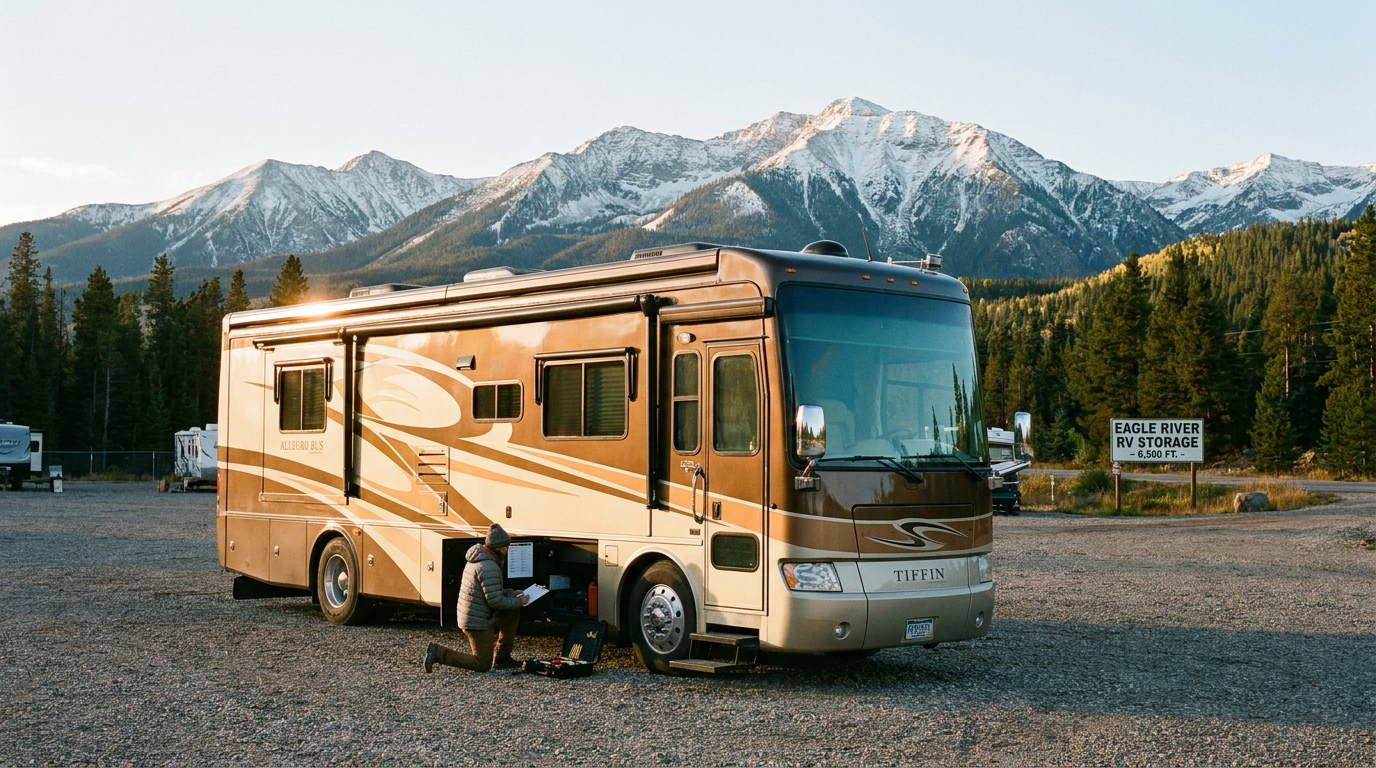
Water system damage is the most common and expensive storage failure in Colorado. A single burst pipe can cause $5,000 to $15,000 in damage. The winterization process takes 2 to 3 hours and costs $75 to $150 if done professionally.
Drain all fresh, gray, and black water tanks completely. Before storing your RV for winter, consider scheduling professional RV winterization services in the Vail Valley to ensure complete water removal from all lines and the water heater bypass is properly configured.
Use RV-specific antifreeze rated to minus 50 degrees Fahrenheit. Standard automotive antifreeze is toxic and will contaminate your water system. Pump antifreeze through all lines until it appears at each faucet, including the outdoor shower if equipped. Use approximately 2 to 3 gallons for a typical Class C motorhome.
Battery Care at Altitude
Batteries discharge 30% faster at high altitude due to lower air density affecting the chemical reactions within cells. A fully charged battery at sea level loses approximately 4% charge per month at 70 degrees Fahrenheit. At 6,500 feet elevation in cold temperatures, that rate increases to 6 to 8% monthly.
Maintenance Charging Options
The best approach for mountain storage is continuous trickle charging. Covered RV storage in Colorado with electric hookups allows battery maintainers to run continuously for approximately $20 per month in electricity costs. This prevents the $200 to $800 replacement cost for RV house batteries or chassis batteries.
If electrical hookups are unavailable, disconnect the negative terminal and store batteries in a temperature-stable location. Check voltage monthly; recharge when voltage drops below 12.4 volts for lead-acid batteries or 12.8 volts for AGM batteries. Lithium batteries should be stored at 50% charge and checked quarterly.
Battery Storage Temperature Considerations
Lead-acid and AGM batteries can freeze if discharged. A fully charged battery freezes at minus 76 degrees Fahrenheit, but a 50% discharged battery freezes at minus 10 degrees, a temperature common in Colorado mountain valleys. Frozen batteries are destroyed and potentially dangerous.
Tire Protection for Extended Storage
Tires face three threats during Colorado mountain storage: flat-spotting from static position, ozone cracking from altitude exposure, and UV degradation from intense sunlight. According to the Tire Industry Association, tires stored improperly lose 20 to 30% of their service life.
Inflate tires to the maximum sidewall pressure before storage. This provides the best protection against flat-spotting. For storage exceeding three months, consider tire cradles or moving the vehicle 6 inches every 30 days to redistribute weight on different portions of the tread.
Cover tires if stored outdoors. UV-blocking tire covers cost $30 to $80 per set and extend tire life by 2 to 3 years in mountain conditions. Covered storage eliminates this requirement while also protecting against ozone damage from altitude.
Rodent Prevention for Mountain Storage
Rodent damage claims in Colorado mountain areas average $2,500 per incident according to regional insurance adjusters. Mice, pack rats, and squirrels seek shelter in stored vehicles, chewing wiring harnesses, insulation, and upholstery. A single pack rat can cause $5,000 in damage overnight.
Effective Deterrent Strategies
Seal all openings larger than 1/4 inch. Use steel wool secured with expanding foam for gaps around pipes, wires, and vents. Commercial rodent-proof vent covers cost $15 to $40 each and prevent entry through furnace and refrigerator vents.
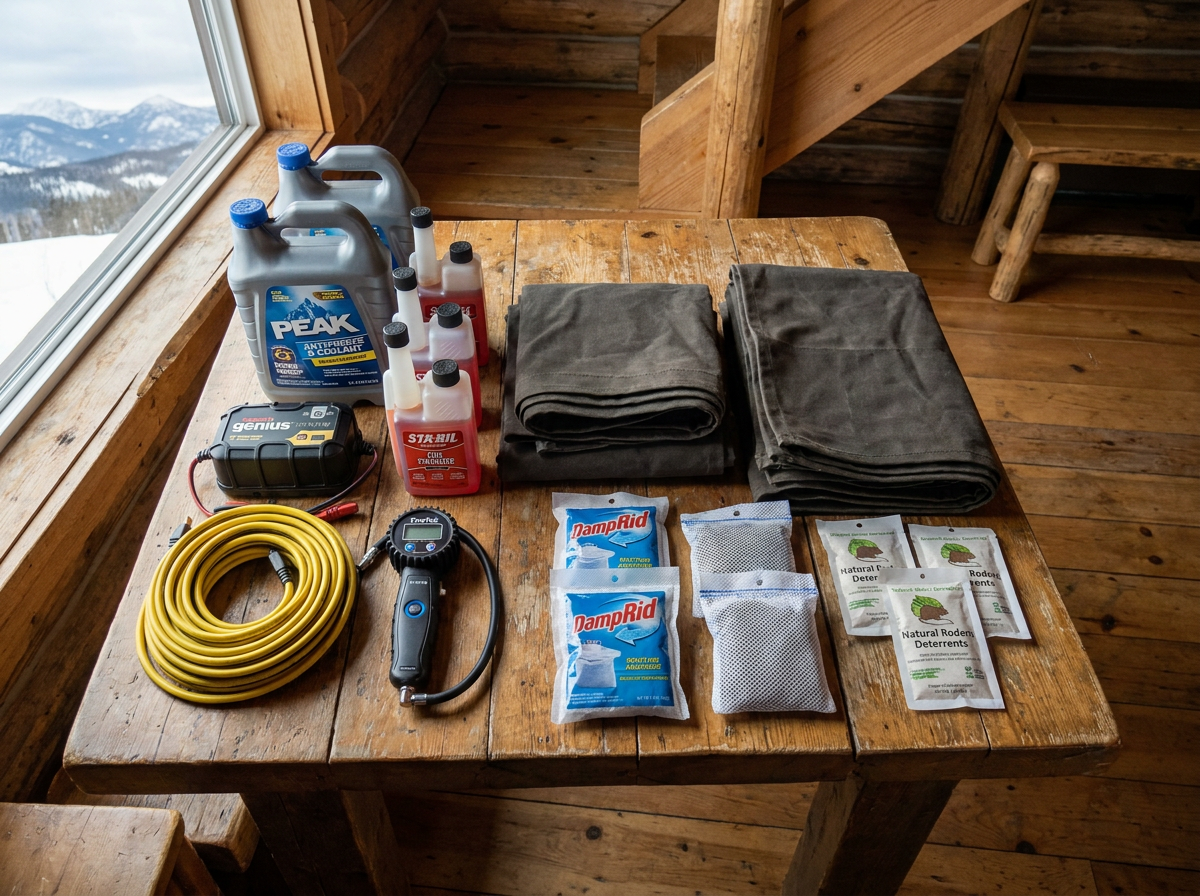
Place deterrents inside the vehicle and in the engine compartment. Peppermint oil sachets, dryer sheets, and commercial rodent repellent sprays provide 30 to 60 days of protection. Ultrasonic deterrent devices cost $20 to $50 and require electrical hookups to operate continuously.
Remove all food, including pet food, birdseed, and pantry items. Clean thoroughly to eliminate crumbs and food residue. A single forgotten granola bar can attract rodents from 100 feet away.
Choosing the Right Storage Option
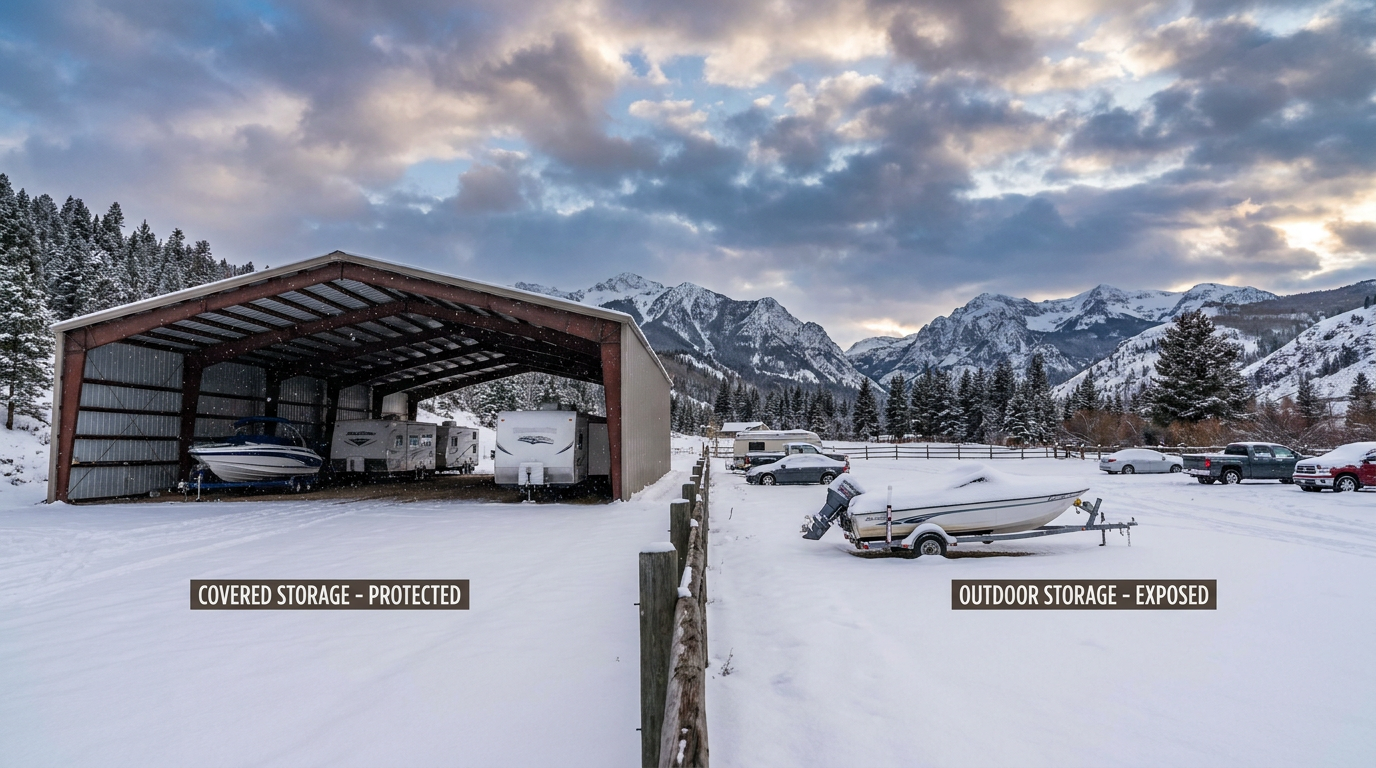
Storage facility selection significantly impacts long-term vehicle condition. Colorado's extreme weather makes covered storage particularly valuable compared to open-air alternatives.
| Storage Type | Monthly Cost Range | Protection Level | Best For |
|---|---|---|---|
| Open Outdoor | $50 to $150 | Minimal; security only | Short-term, utility trailers |
| Covered Canopy | $150 to $460 | High; blocks snow, hail, UV | RVs, boats, seasonal vehicles |
| Enclosed Indoor | $300 to $800 | Maximum; full environmental control | Collectibles, vintage vehicles |
| Climate-Controlled | $400 to $1,200 | Premium; temperature and humidity regulated | High-value classics, exotic cars |
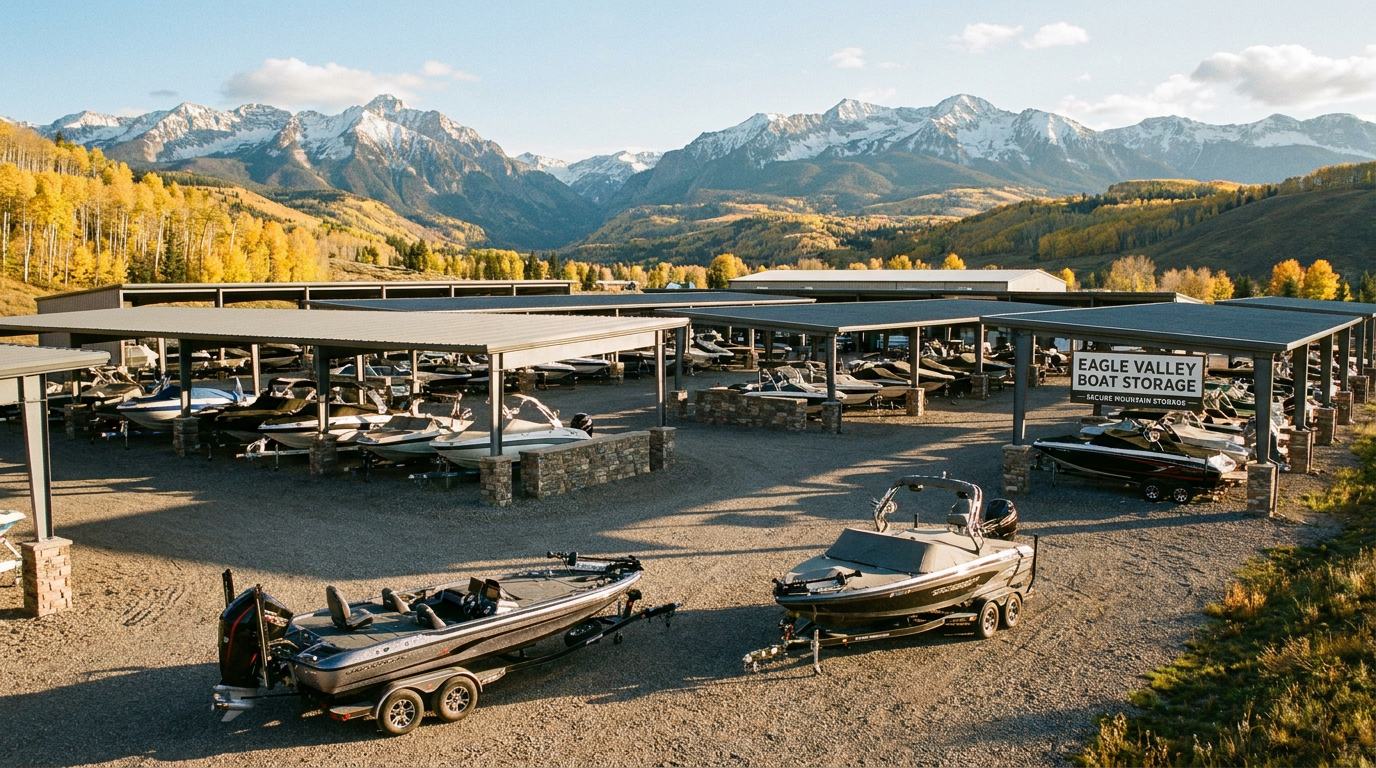
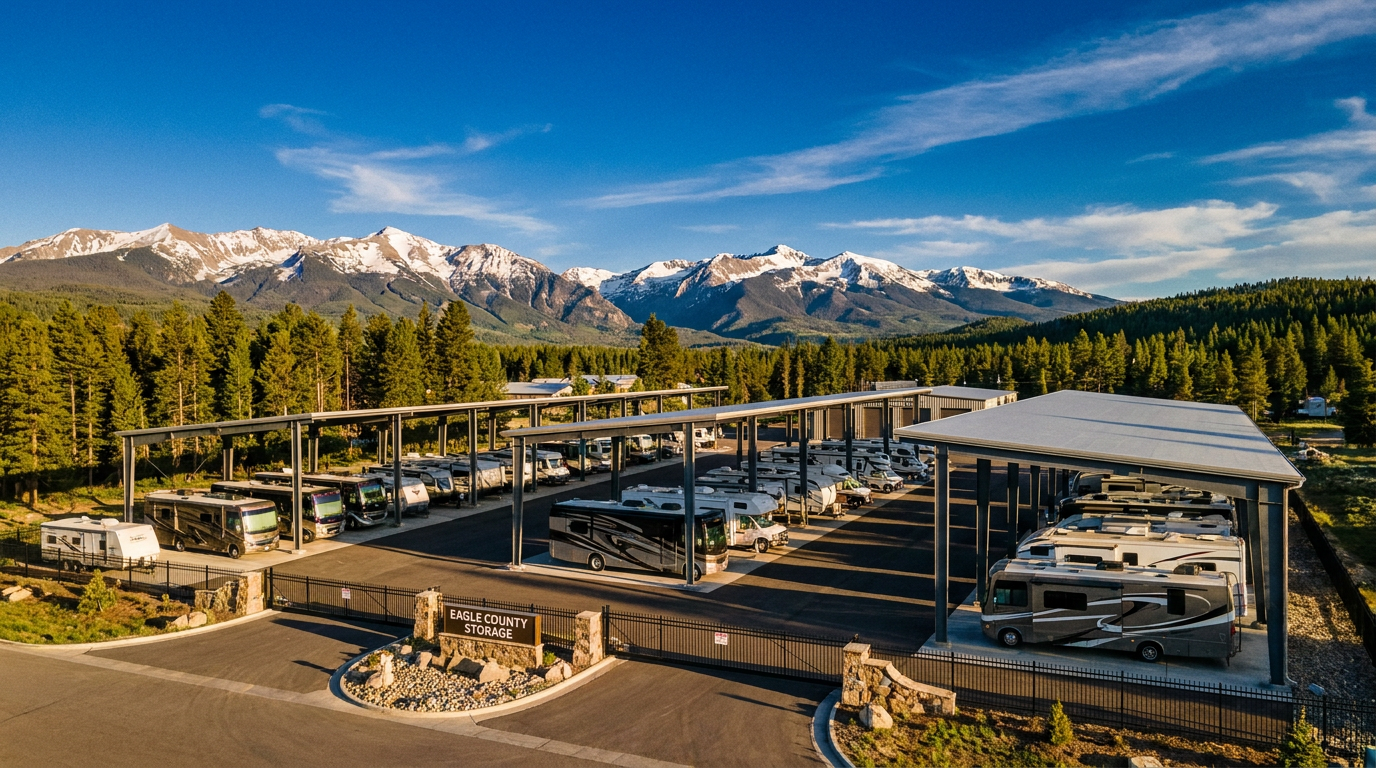
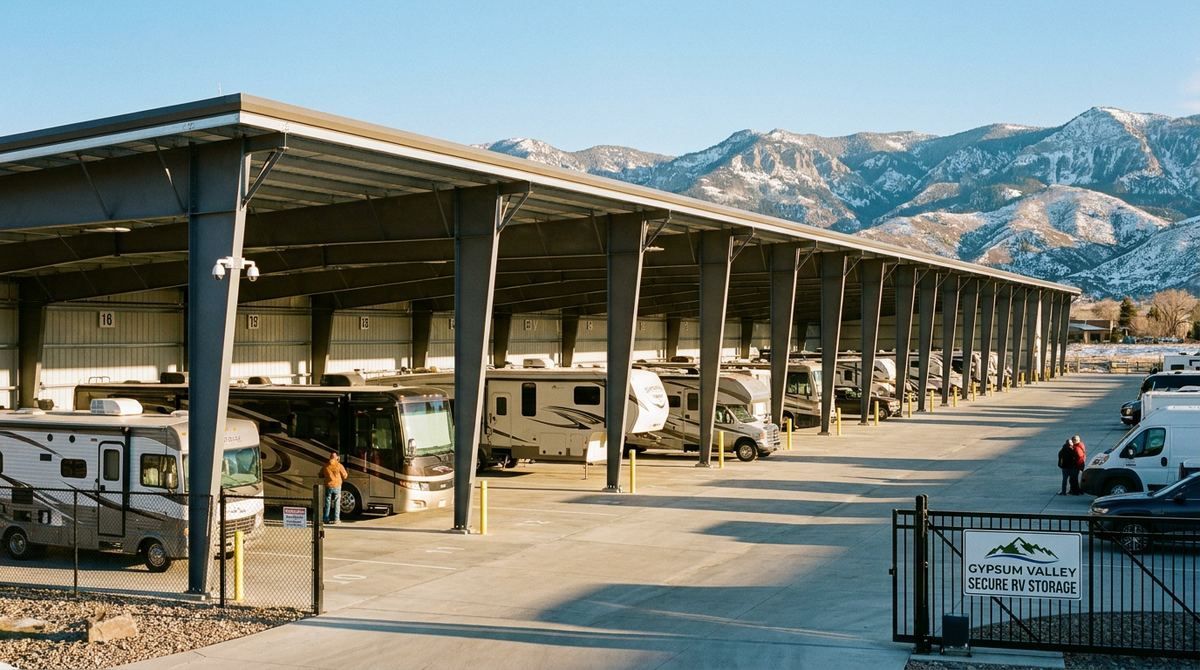
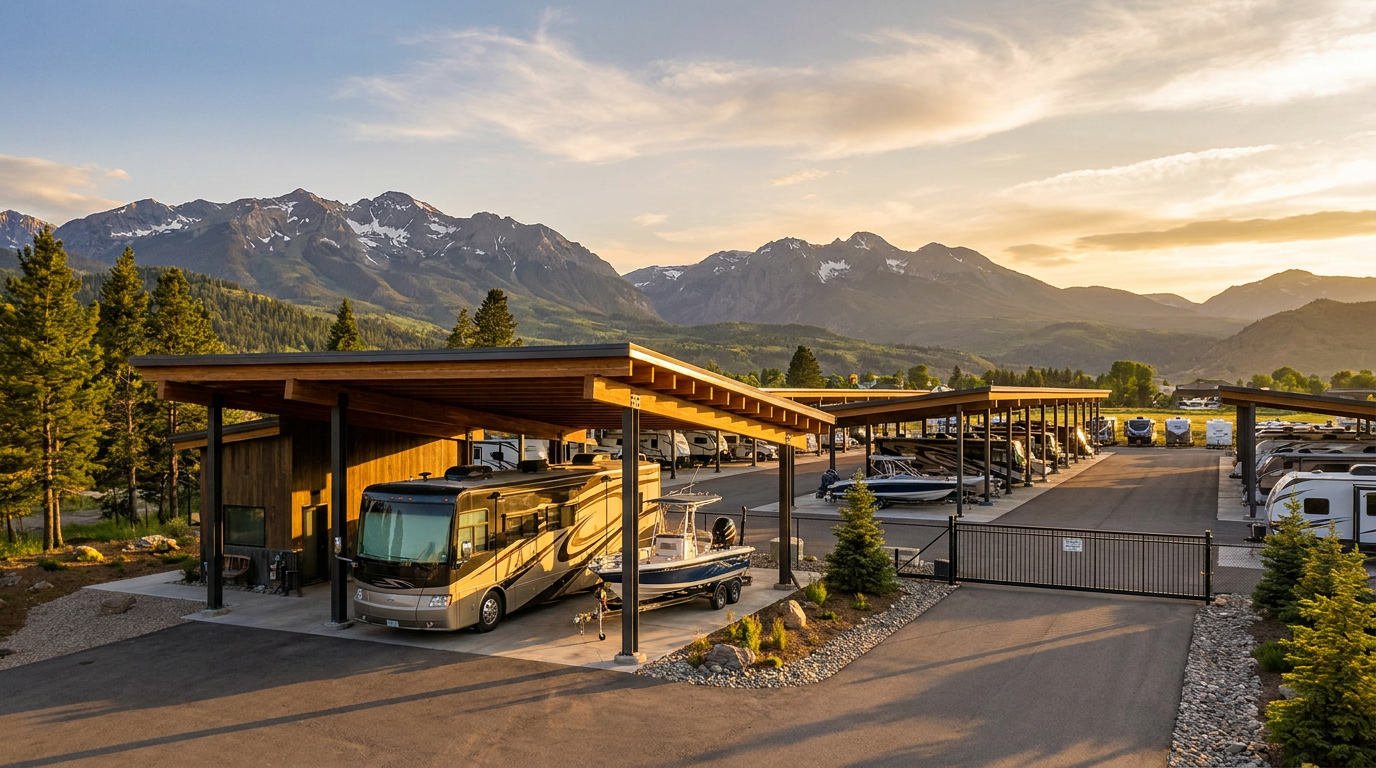
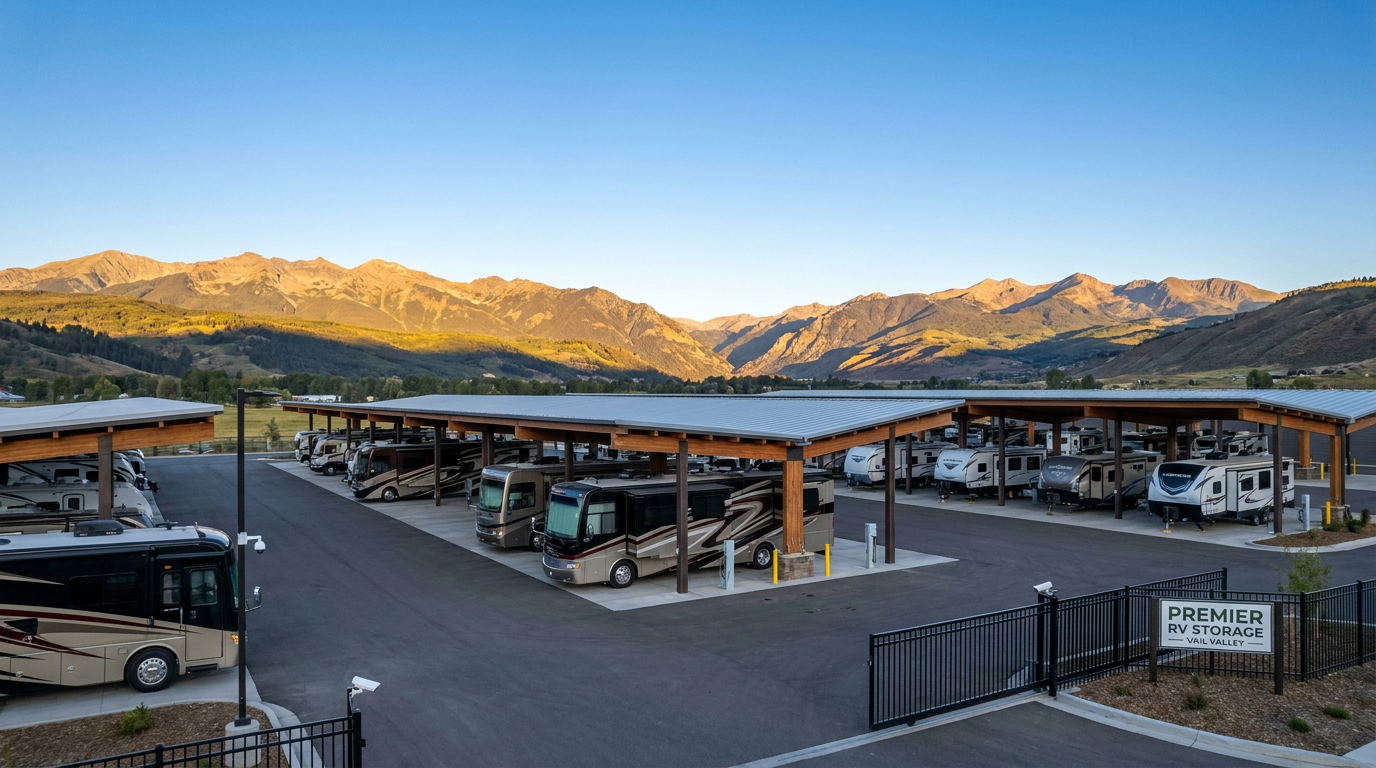
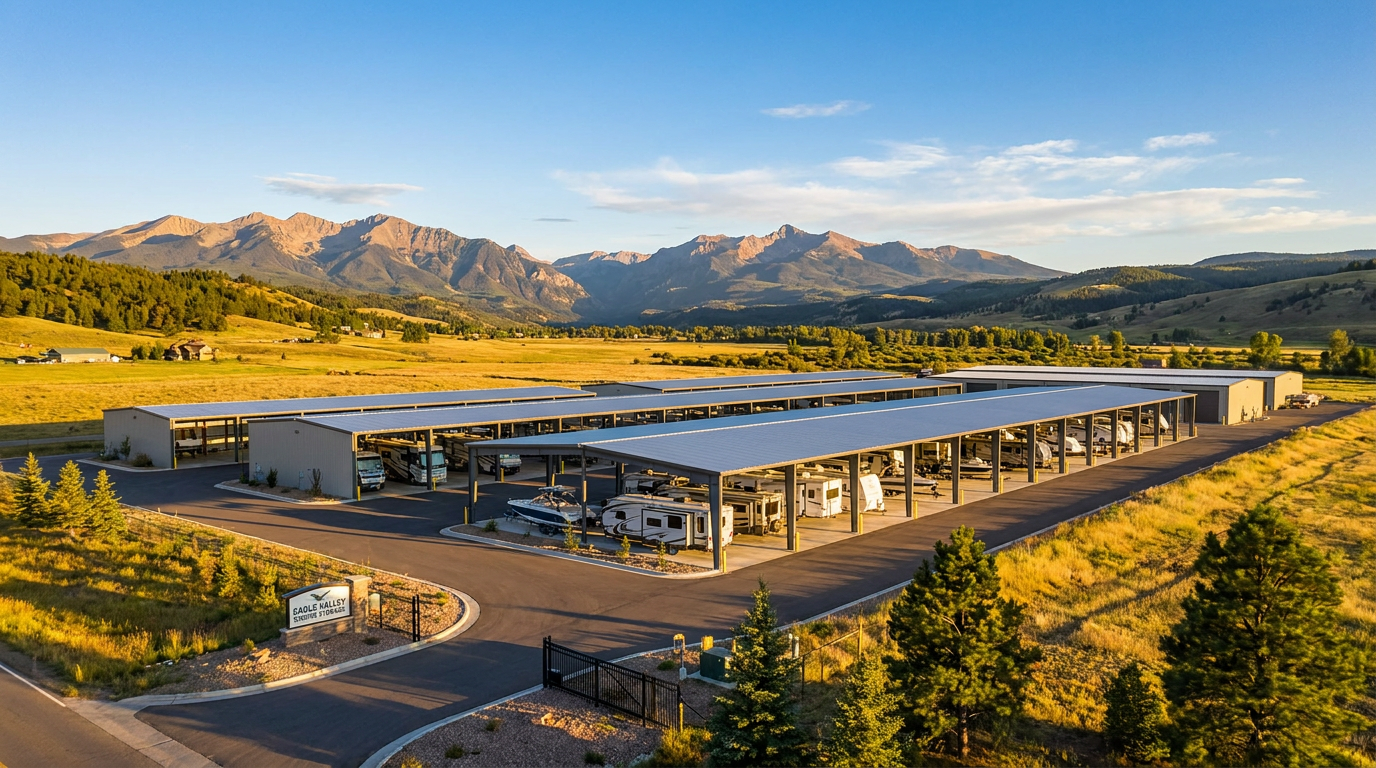
Heavy-duty steel canopy storage rated for 90+ pounds per square foot snow loads provides the best value for most Colorado mountain owners. This protection level prevents roof damage during heavy snowfall while eliminating hail exposure during Colorado's 60+ annual hail days.
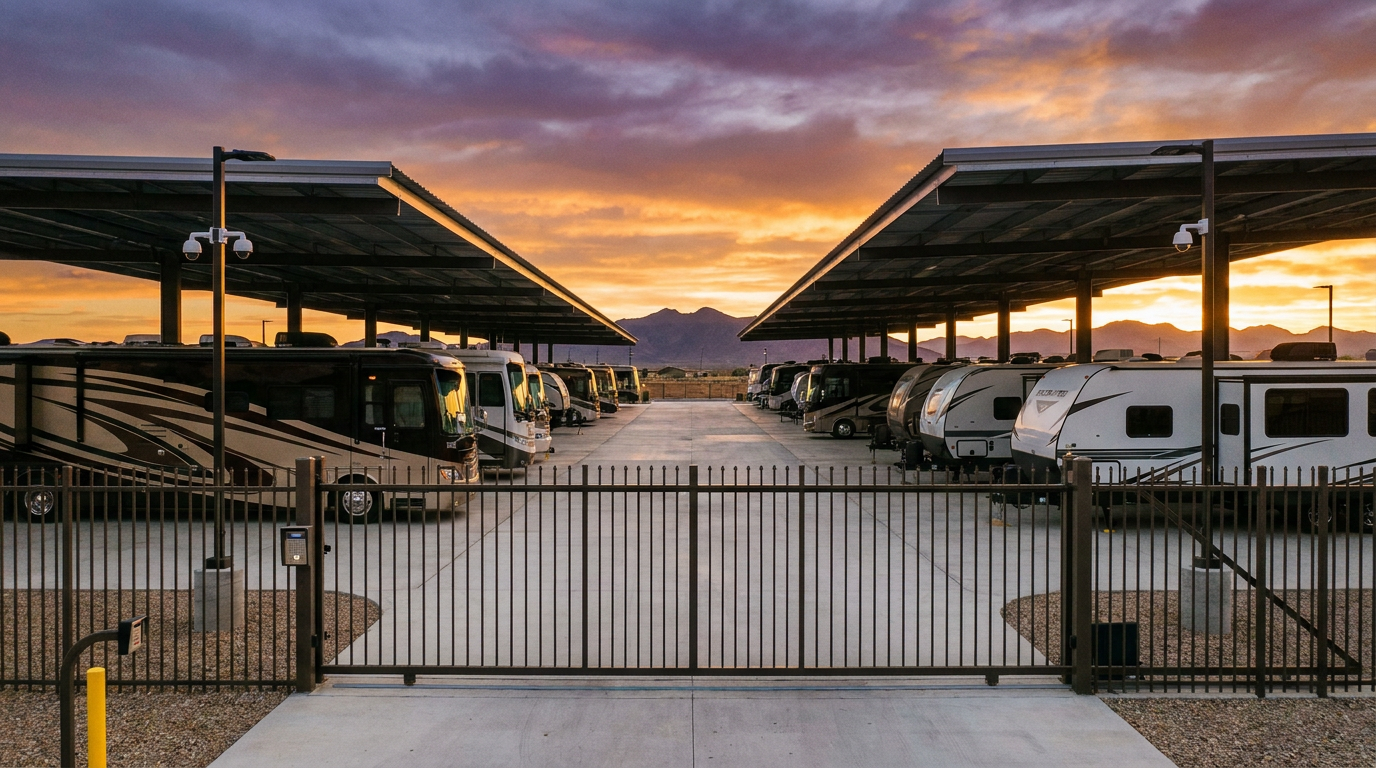
Security features matter for any storage duration. Look for facilities with 24/7 gated access, individualized entry codes, and comprehensive camera coverage. The locally owned and operated Eagle Canopy facility features 16 UHD security cameras and a 9-foot perimeter fence for maximum protection.
Month-by-Month Storage Maintenance Schedule
Even properly prepared vehicles require periodic attention during storage. This schedule prevents small issues from becoming expensive repairs.
Monthly Tasks (15 to 30 Minutes)
Check battery voltage if not on continuous charge. Inspect for rodent activity including droppings, nesting material, or chew marks. Verify tire pressure has not dropped below 80% of the pre-storage inflation. Look for any new leaks or moisture intrusion.
Quarterly Tasks (1 to 2 Hours)
Start the engine and run for 15 to 20 minutes if the vehicle is accessible and temperatures are above 20 degrees Fahrenheit. This circulates oil and prevents seal dry-out. Run the generator under light load for 30 minutes. Check all fluid levels and top off as needed.
Inspect the roof and seams after heavy snow events. Snow accumulation beyond the rated capacity can cause structural damage even on covered vehicles if snow drifts against the sides.
Spring De-Winterization Checklist
Proper spring preparation takes 3 to 5 hours and ensures safe operation for the upcoming season. Rushing this process leads to preventable breakdowns and safety issues.
Flush the RV water system with fresh water for 10 to 15 minutes to remove all antifreeze residue. Sanitize the fresh water tank with a bleach solution (1/4 cup per 15 gallons) and flush again. Check all plumbing connections for leaks under pressure.
Inspect all seals and gaskets that may have dried or cracked during storage. Replace any that show deterioration. Test all appliances, lights, and systems before your first trip. For comprehensive spring preparation, RV de-winterization services near Vail ensure nothing is overlooked.
Have questions about sizing your storage space or the rental process? The frequently asked questions page covers everything from choosing the right space dimensions to setting up convenient autopay.
Frequently Asked Questions
Can you leave a car in storage for a year?
Yes, vehicles can remain in storage for 12 months or longer with proper preparation. The key requirements are fuel stabilizer rated for 24 months, continuous battery maintenance, and periodic inspection every 30 to 60 days. Covered storage significantly reduces maintenance requirements compared to outdoor exposure.
How much does it cost to store a car in a climate-controlled storage unit?
Climate-controlled vehicle storage in Colorado ranges from $400 to $1,200 per month depending on vehicle size and location. Covered canopy storage with electric hookups offers similar protection from precipitation and UV at $150 to $460 per month, making it the preferred choice for most RV and boat owners.
How do you prepare a vehicle for long-term storage?
Long-term vehicle storage preparation includes changing oil, adding fuel stabilizer to a full tank, maintaining battery charge, inflating tires to maximum pressure, sealing all openings against rodents, and removing all food items. For RVs and boats, add complete water system winterization with antifreeze rated to minus 50 degrees Fahrenheit.
Is it allowed to keep vehicles in storage units?
Standard enclosed storage units typically prohibit vehicle storage due to ventilation and fire code requirements. Dedicated vehicle storage facilities, outdoor lots, and covered canopy storage are designed specifically for cars, RVs, boats, and trailers with appropriate access, ventilation, and safety features.
|