How to Prepare Your RV for Storage in Eagle County, CO |
| HOW TO PREPARE YOUR RV FOR STORAGE IN EAGLE COUNTY
⏱ 13 min read ·
📄 #2,414 words
Complete RV storage prep guide for Eagle County. Step-by-step winterization, battery care, pest prevention, and what to do before storing at 6,500+ feet elevation.
|
P reparing your RV for storage in Eagle County requires winterizing the plumbing system, maintaining the battery with a trickle charger, protecting against rodents, and choosing covered storage to shield against Colorado's 90+ lb/sq ft snow loads, intense UV radiation at 6,500 feet, and frequent hail storms. The entire process takes 4 to 8 hours and costs between $150 and $450 depending on whether you DIY or hire a professional.
| Key Points: | |
|---|---|
| • | Winterize plumbing when temperatures drop below 32°F (typically October in Eagle County) |
| • | Use a trickle charger at 1-2 amps to maintain battery health during storage |
| • | Covered storage reduces UV damage by 85% compared to open-air parking at high altitude |
| • | Professional winterization costs $150 to $300; DIY costs $50 to $100 in materials |
| • | Empty all holding tanks at the Edwards dump station before storage |
Why Eagle County Demands Special RV Storage Preparation
Eagle County's mountain climate creates storage challenges that coastal or low-elevation RV owners never face. According to the KOA Camping Blog's storage guide, standard winterization procedures must be modified for high-altitude conditions. At 6,500 feet elevation in Gypsum, Colorado, UV radiation is approximately 25% more intense than at sea level, accelerating rubber seal degradation and exterior paint oxidation.
Winter temperatures in the Vail Valley regularly drop to minus 10°F, while summer afternoons can reach 90°F. This 100-degree temperature swing stresses every component of your RV. The Rocky Mountain region also experiences over 50 hail events annually, with some storms producing golf ball-sized hail capable of totaling an unprotected vehicle.
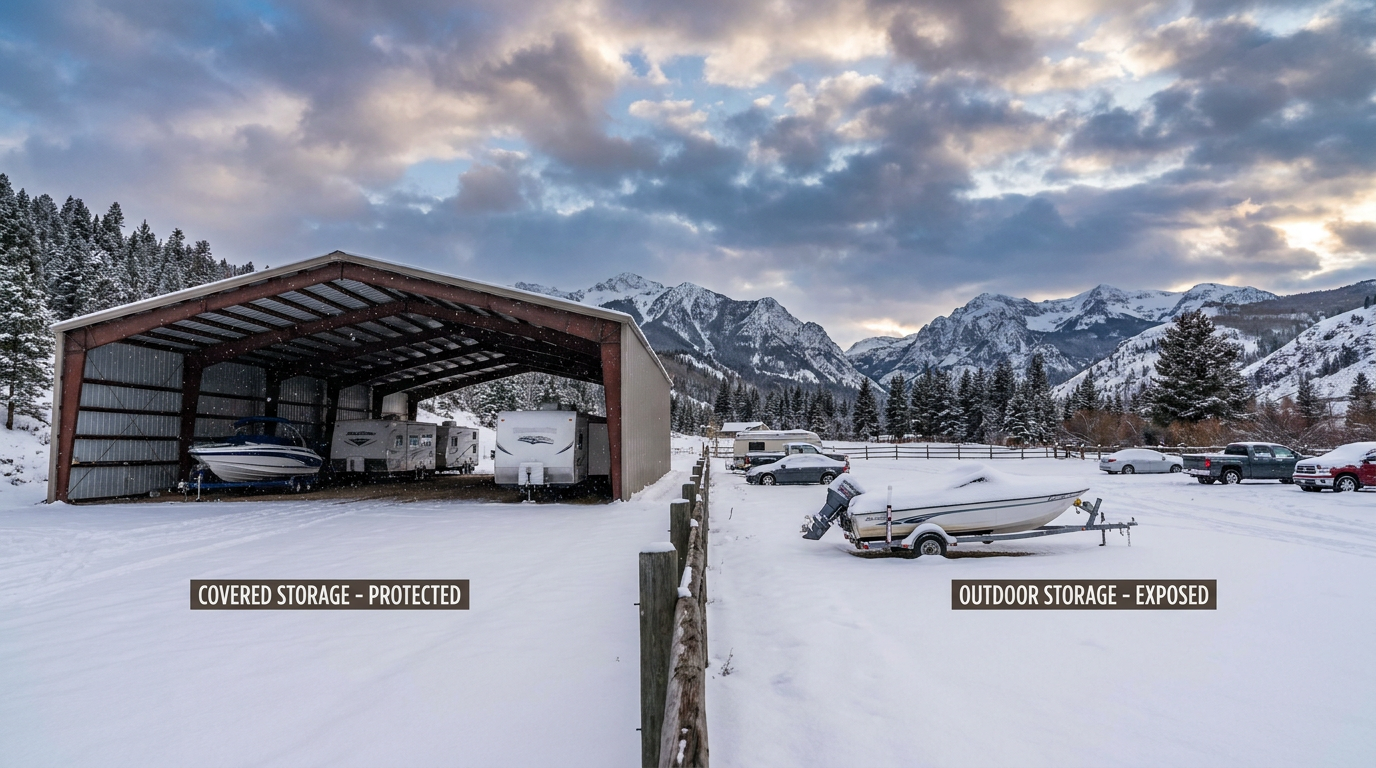
Snow loads present another critical concern. The International Building Code requires structures in Eagle County to support 90+ pounds per square foot of snow load. An uncovered RV roof, designed for 10 to 15 pounds per square foot, can collapse under accumulated snow if not properly cleared or protected by covered RV storage in Colorado.
Complete RV Storage Preparation Checklist for Eagle County
The following checklist covers every step required to safely store your RV in Colorado's mountain climate. Complete these tasks in order, allowing 4 to 8 hours total depending on your RV's size and systems.
Step 1: Clean the Interior and Exterior Thoroughly
Wash the exterior using RV-specific soap (avoid dish detergent, which strips wax). Apply UV-protectant wax rated for high-altitude conditions. Products from Meguiar's, 303 Aerospace Protectant, or Protect All are formulated for intense sun exposure. This step takes 2 to 3 hours for a 30-foot Class A motorhome.
Inside, remove all food items, including canned goods that can freeze and burst. Vacuum carpets and wipe down surfaces with an antibacterial cleaner. Leave cabinet doors and the refrigerator door open to promote air circulation and prevent mold growth. According to Grove RV's mold prevention guide, moisture is the primary cause of interior damage during storage.
Step 2: Drain and Winterize the Plumbing System
Plumbing winterization is mandatory in Eagle County. Water freezes at 32°F, and frozen pipes crack, causing damage that costs $500 to $3,000 to repair. You have two winterization methods to choose from.
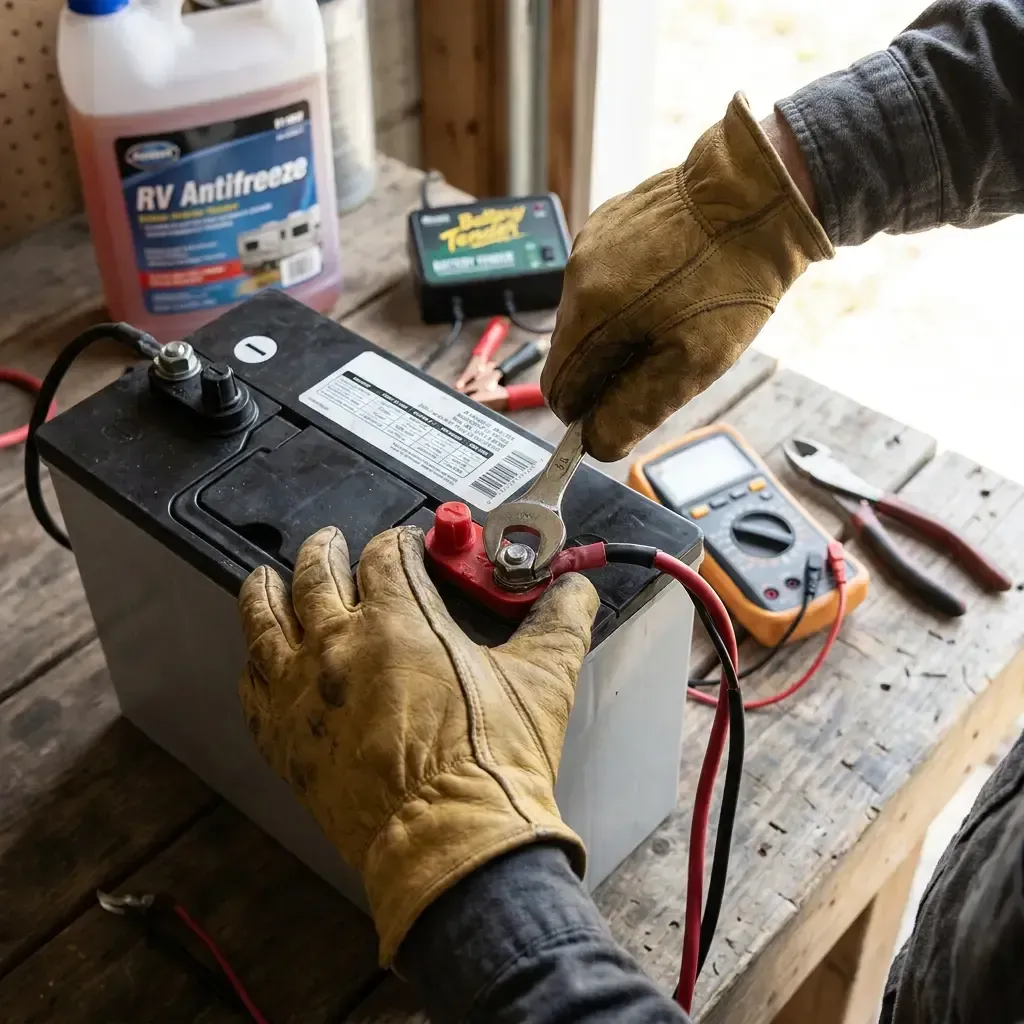
The antifreeze method involves pumping non-toxic RV antifreeze (propylene glycol, not automotive antifreeze) through all water lines. You will need 2 to 3 gallons at $5 to $8 per gallon. This method is preferred for storage lasting longer than 30 days.
The compressed air method uses an air compressor to blow water from the lines. Set the compressor to 30 to 40 PSI maximum to avoid damaging fittings. This method works for shorter storage periods in moderately cold conditions but is not recommended for Eagle County winters.
For both methods, drain the water heater (wait until it cools), open all faucets, flush the toilet, and bypass the water heater before adding antifreeze. If you prefer professional service, RV winterization services in the Vail Valley typically cost $150 to $300 and include a multi-point inspection.
Step 3: Empty and Clean All Holding Tanks
Never store your RV with waste in the holding tanks. Residual waste causes permanent odor absorption into tank walls, sensor damage, and valve seal deterioration. The Edwards Dump Station, located at the Edwards Wastewater Treatment Facility, offers free dumping for Eagle County residents.
After emptying, add tank treatment and 2 to 3 gallons of water to each tank. Run the mixture through by driving to the storage facility, then drain again. This double-flush method removes residue that single dumping misses. Refer to our guide to RV dump stations near Gypsum for complete location details and hours.
Step 4: Protect and Maintain the Battery System
RV batteries lose 10% of their charge per month when disconnected, and a fully discharged lead-acid battery can freeze at 20°F (a charged battery freezes at minus 75°F). In Eagle County's winters, an uncharged battery will be destroyed by January.
The optimal solution is connecting to a trickle charger (also called a battery maintainer) that delivers 1 to 2 amps continuously. Storage facilities with electric hookups, like Eagle Canopy RV Storage, allow you to maintain battery health throughout winter for approximately $20 per month in electricity costs.
If electric hookups are unavailable, remove the battery and store it indoors at 50 to 60°F. Check the charge monthly and top off when it drops below 80%. Clean terminals with a baking soda solution before storage and apply dielectric grease to prevent corrosion.
Step 5: Prepare the Engine and Generator
For motorhomes, change the oil and filter before storage. Used oil contains acids that corrode engine components over time. Fill the fuel tank to 95% capacity (leaving room for expansion) and add fuel stabilizer at the manufacturer's recommended ratio, typically 1 ounce per 2.5 gallons.
Run the engine for 10 to 15 minutes to circulate stabilized fuel through the entire system. Repeat this process for the generator. According to Allstate's RV storage recommendations, unstabilized fuel degrades within 30 days, causing carburetor and fuel injector damage.
Check antifreeze concentration in the engine cooling system using a refractometer or test strips. Eagle County requires protection to minus 30°F minimum. Top off with a 50/50 coolant mixture if needed.
Step 6: Protect Tires and Suspension
Inflate tires to the maximum PSI listed on the sidewall (not the door placard) before storage. Tires lose 1 to 2 PSI per month, and underinflated tires develop flat spots within 30 days of stationary storage. On paved surfaces like asphalt, flat spotting is reduced compared to gravel or dirt.
UV radiation at high altitude degrades tire rubber faster than at sea level. Cover tires with UV-blocking covers or store under a canopy structure. The Rubber Manufacturers Association reports that uncovered tires in high-UV environments lose 25% of their service life compared to protected tires.
If storing for longer than 6 months, consider using tire cradles or moving the RV 12 inches monthly to redistribute weight and prevent permanent flat spots.
Step 7: Seal Against Pests and Rodents
Mice and squirrels cause more RV damage in Colorado than any other factor except weather. A single mouse can chew through wiring harnesses, insulation, and upholstery within days. Rodent damage repairs average $800 to $2,500 depending on severity.
Inspect the exterior for gaps larger than 1/4 inch. Common entry points include:
- Gaps around plumbing and electrical penetrations
- Slide-out seals and weather stripping
- Furnace and water heater vents
- Refrigerator access panels
- Undercarriage openings near axles
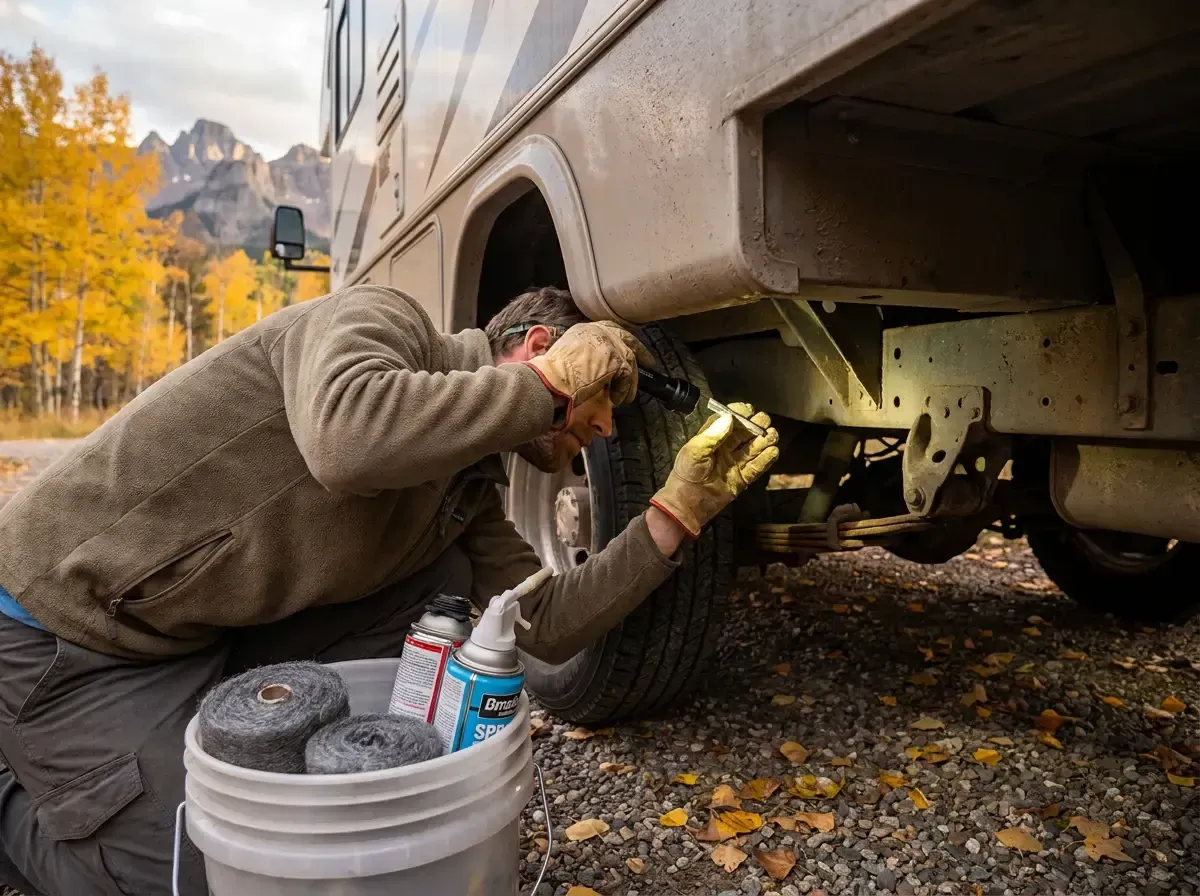
Seal gaps with steel wool (mice cannot chew through it) and silicone caulk. Place peppermint oil-soaked cotton balls in cabinets and storage compartments. Commercial rodent deterrents like Fresh Cab or Grandpa Gus's use natural oils that repel mice for 30 to 90 days per pouch.
Covered vs. Uncovered Storage: A Cost-Benefit Analysis for Eagle County
The decision between covered and uncovered storage significantly impacts both your RV's condition and long-term maintenance costs. The following comparison uses local Eagle County pricing and conditions.
| Factor | Covered Storage | Uncovered Storage |
|---|---|---|
| Monthly Cost (12x35 space) | $320 to $360 | $150 to $200 |
| UV Protection | 85% reduction in UV exposure | No protection |
| Hail Protection | Full protection from direct impact | No protection |
| Snow Load Management | Canopy handles 90+ lbs/sq ft | Owner must clear snow manually |
| Roof Seal Lifespan | 8 to 12 years | 4 to 6 years |
| Annual Exterior Maintenance | $200 to $400 | $600 to $1,200 |
| Electric Hookups Available | Yes (20-amp or 50-amp) | Rarely |
Over a 5-year period, covered storage costs approximately $9,600 more than uncovered storage. However, the reduced maintenance costs, extended component lifespan, and avoided hail damage (a single hail claim averages $3,000 to $8,000) typically offset this difference. For RVs valued over $50,000, covered storage provides measurable return on investment.
Choosing the Right Storage Space Size
Selecting the correct space size prevents overpaying for unused space or struggling to fit your rig. Measure your RV's total length including the hitch, spare tire carrier, and any rear-mounted accessories like bike racks or cargo carriers.
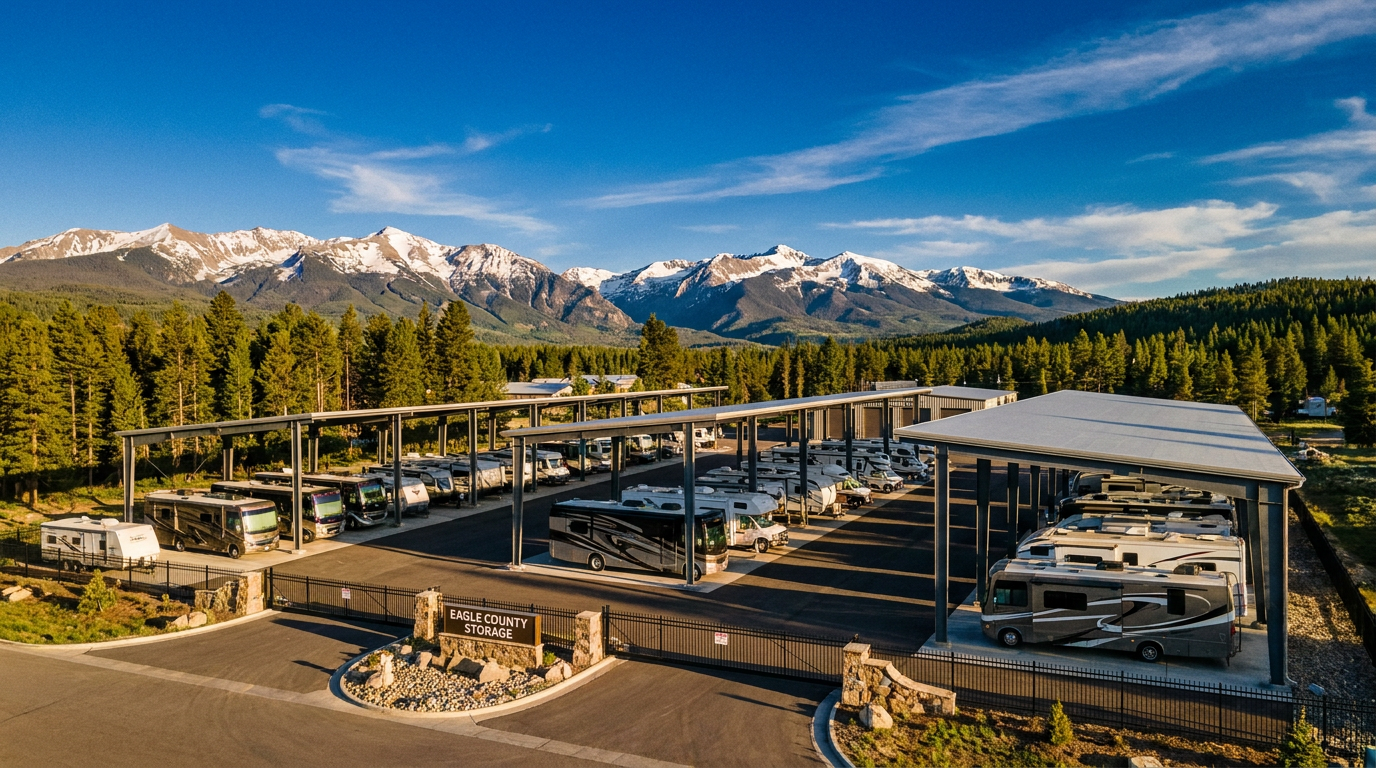
Add 3 to 5 feet to your measured length for maneuvering room. A 32-foot travel trailer needs a 35 to 37-foot space minimum. For reference, Eagle Canopy offers covered spaces ranging from 12x15 feet ($230/month) for motorcycles and small trailers up to 12x50 feet ($460/month) for Class A motorhomes and large fifth wheels. See the FAQ page for detailed sizing guidance.
Security Features to Prioritize in Eagle County Storage Facilities
RV theft and break-ins occur throughout Colorado, with rural storage facilities being particularly vulnerable. The National Insurance Crime Bureau reports that RV thefts increased 12% between 2022 and 2024 in mountain states.
Essential security features include:
- Perimeter fencing at least 6 feet tall with barbed wire or anti-climb features
- Individual gate access codes (not shared codes) with entry logging
- 24/7 video surveillance with at least 1080p resolution
- Adequate lighting throughout the facility
- On-site or responsive management
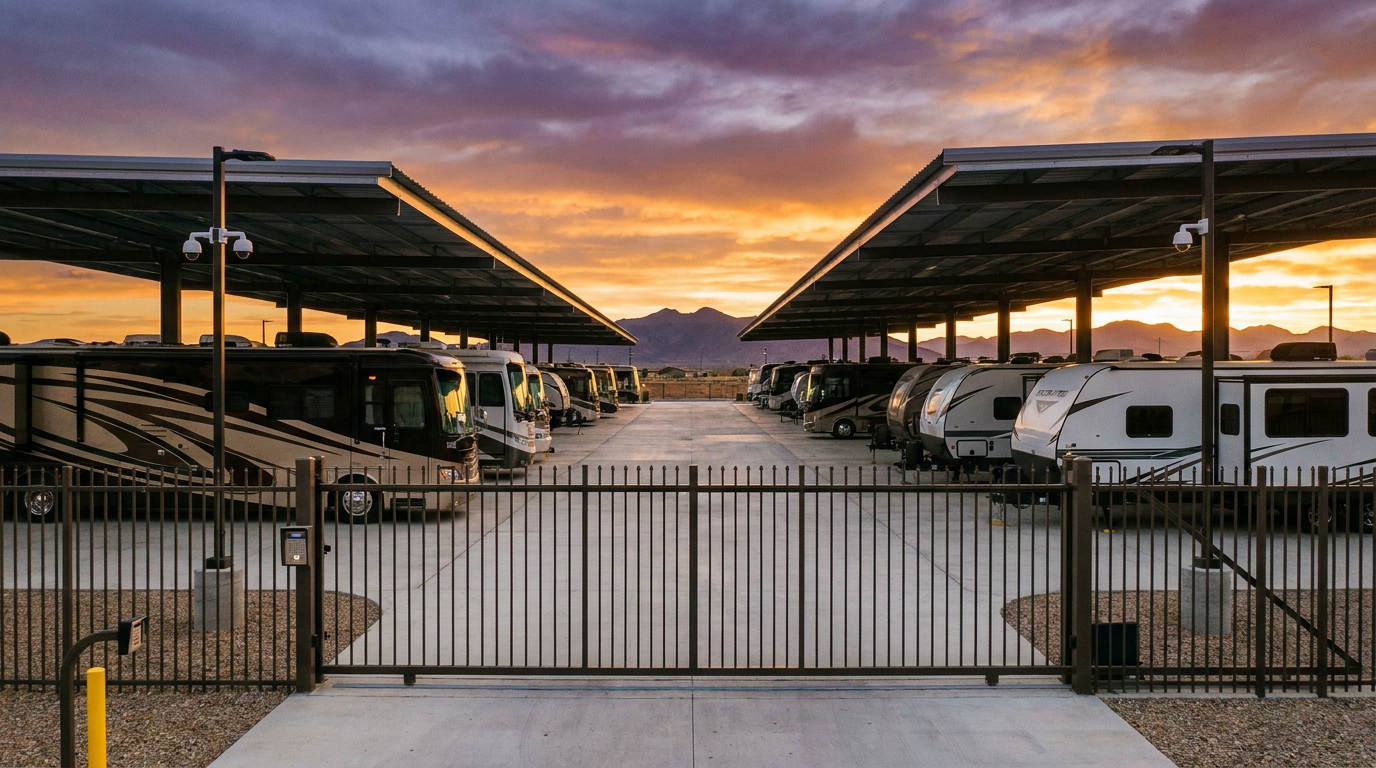
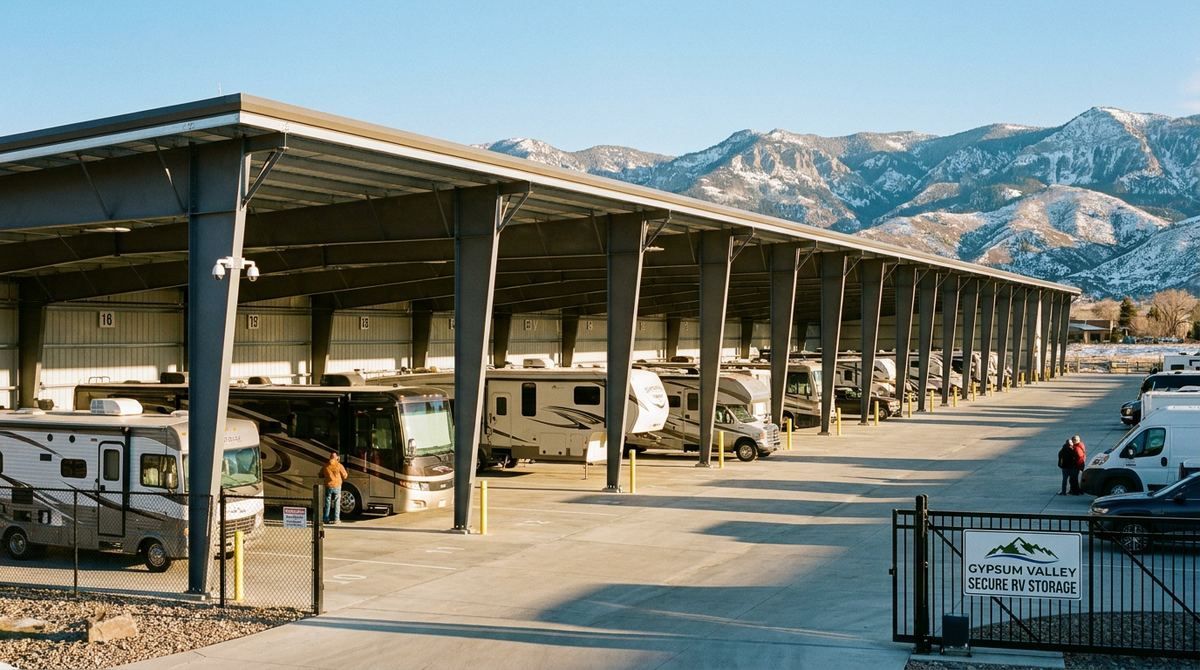
The Eagle Canopy facility in Gypsum features 16 UHD security cameras, a 9-foot perimeter fence with barbed wire, individualized gate codes, and LED flood lighting throughout the property. These features meet or exceed industry standards recommended by the Self Storage Association.
Insurance and Protection Plans for Stored RVs
Your standard RV insurance policy may have reduced coverage during storage periods. Contact your insurance provider (GEICO, Progressive, Good Sam, or National General are common RV insurers) to confirm comprehensive coverage remains active while your RV is stored.
Many storage facilities offer supplemental tenant protection plans covering burglary, fire, water damage, and other perils. These plans typically cost $15 to $30 per month and provide $5,000 to $15,000 in coverage. While not a replacement for RV insurance, tenant protection fills gaps for items stored inside the RV and damage occurring on facility property.
Month-to-Month vs. Long-Term Storage Contracts
Eagle County's seasonal population creates unique storage demand patterns. Ski season (November through April) sees high demand for vehicle storage near Eagle County Regional Airport, while summer brings increased RV activity as owners head to Dillon Reservoir, Tiger Run Resort in Breckenridge, and national parks throughout Colorado.
Month-to-month leases provide flexibility for seasonal RV owners who store during winter but use their RV from May through October. This arrangement avoids paying for unused months but may result in losing your space during high-demand periods.
Long-term contracts (6 to 12 months) often include discounted rates of 5% to 15% and guarantee space availability. However, they require commitment even if your plans change. For most Eagle County RV owners who store 5 to 7 months annually, month-to-month arrangements with a reliable facility offer the best balance of flexibility and security.
Preparing Your RV for Spring After Winter Storage
De-winterization is equally important as winterization. Rushing this process causes damage that negates your careful storage preparation. Plan 2 to 4 hours for spring preparation.
Begin by inspecting the exterior for any damage that occurred during storage. Check roof seams, window seals, and compartment doors. Look for evidence of rodent activity including droppings, chewed materials, or nesting.
Flush the plumbing system by connecting to a water source and running all faucets until water runs clear (no pink antifreeze residue). Sanitize the fresh water system using 1/4 cup of household bleach per 15 gallons of tank capacity. Fill the tank, run the solution through all faucets, let it sit for 4 hours, then drain and flush with fresh water until no bleach odor remains.
Check tire pressure and inspect for cracking or flat spots. Test all appliances, including the refrigerator (allow 24 hours to reach operating temperature on propane), water heater, furnace, and air conditioning. Verify propane system integrity by checking for leaks with soapy water at all connections.
Professional RV de-winterization services near Vail include comprehensive system testing and typically cost $100 to $200, less than winterization due to reduced material costs.
Frequently Asked Questions About RV Storage in Eagle County
When should I winterize my RV in Eagle County?
Winterize your RV when overnight temperatures consistently drop below 32°F, typically mid-October in the Vail Valley. Do not wait for the first hard freeze, as a single night of freezing temperatures can crack pipes and damage the water heater.
Can I store my RV with propane tanks connected?
Most storage facilities allow propane tanks to remain connected but require them to be turned off at the tank valve. Check your facility's specific rules. Leaving a small amount of propane allows you to run the furnace during occasional winter visits to prevent moisture buildup.
How often should I check on my stored RV?
Visit your stored RV at least once per month during winter. Check for roof leaks after heavy snow, verify the battery maintainer is functioning, and look for signs of rodent intrusion. Many issues are easier to address when caught early.
Do I need to remove the RV battery for winter storage?
If your storage space has electric hookups for a trickle charger, you can leave the battery installed. Without electric hookups, remove the battery and store it indoors where temperatures remain above 32°F. A fully discharged battery will freeze and be permanently damaged.
What size storage space do I need for my RV?
Measure your RV's total length including hitch, bumper extensions, and accessories. Add 3 to 5 feet for maneuvering. A 28-foot travel trailer typically needs a 12x35 space, while a 40-foot Class A motorhome requires a 12x45 or 12x50 space. Consult the storage FAQ for detailed recommendations.
|