Eagle RV and Boat Storage Checklist: Covered Parking and Cost Factors |
| EAGLE RV AND BOAT STORAGE CHECKLIST: COVERED PARKING, ACCESS, AND COST FACTORS
⏱ 9 min read ·
📄 #1,731 words
Complete checklist for RV and boat storage covering covered parking options, 24/7 access features, and cost factors for Colorado mountain storage facilities.
|
C hoosing the right RV or boat storage facility requires evaluating three critical factors: covered parking protection, access convenience, and monthly costs. In Colorado's mountain climate, storage rates vary significantly based on space size, covered versus open parking, power availability, and seasonal demand. This checklist covers every factor you need to evaluate before signing a lease.
| Key Points: | |
|---|---|
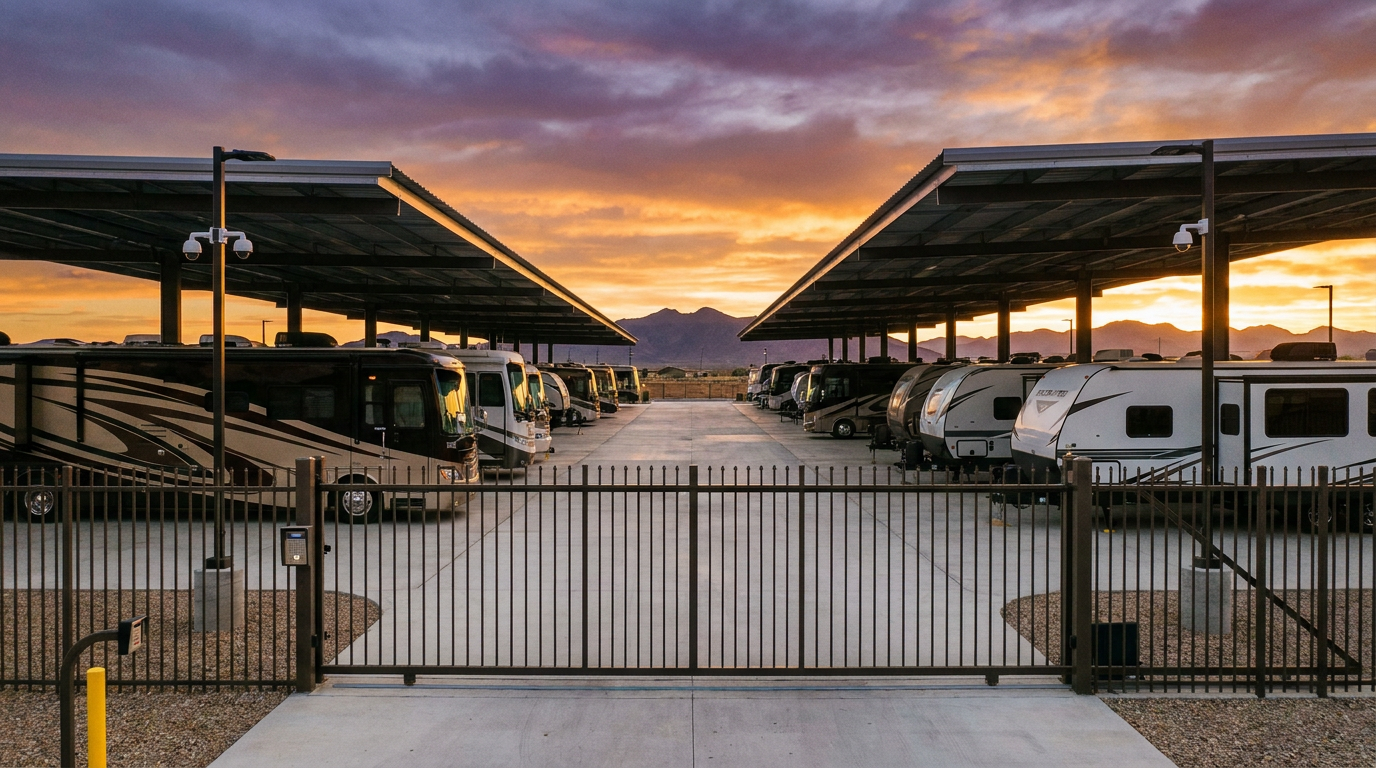
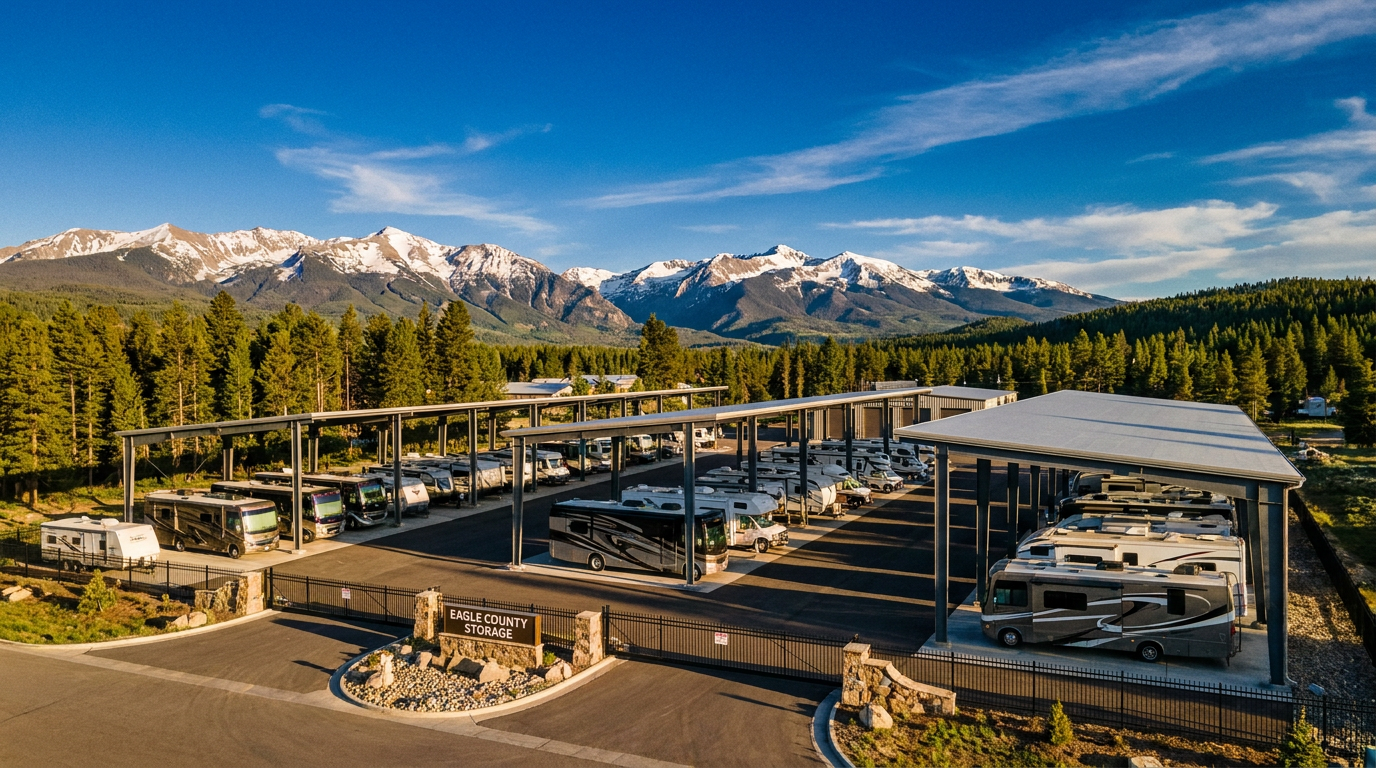
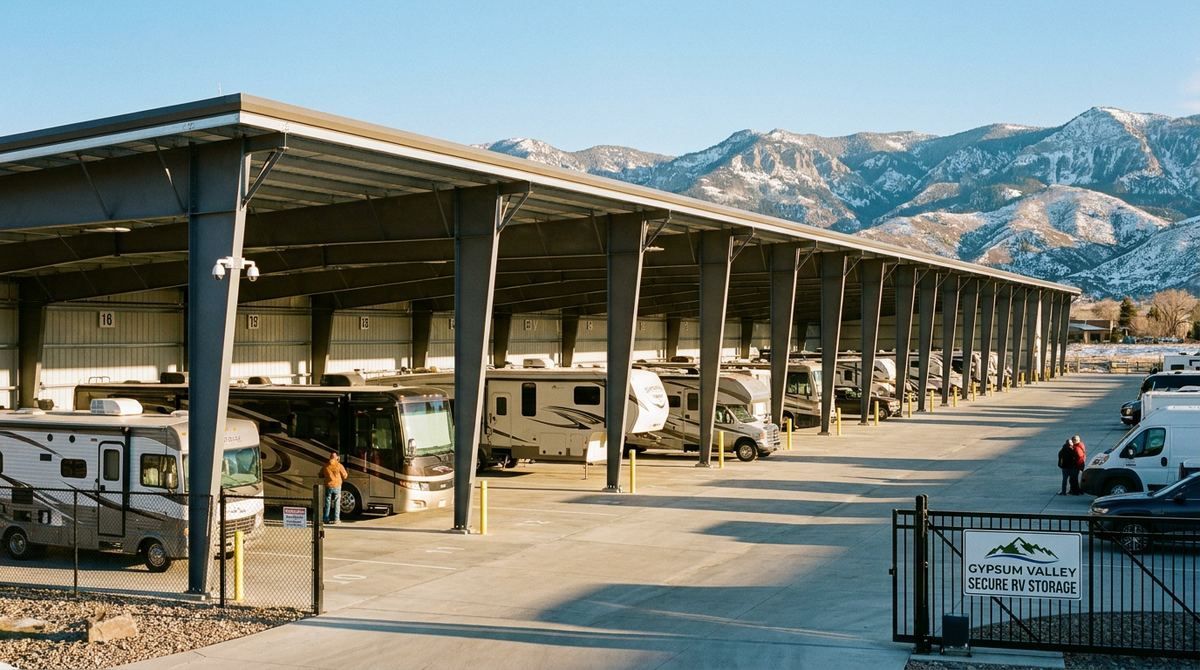
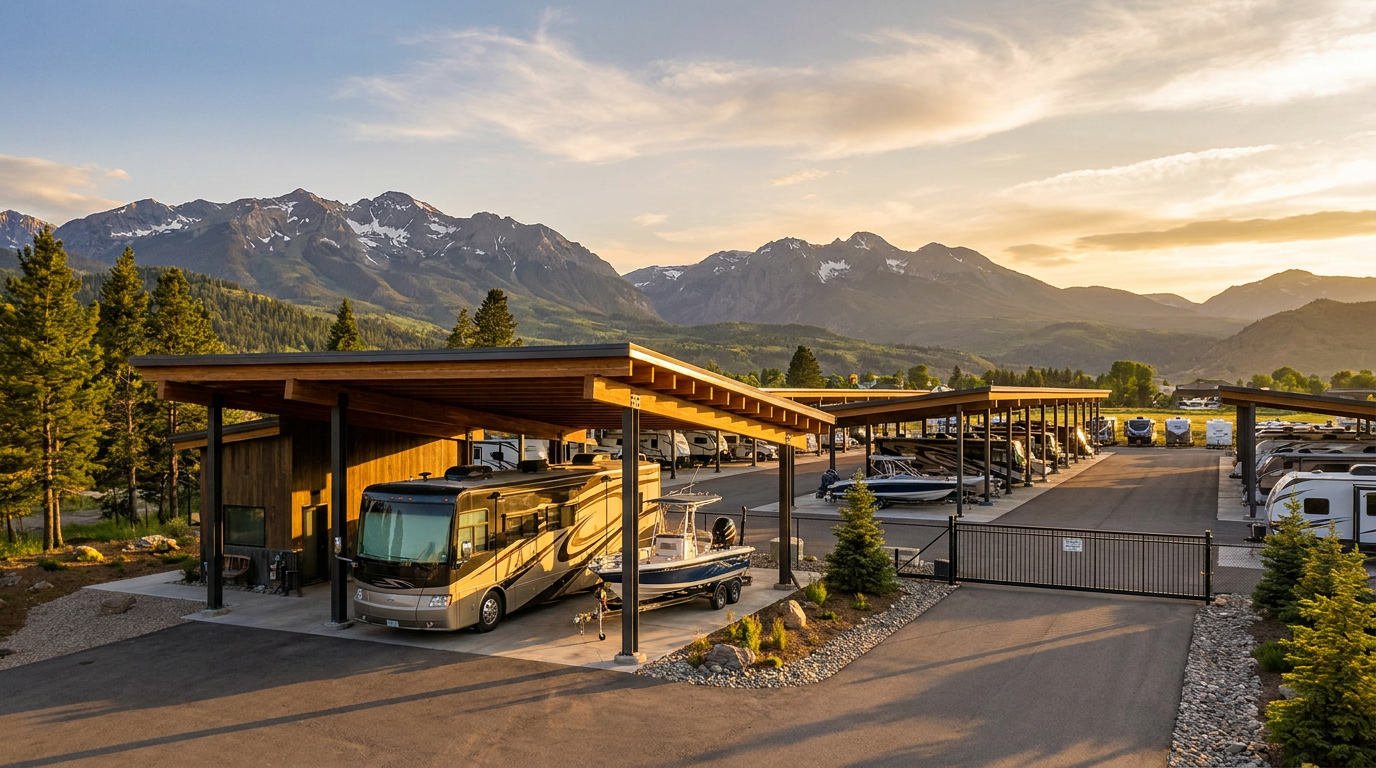
| • | Covered steel canopy storage protects against 90+ lbs/sq ft snow loads, hail, and UV damage at 6,500+ feet elevation |
| • | Monthly costs vary by space size, coverage type, and power availability |
| • | 24/7 gated access with individualized entry codes eliminates scheduling restrictions |
| • | Electric hookups enable trickle charging to prevent battery degradation |
| • | Month-to-month leases provide flexibility for seasonal RV owners |
Covered Parking: Why It Matters in Colorado
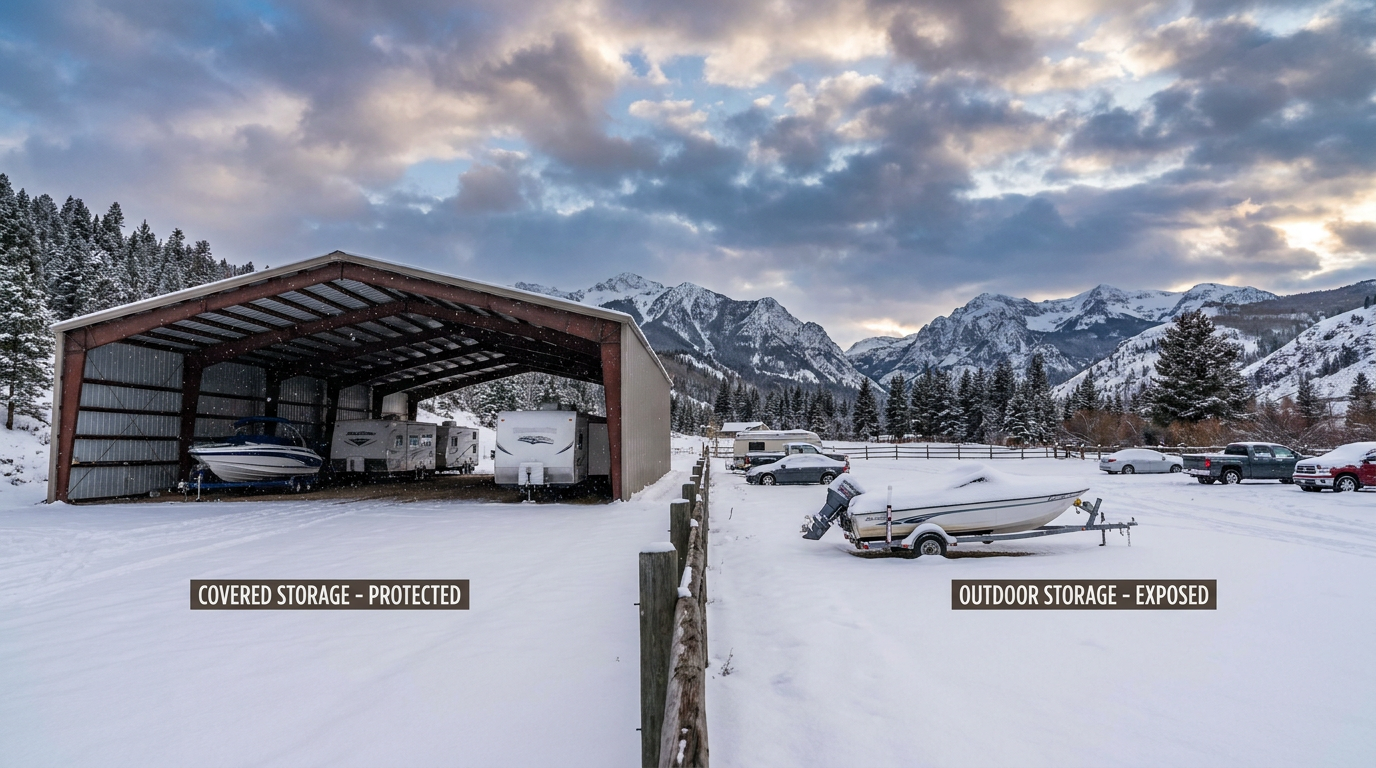
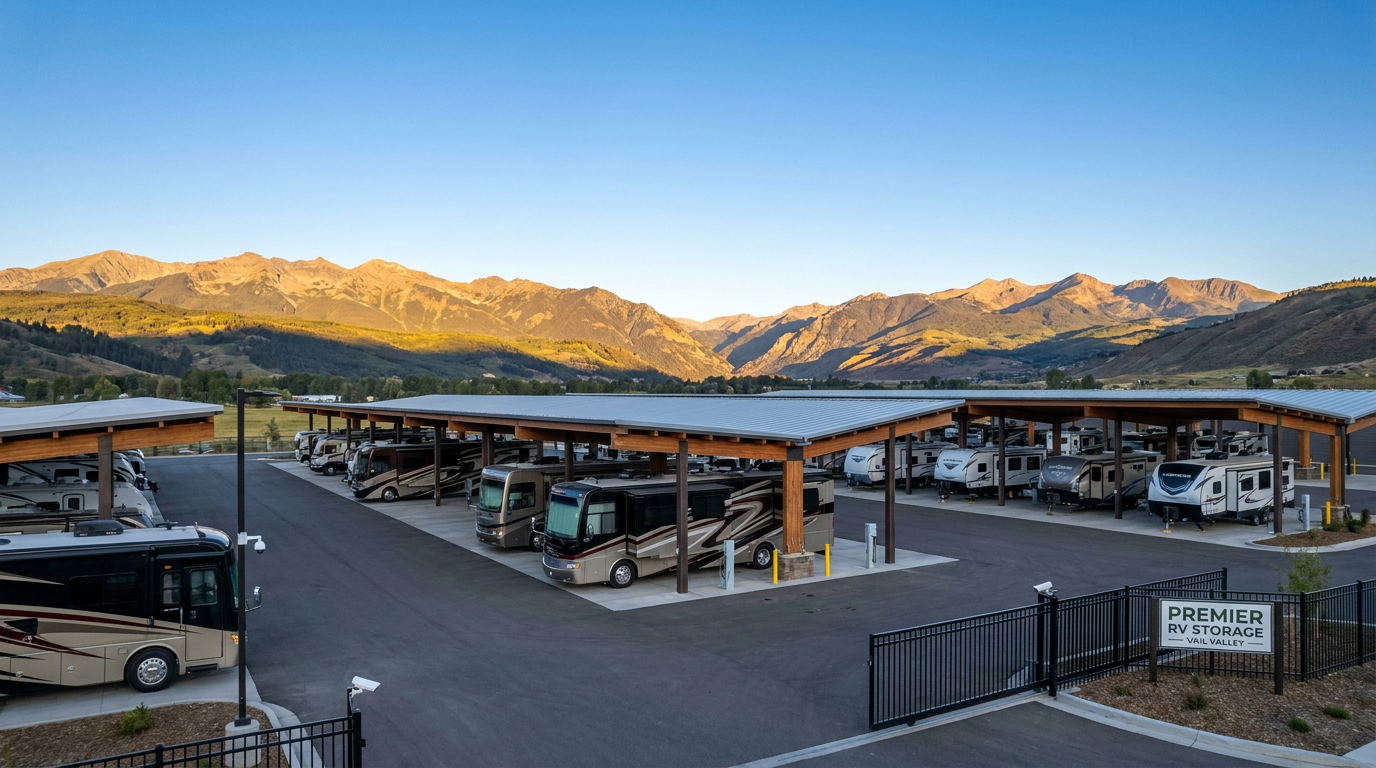
Colorado's mountain weather creates unique storage challenges that uncovered facilities cannot address. According to the National Weather Service, the Vail Valley region experiences average annual snowfall exceeding 150 inches, with individual storms depositing 2 to 3 feet in 24 hours. Heavy-duty steel canopy structures rated for 90+ pounds per square foot prevent roof collapse and eliminate the need for emergency snow removal.
UV radiation at 6,500 feet elevation is 25% more intense than at sea level, according to research from the Environmental Protection Agency. Extended UV exposure causes rubber seals to crack, fiberglass to fade, and decals to peel within 2 to 3 years. Covered parking blocks direct sunlight, extending exterior component lifespan by 5 to 10 years.
Hail damage remains the leading cause of RV insurance claims in Colorado. The Rocky Mountain Insurance Information Association reports that Colorado ranks first nationally for hail damage claims, with average repair costs of $3,000 to $8,000 per incident. Steel canopy coverage eliminates this risk entirely.
Covered vs. Uncovered Storage Comparison
| Factor | Covered Storage | Uncovered Storage |
|---|---|---|
| Snow Protection | Full protection, 90+ lbs/sq ft rated | None; requires manual removal |
| Hail Protection | Complete coverage | No protection |
| UV Damage Prevention | Blocks 100% direct sunlight | Full exposure year-round |
| Monthly Cost | Higher rates for protection benefits | Lower rates but higher damage risk |
| Long-term Value | Prevents thousands in damage risk | Higher maintenance costs |
Access Features Checklist
Access convenience directly impacts how often you use your RV or boat. Facilities with restricted hours (typically 6 AM to 10 PM) create scheduling conflicts for early morning fishing trips or late-night returns from camping. The RV Industry Association reports that 67% of RV owners prefer storage facilities with 24/7 access capabilities.
Evaluate these access features before selecting a facility:
- 24/7 gated entry with individualized access codes (not shared codes)
- Wide drive aisles measuring 30 feet minimum for Class A motorhome maneuvering
- Fully paved asphalt surfaces preventing tire damage and undercarriage scraping
- LED flood lighting throughout the property for nighttime access safety
- Pull-through spaces eliminating difficult backing maneuvers for trailers
- Free WiFi on-site for accessing digital manuals or contacting roadside assistance
Location accessibility matters equally. Facilities near major highways reduce travel time and fuel costs. Eagle Canopy RV Storage in Gypsum, Colorado sits adjacent to I-70 and Highway 6, providing direct access for owners traveling to Vail, Beaver Creek, and Summit County destinations.
Security Features to Verify
RV theft increased 12% nationally between 2022 and 2024, according to the National Insurance Crime Bureau. Boats and trailers remain particularly vulnerable due to their towability. Comprehensive security requires multiple overlapping systems rather than single-point solutions.
Essential security features include:
- UHD security cameras with 16+ camera coverage and 30-day recording retention
- Perimeter fencing at minimum 6 feet height with barbed wire or anti-climb features
- Individualized gate codes that log entry and exit times for each tenant
- On-site management presence during business hours for package acceptance and monitoring
- Motion-activated lighting eliminating dark zones throughout the property
The locally owned and operated facility in Gypsum features 16 UHD security cameras, a 9-foot perimeter fence with barbed wire, and individualized gate access codes that create detailed entry logs. This multi-layered approach deters opportunistic theft while providing documentation for insurance claims if incidents occur.
Cost Factors and Pricing Variables
Storage costs vary based on four primary factors: space dimensions, coverage type, electrical hookup availability, and lease terms. Understanding these variables prevents overpaying for unnecessary features while ensuring adequate protection for your specific vehicle.
Rates are influenced by several key factors:
- Space size: Larger dimensions cost more, with rates scaling based on square footage
- Coverage type: Covered spaces command premium pricing over open parking
- Power availability: Electric hookups add to monthly costs but protect battery systems
- Seasonal demand: Winter storage rates may vary from summer pricing
- Location proximity: Highway access and convenience features affect pricing
For current rates and availability, check the Eagle Canopy RV Storage rates page or call the facility directly. Rates vary by space size, covered versus open parking, power availability, and seasonal demand factors.
Electric Hookup Considerations
Electric hookups enable battery trickle charging, which prevents the sulfation that destroys lead-acid batteries during extended storage. The Battery University research indicates that batteries left discharged for 30+ days lose 20% to 50% of their capacity permanently. Electric service protects hundreds of dollars worth of batteries.
Choose between different amperage options based on your charging needs:
- 20-amp hookups support standard battery maintainers and small appliances
- 50-amp hookups enable converter operation and faster charging for large battery banks
Most RV owners find 20-amp service sufficient for storage purposes. Reserve 50-amp hookups for units with residential refrigerators requiring periodic operation or lithium battery systems with high-capacity chargers.
Lease Terms and Flexibility
Contract structure significantly impacts total cost and convenience. Long-term contracts (6 to 12 months) may offer discounts but create penalties for early termination. Month-to-month leases provide maximum flexibility for seasonal owners who store vehicles only during winter months.
Key lease terms to evaluate:
- Deposit requirements: Some facilities require deposits; others may waive them entirely
- Rate lock guarantees: Protection against mid-lease price increases
- Cancellation notice: Typically 30 days; shorter notice periods offer more flexibility
- Move-in timing: Same-day availability vs. waiting periods
- Payment methods: Autopay discounts, credit card acceptance, ACH options
Facilities offering month-to-month leases provide optimal flexibility for Vail Valley seasonal residents and outdoor enthusiasts who need storage only during specific seasons. Online rental completion with immediate move-in capability eliminates scheduling delays.
Location and Convenience Factors
Storage facility location affects both access convenience and insurance rates. Facilities in flood zones, high-crime areas, or remote locations may increase insurance premiums by 10% to 25%. Proximity to service providers, fuel stations, and dump stations reduces preparation time before trips.
Evaluate location factors including:
- Highway access: Direct routes to I-70, Highway 6, or other major corridors
- Proximity to services: Fuel stations, propane refill, grocery stores within 5 miles
- Dump station access: RV waste disposal facilities within 15-minute drive
- Airport proximity: Relevant for fly-and-drive RV owners
- Service provider access: Mobile RV repair, winterization services available on-site or nearby
The Gypsum, Colorado location near Vail Eagle Airport (EGE) and Costco provides strategic advantages for Eagle County residents. Our guide to RV dump stations near Gypsum details the Edwards Dump Station location and operating hours for pre-storage tank emptying.
Pre-Storage Preparation Checklist
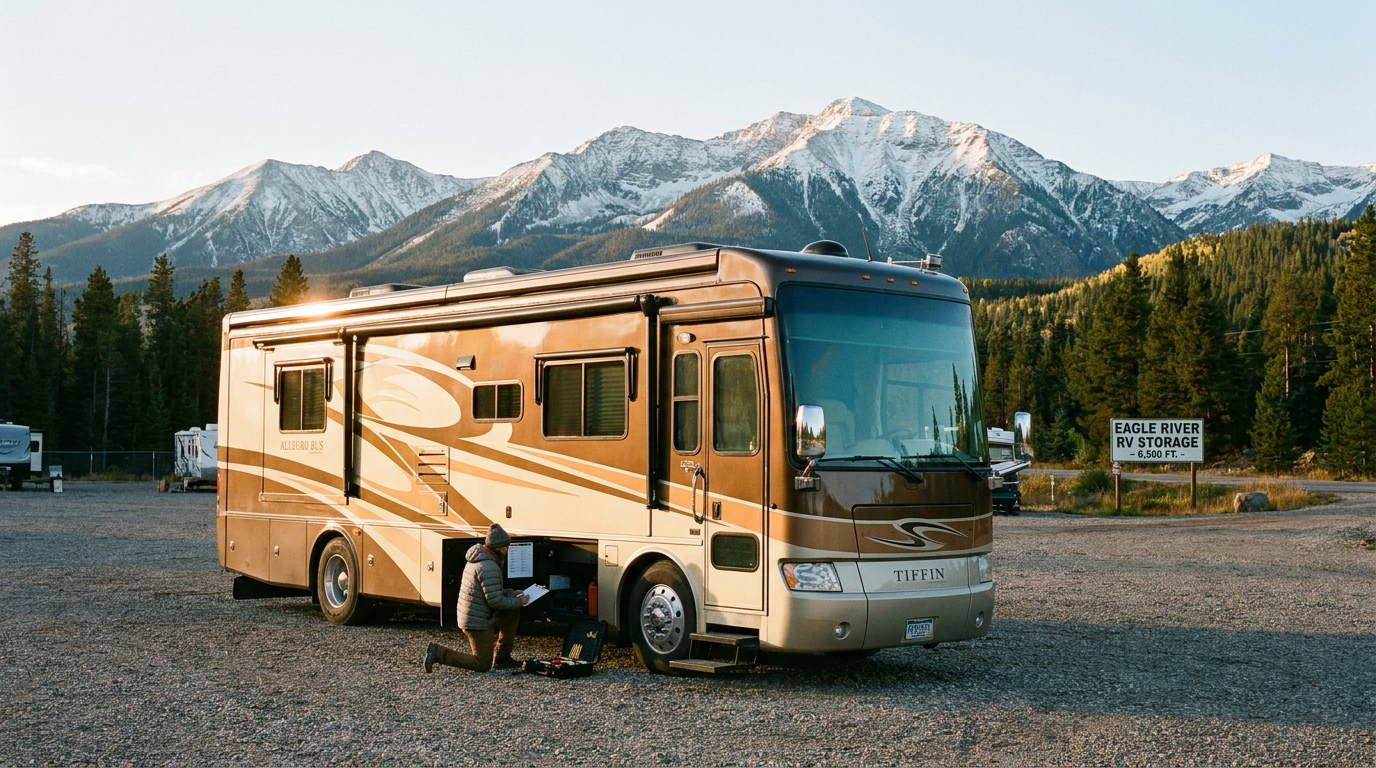
Proper preparation before storage prevents costly repairs and extends vehicle lifespan. The Family Motor Coach Association recommends completing these tasks before any storage period exceeding 30 days:
RV Preparation Tasks
- Drain fresh water tanks and water heater to prevent freezing damage
- Add RV antifreeze to plumbing lines if storing during winter months
- Empty holding tanks at an approved dump station
- Clean refrigerator and prop doors open to prevent mold growth
- Disconnect propane and turn off pilot lights
- Connect battery maintainer to electric hookup
- Cover tires or use tire covers to prevent UV degradation
- Close roof vents and check seals for potential leak points
For comprehensive winterization in Colorado's climate, professional RV winterization services in the Vail Valley ensure proper antifreeze distribution throughout plumbing systems. Professional winterization prevents thousands of dollars in freeze damage repairs.
Boat Preparation Tasks
- Drain engine block and cooling system completely
- Fog engine cylinders with marine fogging oil
- Add fuel stabilizer to prevent ethanol separation
- Disconnect battery or connect to trickle charger
- Remove drain plugs to prevent water accumulation
- Clean hull and apply wax coating for UV protection
- Cover with breathable tarp if storing in open space
Insurance and Protection Considerations
Standard auto insurance policies often exclude vehicles in storage for extended periods. Contact your insurance provider to confirm coverage terms and consider supplemental protection. Storage facility tenant protection plans typically provide coverage for theft, fire, water damage, and vandalism.
The tenant protection plan available through SafeLease covers stored vehicles against burglary, fire, water damage, and other risks. This protection supplements rather than replaces comprehensive RV or boat insurance but fills gaps that may exist during storage periods.
Document your vehicle's condition before storage with dated photographs of all sides, the roof, and any existing damage. This documentation proves invaluable for insurance claims and disputes regarding pre-existing conditions.
Final Selection Checklist
Use this comprehensive checklist when evaluating storage facilities:
- Coverage type: Steel canopy rated for local snow loads (90+ lbs/sq ft minimum in Colorado mountains)
- Space dimensions: Measure your vehicle including hitch, mirrors, and accessories; add 2 feet minimum clearance
- Electric hookups: 20-amp sufficient for most; 50-amp for large battery banks or converter operation
- Access hours: 24/7 gated access with individualized codes preferred
- Security features: UHD cameras, perimeter fencing, motion lighting, entry logging
- Surface type: Fully paved asphalt prevents tire and undercarriage damage
- Lease terms: Month-to-month leases offer maximum flexibility
- Location: Highway access, proximity to services, dump station availability
- Insurance options: Tenant protection plans available for supplemental coverage
- Move-in process: Online rental with immediate availability reduces delays
For RV and boat owners in Eagle County, the Vail Valley, and the broader Rocky Mountain region, covered RV storage in Colorado provides essential protection against the extreme weather conditions that damage unprotected vehicles. Evaluate facilities against this checklist to ensure your investment remains protected year-round.
|