Covered RV and Boat Storage in Eagle, Colorado: Rental Guide |
| COVERED RV AND BOAT STORAGE IN EAGLE, COLORADO: WHAT TO KNOW BEFORE YOU RENT
⏱ 12 min read ·
📄 #2,264 words
Learn what to check before renting covered RV or boat storage in Eagle County, CO. Compare costs, security features, and weather protection at local facilities.
|
B efore renting covered RV or boat storage in Eagle County, Colorado, verify the facility offers steel canopy protection rated for 90+ lbs/sq ft snow loads, 24/7 gated access with individual codes, electric hookups for battery maintenance, and month-to-month lease flexibility. Prices in the Gypsum and Eagle area range from $150 to $460 per month depending on space size and amperage.
| Key Points: | |
|---|---|
| • | Covered storage in Eagle County costs $230 to $460/month for spaces ranging from 12x15 to 12x50 feet |
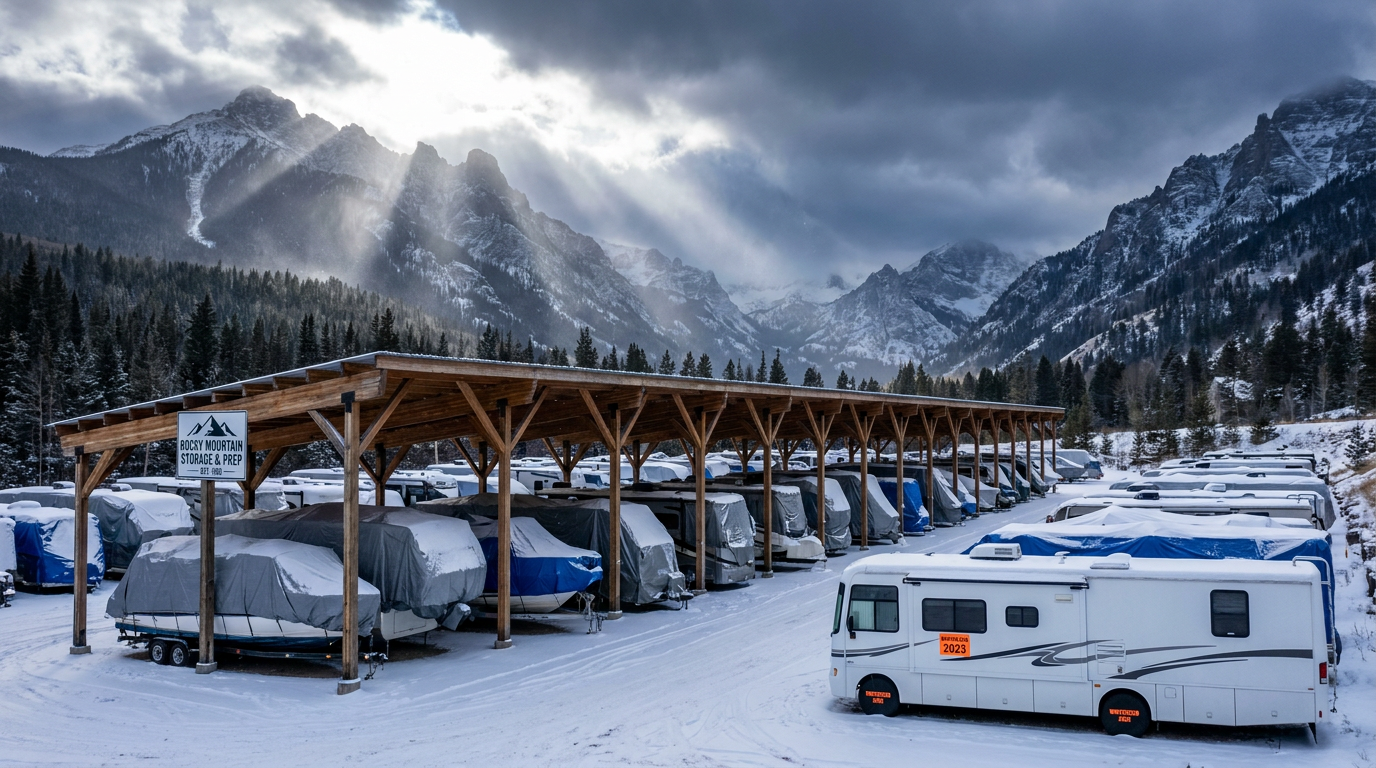
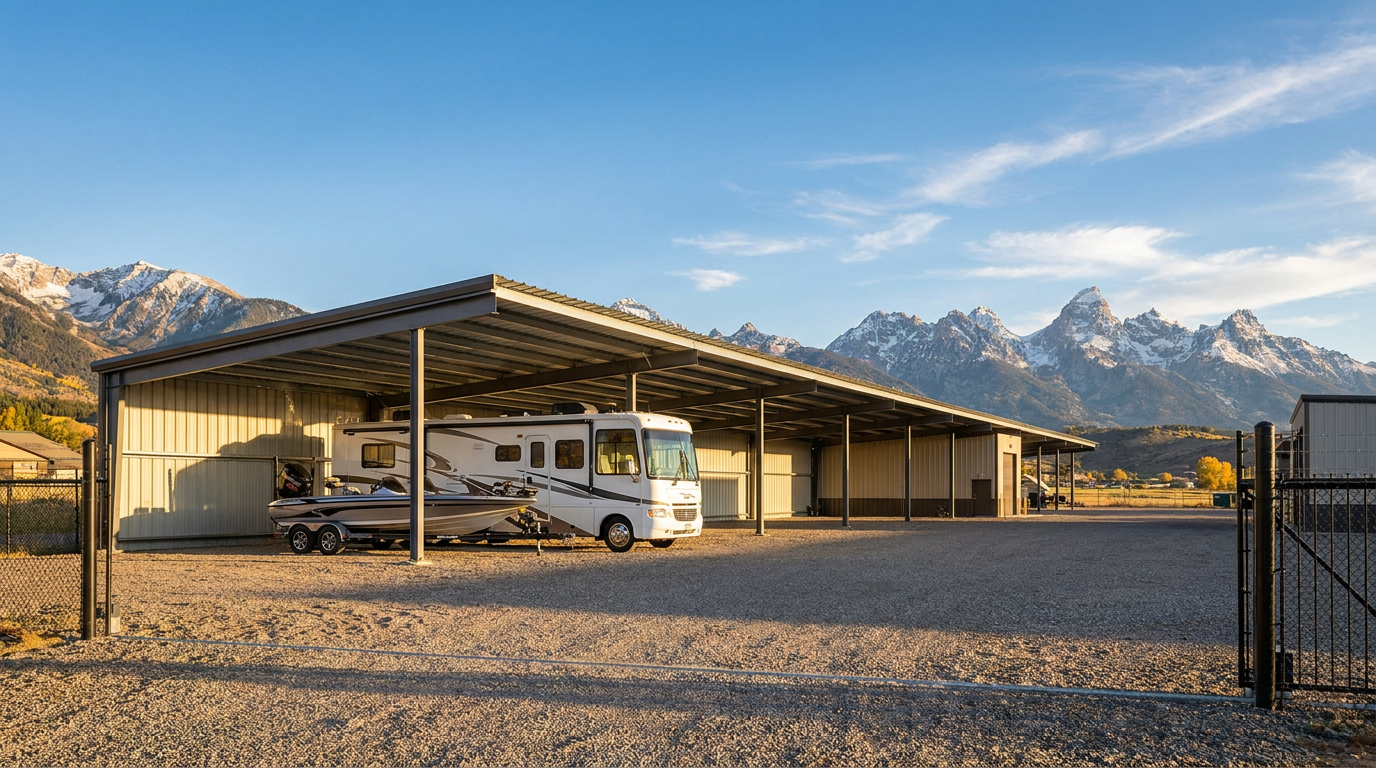
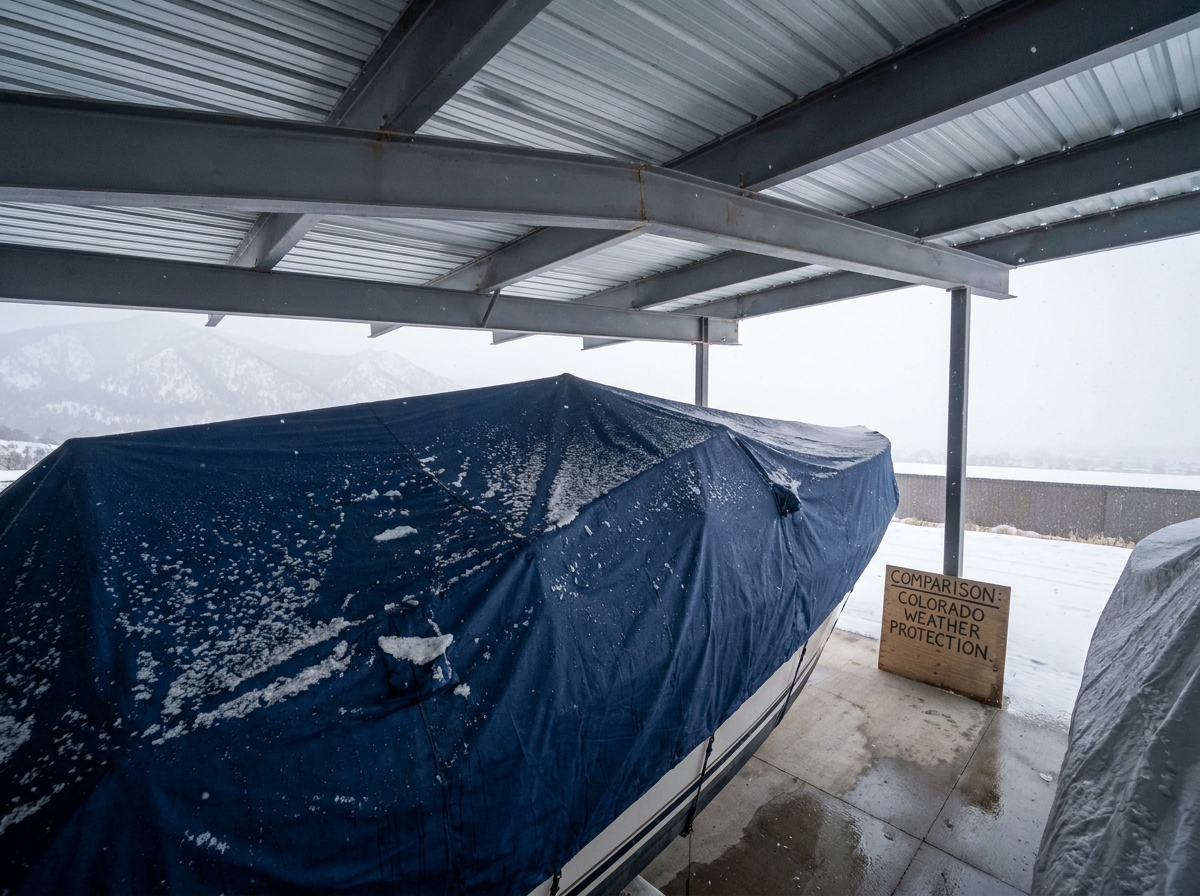
| • | Steel canopy structures rated for 90+ lbs/sq ft snow loads protect against Colorado's 300+ inches of annual mountain snowfall |
| • | Electric hookups (20-amp or 50-amp) prevent battery drain during storage periods of 30 days or longer |
| • | UV radiation at 6,500+ feet elevation degrades RV seals and finishes 25% faster than at sea level |
| • | Month-to-month leases provide flexibility for seasonal storage needs without long-term commitments |
Why Covered Storage Matters at Colorado Elevations
Eagle County sits at elevations between 6,500 and 8,000 feet, creating storage challenges that coastal or low-altitude facilities never face. According to the National Weather Service, the Vail Valley receives an average of 150 inches of snow annually at valley floor elevations, with mountain areas exceeding 300 inches. This snow accumulation, combined with freeze-thaw cycles occurring 100+ days per year, accelerates wear on exposed vehicles.
Ultraviolet radiation intensity increases approximately 4% for every 1,000 feet of elevation gain. At 6,500 feet in Gypsum, UV exposure is roughly 26% stronger than at sea level. The Environmental Protection Agency notes that prolonged UV exposure degrades rubber seals, fades paint finishes, and causes fiberglass oxidation on RVs and boats.
Hail events in Eagle County occur 2 to 4 times per summer season, according to Colorado State University's Severe Weather Database. A single hailstorm can cause $5,000 to $25,000 in damage to an unprotected RV or boat. Covered storage with steel canopy construction eliminates this risk entirely.
Comparing Storage Options in Eagle County
The Eagle and Gypsum area offers three primary storage categories: open-air parking, covered canopy storage, and fully enclosed units. Each serves different needs and budgets. Understanding the tradeoffs helps you select the right option for your vehicle and storage duration.
| Storage Type | Monthly Cost Range | Weather Protection | Best For |
|---|---|---|---|
| Open-Air Parking | $100 to $175 | None | Short-term storage under 60 days |
| Covered Canopy | $230 to $460 | Snow, hail, UV | Seasonal and year-round storage |
| Fully Enclosed | $400 to $800+ | Complete protection | Classic vehicles, high-value boats |
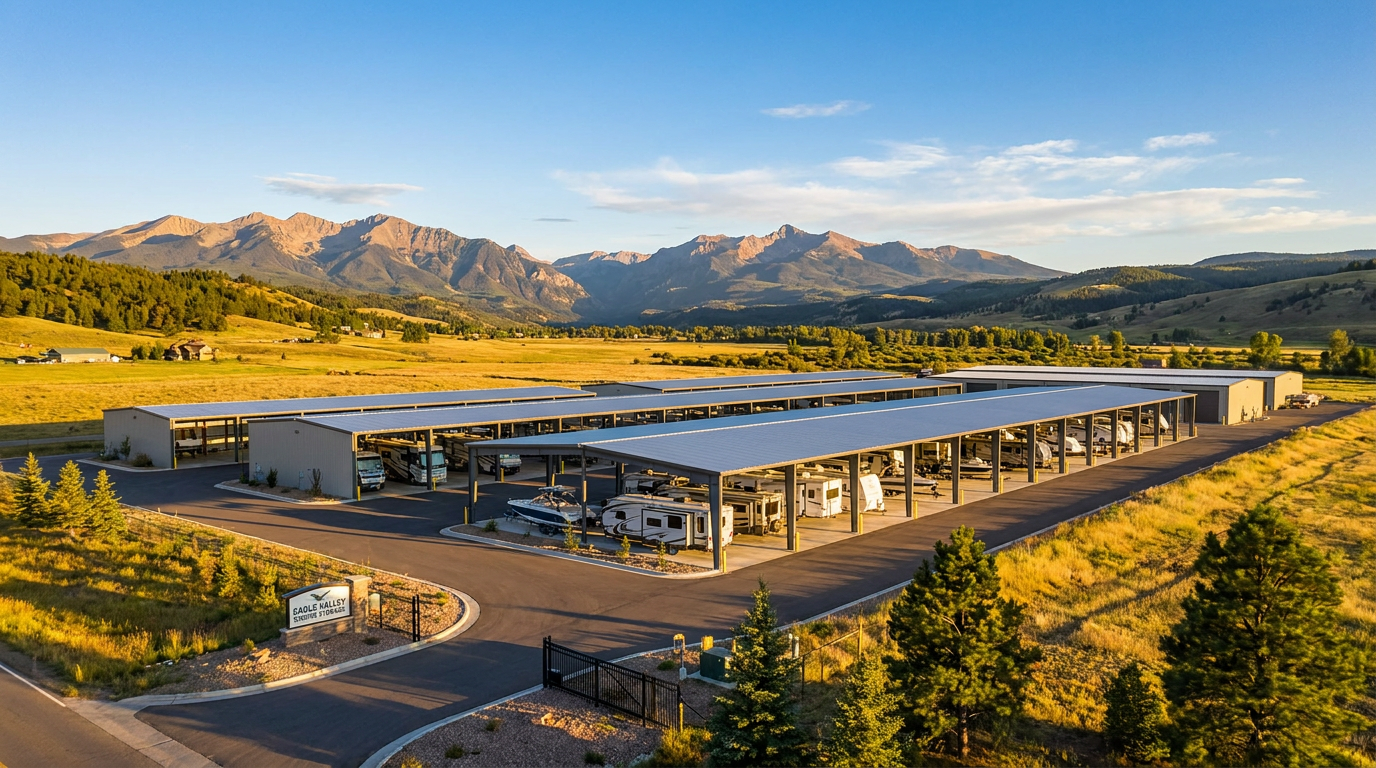
Covered canopy storage represents the optimal balance for most RV and boat owners in the Vail Valley. It provides essential protection from snow loads, hail damage, and UV degradation at 40% to 60% lower cost than fully enclosed options. For covered RV storage in Colorado, facilities with heavy-duty steel construction rated for mountain snow loads offer the best long-term value.
Essential Features to Evaluate Before Signing a Lease
Structural Specifications
Not all covered storage is created equal. Ask specifically about snow load ratings before committing to any facility. The International Building Code requires structures in Eagle County to withstand ground snow loads of 65 to 100+ lbs/sq ft depending on exact location. A canopy rated for 90+ lbs/sq ft provides adequate margin for heavy snowfall years.
Steel construction outperforms fabric or lightweight metal alternatives in Colorado conditions. Steel canopies resist wind uplift during spring storms that regularly exceed 60 mph in the Eagle River Valley. They also maintain structural integrity through decades of freeze-thaw cycling that degrades lesser materials.
Security Infrastructure
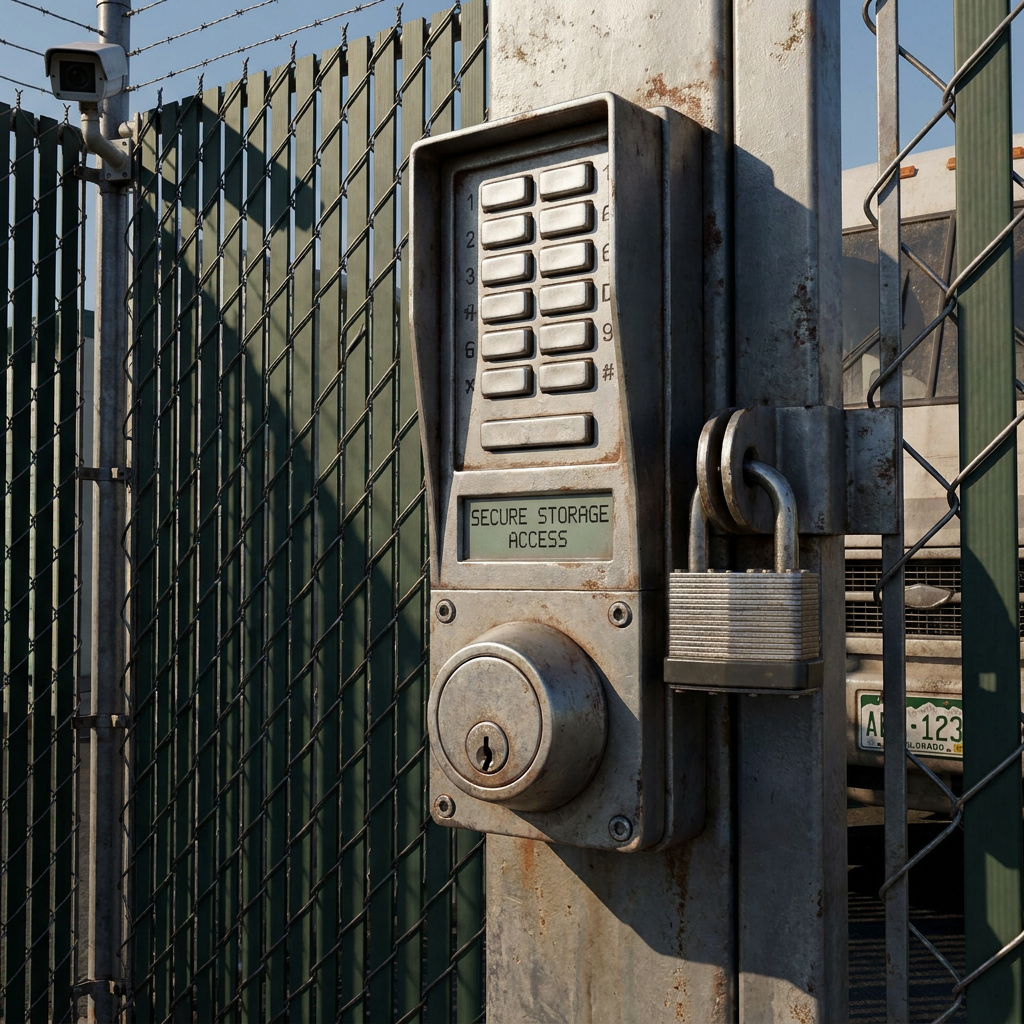
Comprehensive security requires multiple layers. According to the FBI's Uniform Crime Reporting Program, property crimes in rural Colorado communities occur at rates of 15 to 25 incidents per 1,000 residents annually. Effective storage facility security includes:
- Perimeter fencing: Minimum 6 feet height with barbed wire or anti-climb features
- Access control: Individual gate codes that log entry and exit times
- Video surveillance: HD cameras covering all access points and storage rows
- Lighting: Motion-activated or continuous lighting throughout the facility
Facilities offering 24/7 access should use individual codes rather than shared combinations. This creates an audit trail and allows management to deactivate codes immediately if a tenant's account becomes delinquent or a code is compromised.
Electrical Hookups
Battery maintenance represents one of the most overlooked aspects of RV and boat storage. Lead-acid batteries lose 5% to 15% of their charge per month when disconnected, according to Interstate Batteries technical specifications. In cold weather, this discharge rate increases. A battery that drops below 50% charge can suffer permanent capacity loss.
Electric hookups solve this problem by enabling trickle chargers or battery maintainers to keep batteries at optimal charge levels. Most RVs require 20-amp service for basic maintenance charging. Larger Class A motorhomes with multiple battery banks or onboard systems may benefit from 50-amp service.
When evaluating facilities, confirm that electrical outlets are located at each covered space rather than shared among multiple tenants. Shared outlets create conflicts during peak usage periods and complicate billing.
Space Sizing: How to Measure Your RV or Boat
Selecting the correct space size prevents costly mistakes. Measure your vehicle's total length including all protrusions: hitch receivers, spare tire mounts, ladder extensions, and any roof-mounted accessories. Add 2 to 3 feet to this measurement for comfortable maneuvering room.
| Vehicle Type | Typical Length | Recommended Space | Monthly Cost |
|---|---|---|---|
| Pop-up Camper | 10 to 16 feet | 12x15 or 12x20 | $230 to $250 |
| Ski Boat with Trailer | 18 to 24 feet | 12x25 or 12x30 | $270 to $290 |
| Travel Trailer | 20 to 30 feet | 12x30 or 12x35 | $290 to $320 |
| Fifth Wheel | 28 to 40 feet | 12x40 or 12x45 | $380 to $390 |
| Class A Motorhome | 35 to 45 feet | 12x45 or 12x50 | $390 to $460 |
Width matters as much as length. Standard covered spaces measure 12 feet wide, accommodating most RVs and boats with slide-outs retracted. If your vehicle exceeds 10 feet in width with mirrors extended, confirm the facility can accommodate it before signing. For detailed sizing guidance, the Eagle Canopy FAQ addresses common questions about space selection.
Lease Terms and Pricing Structures
Storage lease terms in Eagle County fall into three categories: month-to-month, seasonal contracts, and annual agreements. Each structure offers different advantages depending on your usage patterns and budget constraints.
Month-to-month leases provide maximum flexibility with typical notice periods of 7 to 14 days. This arrangement suits RV owners who travel frequently or may relocate. The tradeoff is slightly higher monthly rates compared to longer commitments.
Seasonal contracts lock in rates for 4 to 6 months, often covering either the winter storage season (October through April) or summer boating season. Facilities may offer 5% to 15% discounts for seasonal prepayment.
Annual agreements deliver the lowest monthly rates but require 12-month commitments. Early termination typically forfeits any prepaid discounts and may incur penalties equal to 1 to 2 months' rent.
Many facilities offer move-in promotions to attract new tenants. Discounts of 50% off the first 1 to 2 months are common in the Eagle County market. Calculate the effective annual cost when comparing facilities by adding all monthly payments including promotional rates.
Location Factors Specific to Eagle County
Storage facility location affects both convenience and practical access during Colorado winters. The Highway 6 corridor between Eagle and Gypsum offers the most accessible year-round options, with facilities located near major intersections that receive priority snow removal.
Proximity to Interstate 70 matters for RV owners traveling to camping destinations throughout Colorado. Facilities near Exit 147 (Eagle) or Exit 140 (Gypsum) provide quick highway access without navigating residential streets with large vehicles.
Consider proximity to services you will need before or after trips. Locations near Costco in Gypsum allow convenient provisioning runs. Facilities near Eagle County Regional Airport (EGE) serve owners who fly in to retrieve their vehicles for regional trips.
The RV dump station in Edwards sits approximately 25 to 30 minutes from most Gypsum storage facilities. Plan your route to include waste disposal before returning to storage after extended trips.
Preparing Your Vehicle for Storage
Pre-Storage Checklist for RVs
Proper preparation extends your RV's lifespan and prevents costly repairs. Complete these tasks before placing your vehicle in storage for 30 days or longer:
- Drain all water systems: Empty fresh water tank, hot water heater, and all lines
- Add RV antifreeze: Pump non-toxic antifreeze through all plumbing lines and traps
- Clean interior thoroughly: Remove all food items that attract rodents
- Inspect roof seals: Repair any cracks or gaps before storage
- Check tire pressure: Inflate to manufacturer specifications to prevent flat spots
- Disconnect batteries: Or connect to trickle charger if electrical hookup available
For winter storage in Colorado, professional winterization services ensure complete water system protection. RV winterization services in the Vail Valley typically cost $150 to $300 and include antifreeze treatment, battery conditioning, and system inspection.
Boat Storage Preparation
Boats require specific preparation for Colorado's dry mountain climate. The BoatUS Foundation recommends these steps for seasonal storage:
- Flush engine with fresh water: Remove salt or lake sediment from cooling system
- Fog engine cylinders: Spray fogging oil to prevent corrosion during storage
- Stabilize fuel: Add fuel stabilizer and run engine to distribute through system
- Remove drain plugs: Allow any accumulated water to drain completely
- Apply UV protectant: Treat vinyl seats, canvas covers, and rubber components
Insurance and Protection Considerations
Standard homeowners or auto insurance policies often exclude vehicles in storage or impose coverage limitations. Review your existing policies before assuming coverage applies. The Insurance Information Institute recommends confirming these specific coverages:
Comprehensive coverage: Protects against theft, vandalism, hail, and falling objects. Verify no exclusions for vehicles stored off-premises for extended periods.
Liability coverage: May be reduced or suspended for vehicles not in active use. Confirm minimum coverage remains in force.
Actual cash value vs. agreed value: Understand how your policy calculates payout in case of total loss. Classic RVs and boats may need agreed-value endorsements.
Many storage facilities offer tenant protection plans as supplemental coverage. These plans typically cost $15 to $40 per month and cover specific perils like burglary, fire, water damage, and vandalism. The SafeLease tenant protection plan at Eagle Canopy includes a $100 deductible and covers vehicle damage while in storage.
Frequently Asked Questions
What is the difference between covered and enclosed RV storage?
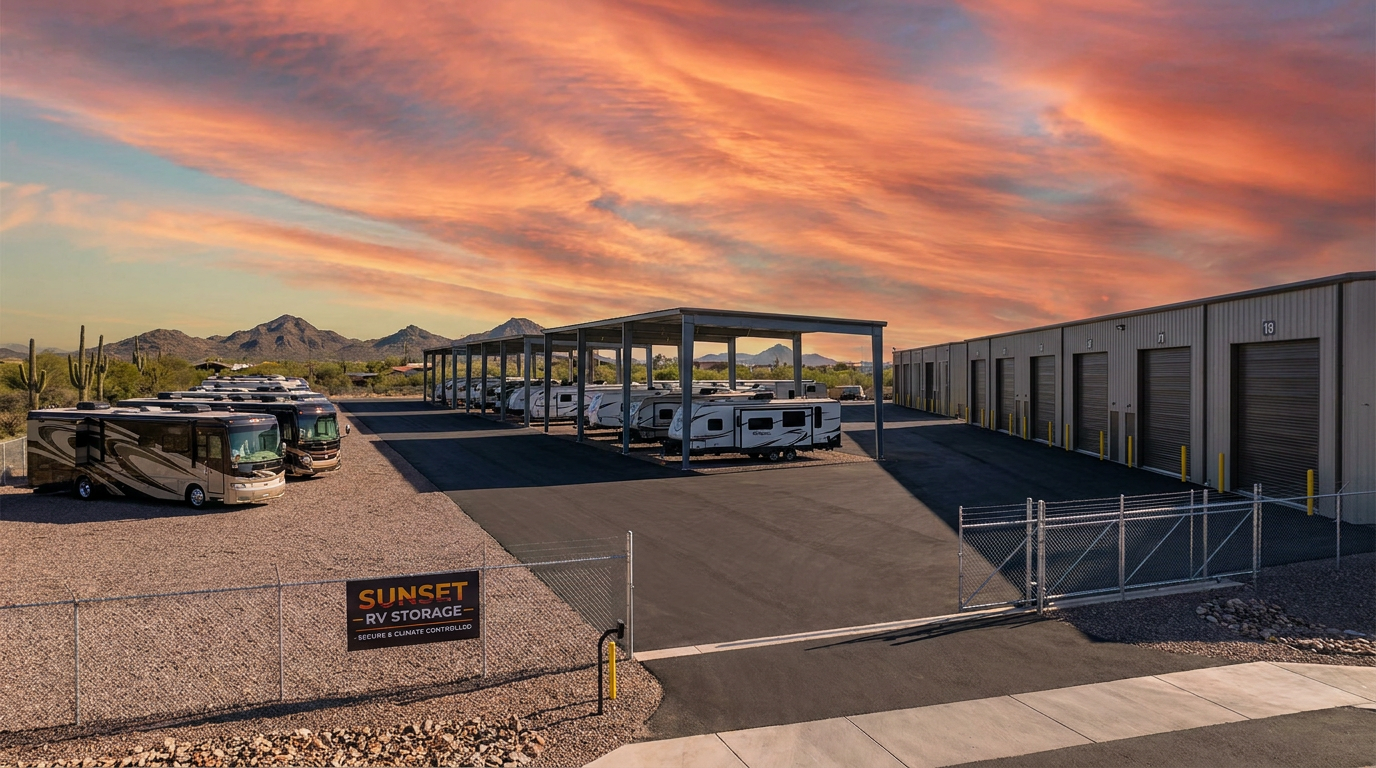
Covered storage features a roof structure (typically steel canopy) that protects vehicles from snow, hail, and direct UV exposure while leaving sides open. Enclosed storage provides four walls plus a roof, offering complete protection from all elements and enhanced security. Covered storage costs 40% to 60% less than enclosed options while providing adequate protection for most RVs and boats in Colorado's climate.
How much does covered RV storage cost in Eagle County?
Covered RV storage in the Eagle and Gypsum area ranges from $230 to $460 per month depending on space dimensions. A 12x25 space suitable for travel trailers costs approximately $270 monthly. Larger 12x50 spaces for Class A motorhomes run $460 per month. Open-air parking without coverage starts around $150 monthly.
Do I need electric hookups for RV storage?
Electric hookups are strongly recommended for storage periods exceeding 30 days. They enable trickle chargers to maintain battery health, preventing the 5% to 15% monthly discharge that damages lead-acid batteries. Most RVs require 20-amp service; larger motorhomes with multiple battery banks benefit from 50-amp connections. Spaces with 50-amp service typically cost $40 to $60 more per month than 20-amp options.
Can I access my RV or boat during winter storage?
Quality facilities provide 24/7 gated access regardless of season. Individual access codes allow entry at any time without coordinating with staff. Before renting, confirm the facility maintains clear access roads during snow events. Facilities on the Highway 6 corridor typically receive faster snow removal than those on secondary roads.
What security features should I look for?
Essential security features include perimeter fencing (minimum 6 feet with anti-climb measures), individual gate codes with entry logging, HD video surveillance covering all areas, and adequate lighting. Premium facilities add features like on-site management, motion sensors, and real-time monitoring. Verify that security cameras record footage for at least 30 days in case you need to report an incident.
Should I winterize my RV before storage in Colorado?
Yes. Colorado temperatures regularly drop below freezing from October through April, even at valley floor elevations around Gypsum. Water remaining in plumbing lines, tanks, or the hot water heater will freeze and cause pipe bursts, valve damage, and tank cracks. Professional winterization costs $150 to $300 and prevents repairs that can exceed $2,000.
Making Your Final Decision
Selecting covered RV or boat storage in Eagle County requires balancing protection, convenience, and cost. Prioritize facilities with steel canopy construction rated for Colorado snow loads, electric hookups at each space, and robust security infrastructure. Month-to-month leases provide flexibility for seasonal users, while longer commitments may reduce monthly costs by 5% to 15%.
Visit prospective facilities in person before signing. Inspect canopy construction quality, measure your assigned space, test the gate access system, and verify electrical outlet functionality. Ask current tenants about their experience with snow removal, management responsiveness, and any issues encountered.
For RV owners planning trips throughout the Rocky Mountain region, the Dillon Reservoir RV camping guide and national park reservation guide provide valuable planning resources. Proper storage between adventures protects your investment and ensures your vehicle is ready when the next trip calls.
|