Covered vs Outdoor Storage in Eagle County: Complete Guide |
| BOAT, TRAILER, AND CAMPER STORAGE IN EAGLE COUNTY: COVERED VS OUTDOOR OPTIONS
⏱ 13 min read ·
📄 #2,465 words
Compare covered and outdoor boat, trailer, and camper storage options in Eagle County. Learn costs, protection levels, and which type suits Colorado weather.
|
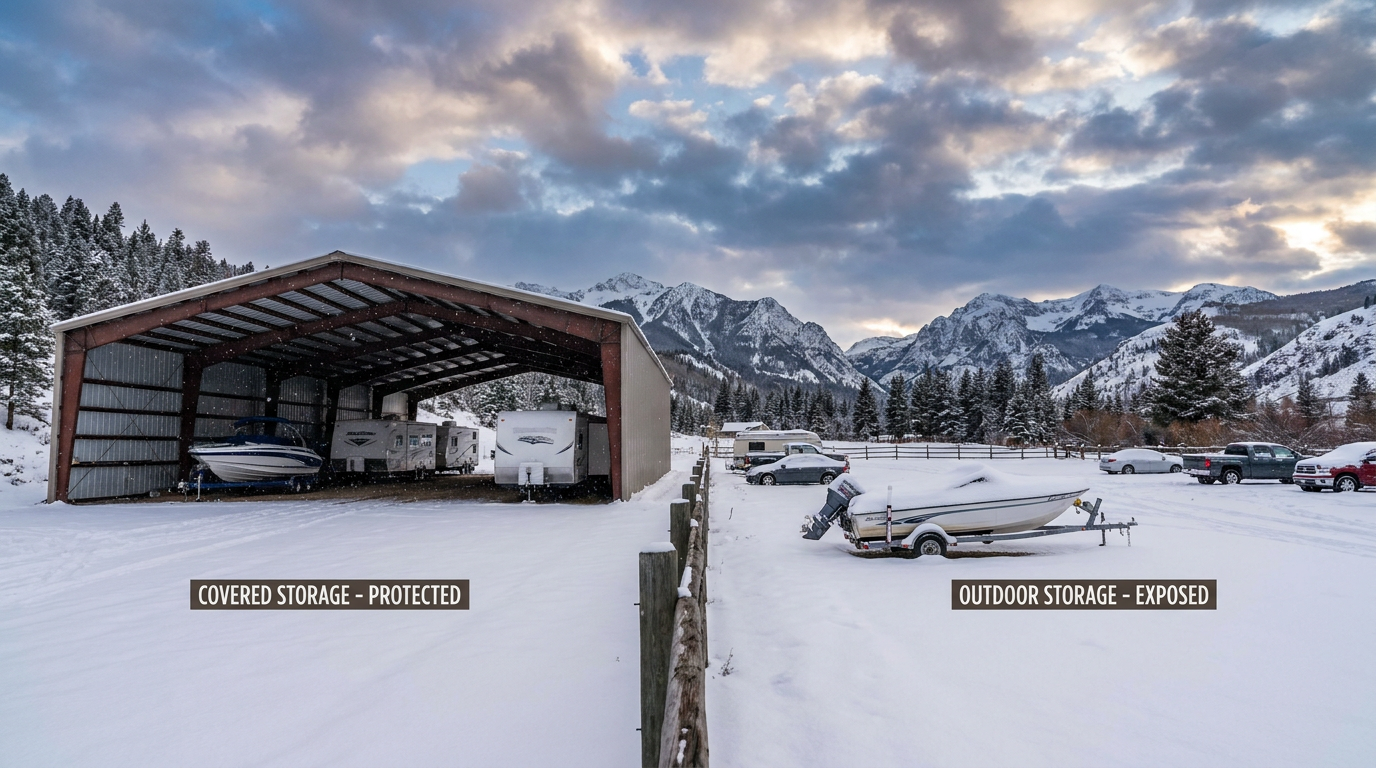
C overed storage in Eagle County costs $230 to $460 per month and protects vehicles from snow loads exceeding 90 pounds per square foot, hail damage, and UV degradation at 6,500+ feet elevation. Outdoor storage runs $150 to $200 monthly but exposes boats, trailers, and campers to Colorado's 300+ days of intense mountain sun and unpredictable severe weather events that cause an estimated $1.5 billion in hail damage statewide each year.
| Key Points: | |
|---|---|
| • | Covered storage in Eagle County ranges from $230 to $460 per month depending on space size (12x15 to 12x50 feet) |
| • | Outdoor uncovered storage costs approximately $150 per month for a 10x20 space |
| • | Colorado's high altitude UV exposure degrades rubber seals, tires, and exterior finishes 40% faster than sea level |
| • | Steel canopy structures rated for 90+ lb/sq ft snow loads prevent roof collapse and structural damage |
| • | Electric hookups ($20/month additional) enable trickle charging that extends battery life by 2 to 3 years |
Why Storage Type Matters in Eagle County's Mountain Climate
Eagle County sits at elevations between 6,000 and 11,000 feet, creating storage challenges that coastal or lowland facilities never face. According to the Storage Star industry analysis, mountain climates require storage solutions specifically engineered for extreme temperature swings, heavy precipitation, and intense solar radiation.
The Vail Valley experiences temperature fluctuations of 50 degrees or more within 24 hours during spring and fall. These rapid changes stress vehicle seals, cause condensation inside compartments, and accelerate wear on exterior components. Winter brings average snowfall exceeding 150 inches annually in higher elevations, with individual storms capable of depositing 2 to 3 feet overnight.
Summer presents different hazards. Colorado ranks among the top five states for hail damage, with the Front Range and mountain corridors experiencing severe hailstorms between May and September. A single hailstorm can total an unprotected RV roof, crack fiberglass boat hulls, or destroy trailer covers in minutes.
Covered Storage: Features, Benefits, and Costs
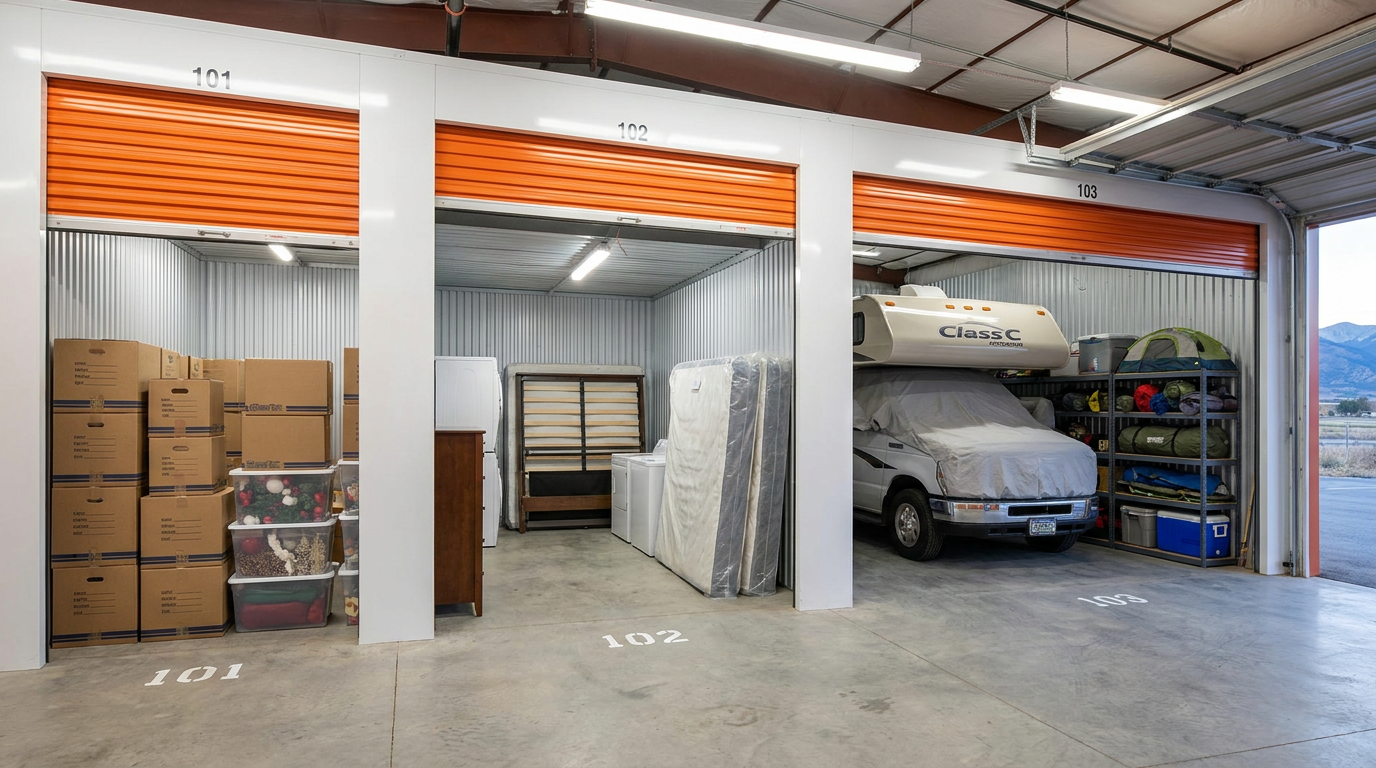
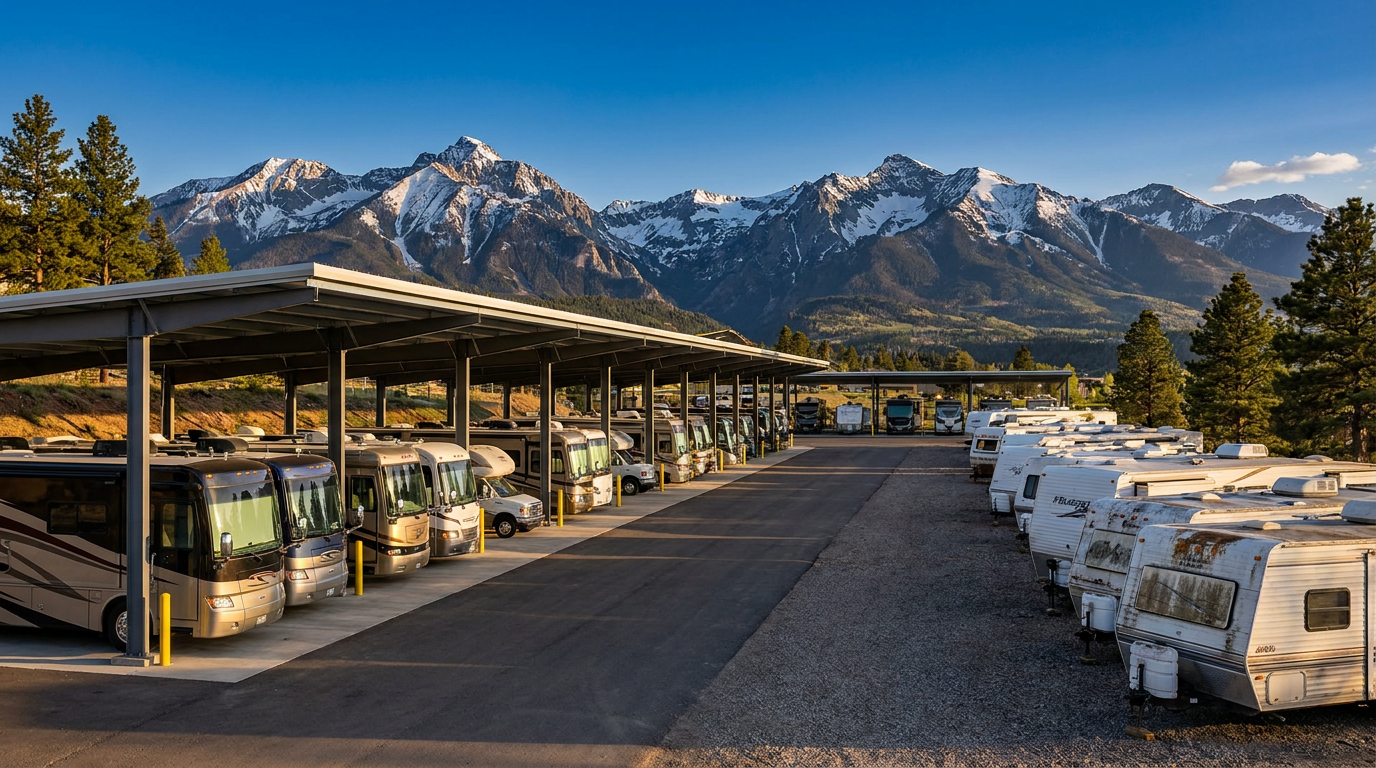
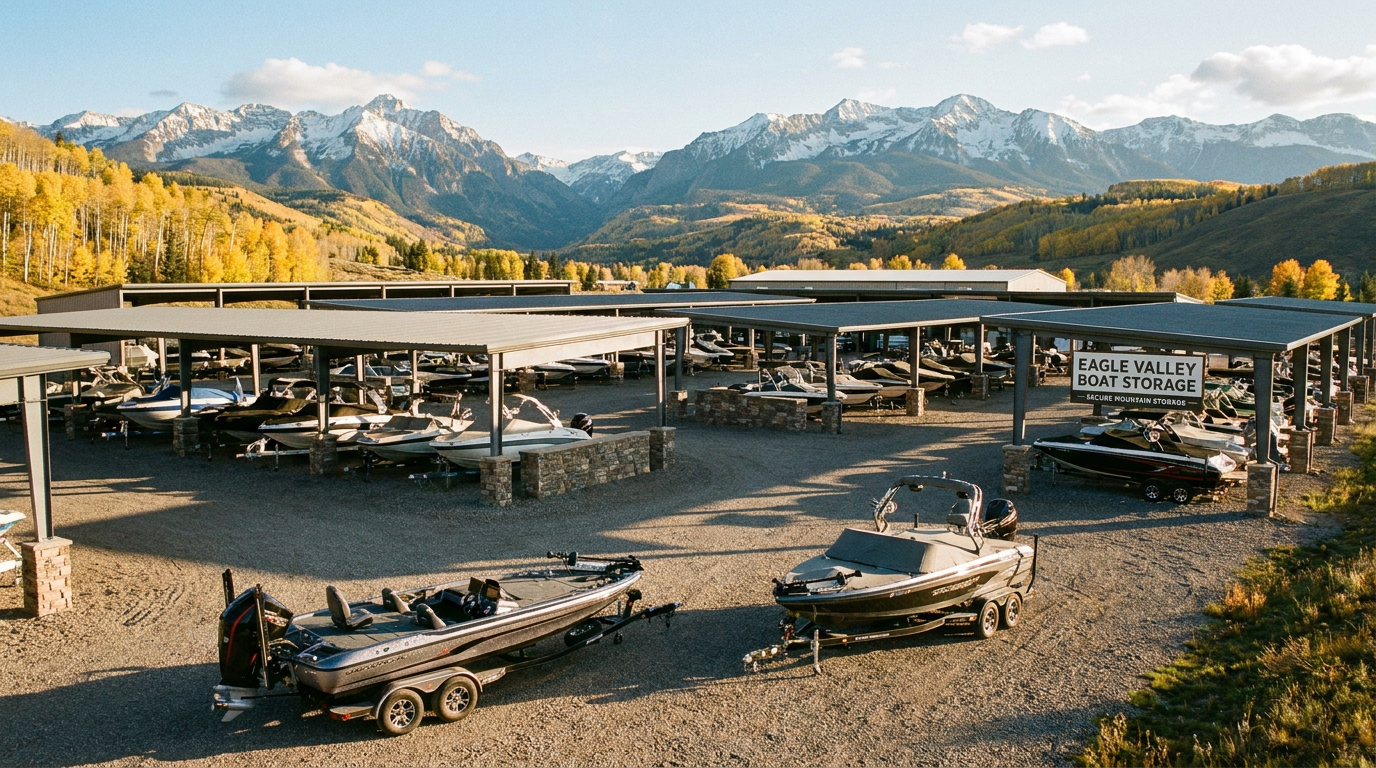
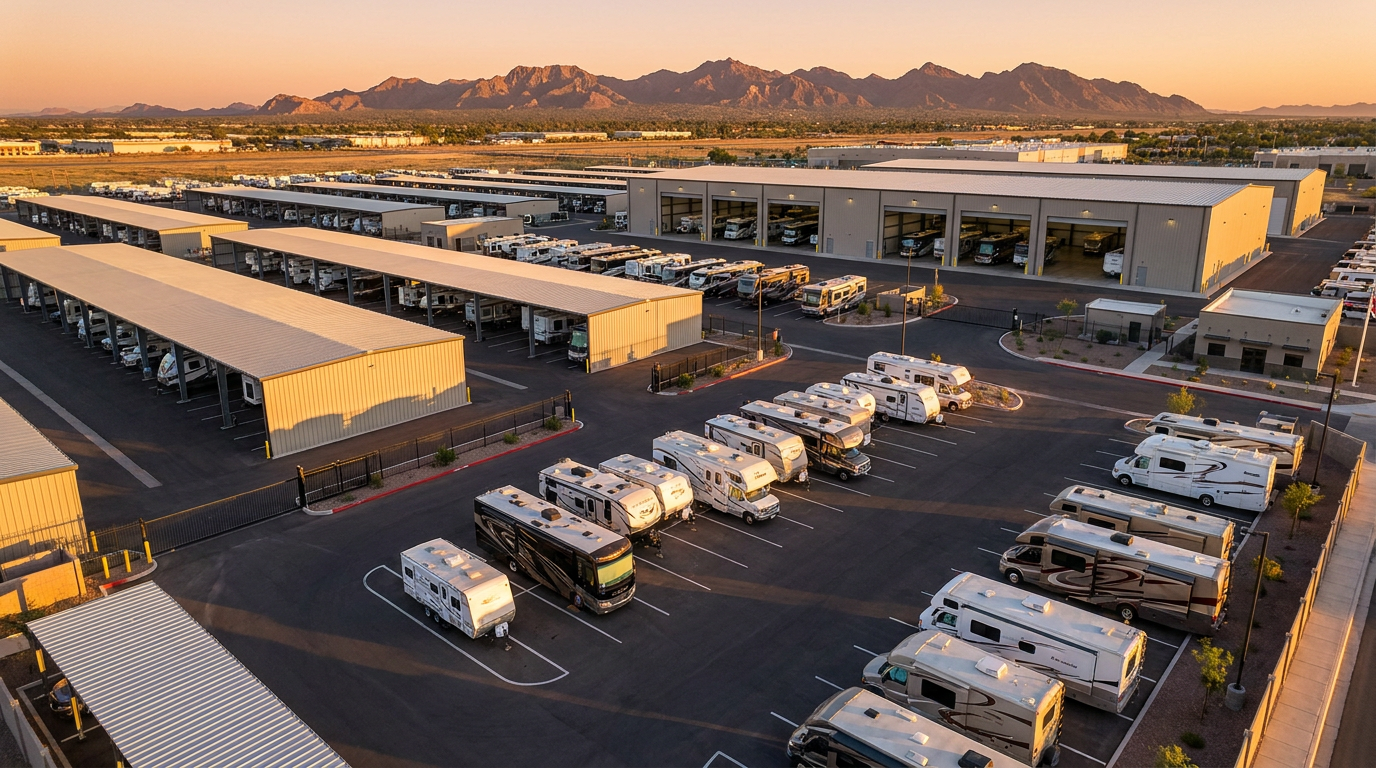
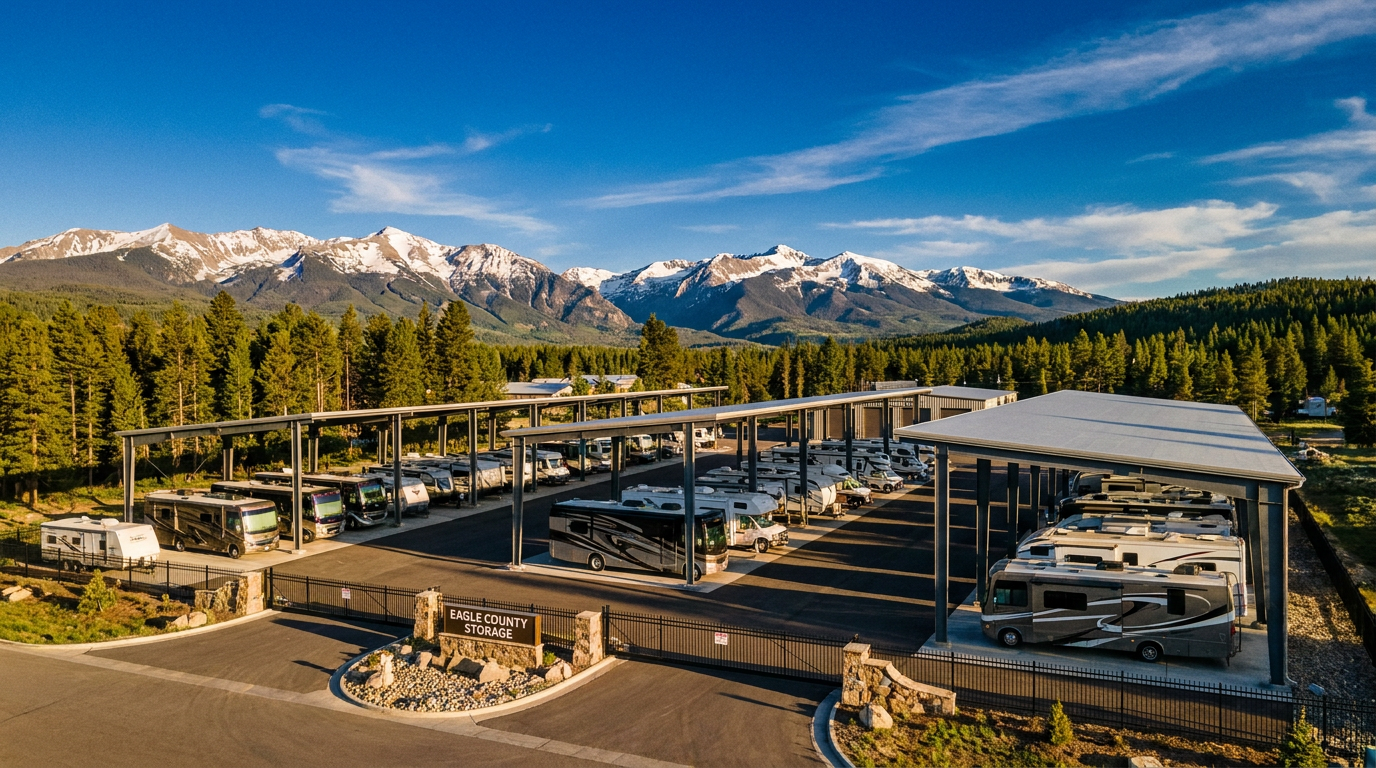
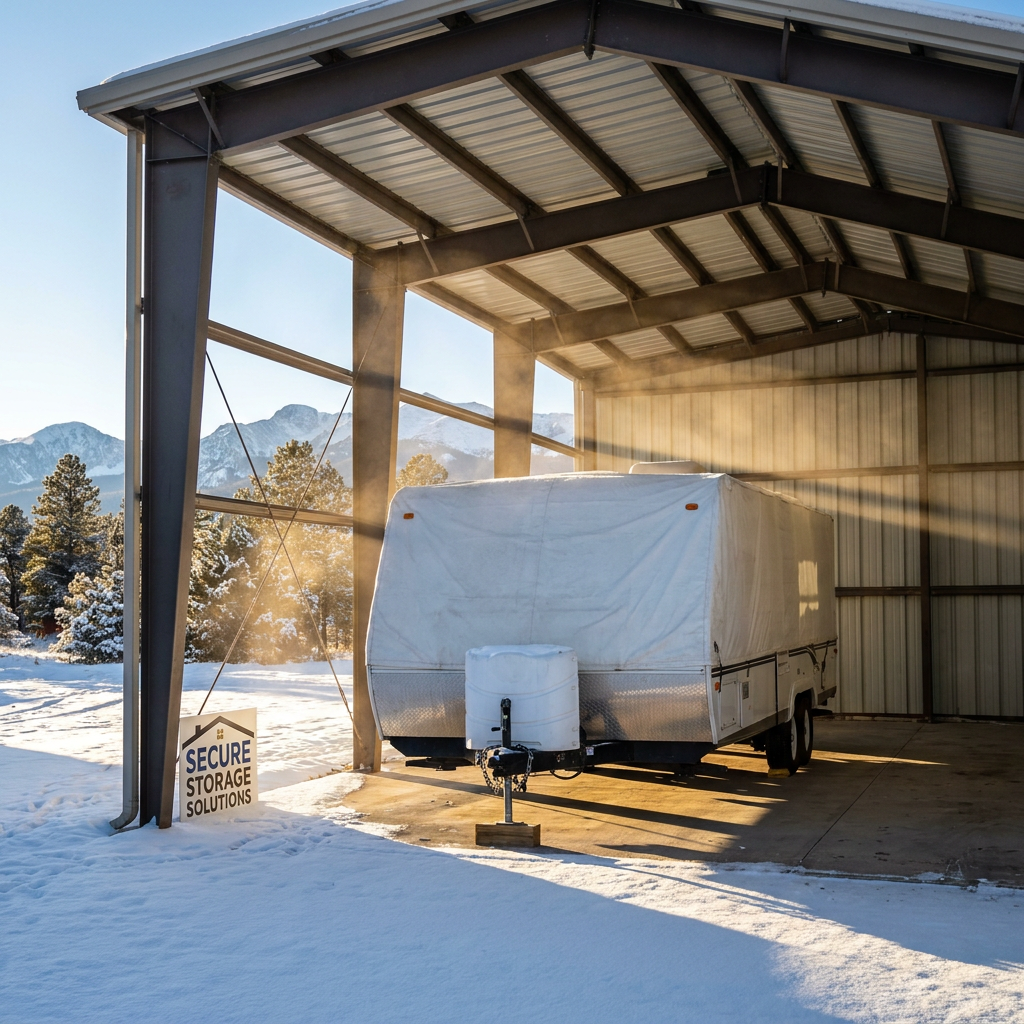
Covered storage provides overhead protection through steel canopy structures, carports, or fully enclosed buildings. In Eagle County, covered options typically feature heavy-duty steel canopies engineered to withstand regional snow loads and wind conditions. These structures block direct precipitation, reduce UV exposure by 85% or more, and minimize temperature extremes inside stored vehicles.
What Covered Storage Includes
Quality covered facilities in the Gypsum and Eagle area offer more than just a roof. Standard features at professionally operated sites include fully paved asphalt surfaces that prevent tire damage and undercarriage corrosion. Paved lots eliminate the mud, gravel dust, and pooling water common at unpaved outdoor facilities.
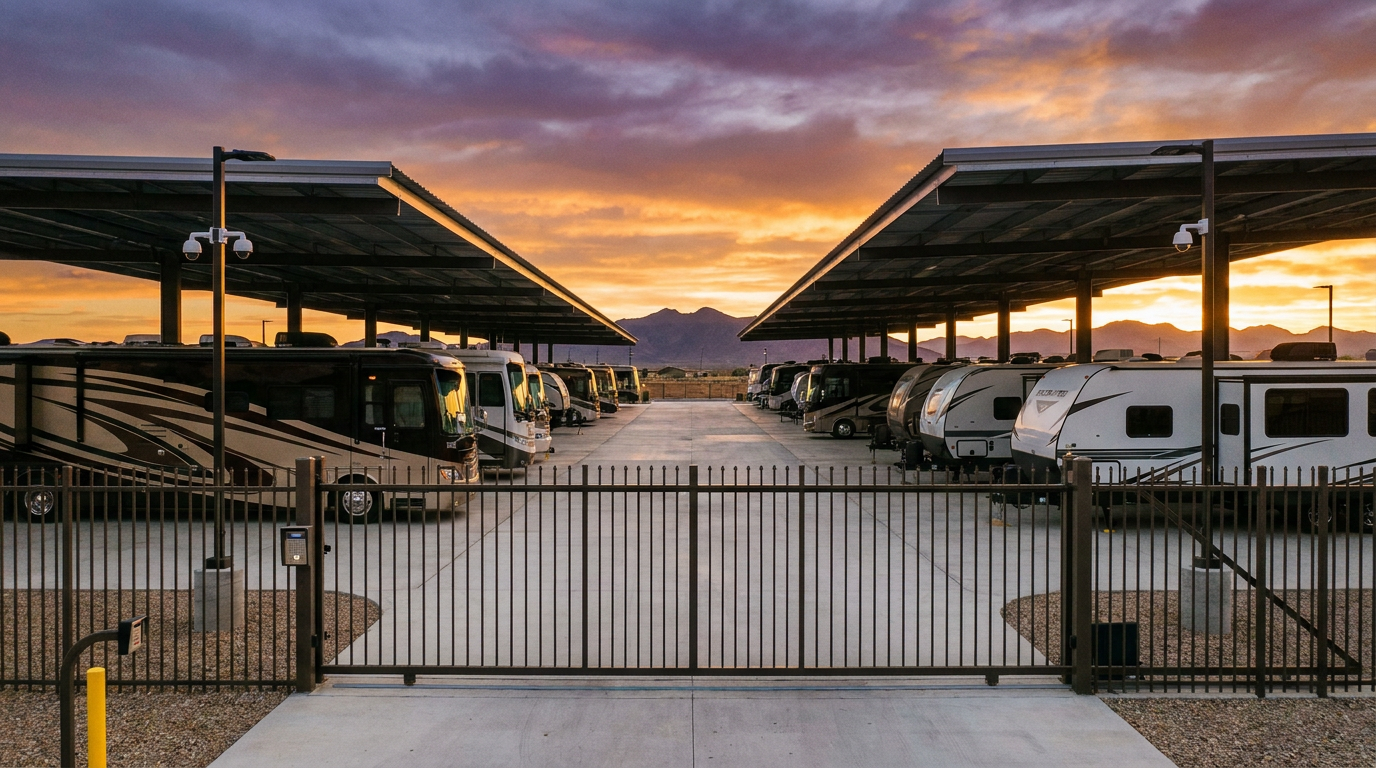
Security infrastructure at covered facilities typically includes gated access with individualized entry codes, perimeter fencing, and surveillance camera systems. Eagle Canopy RV Storage operates 16 UHD security cameras with 24/7 monitoring, providing documentation for insurance claims if incidents occur.
Electric hookups represent a significant advantage of covered storage. A 20-amp outlet enables trickle charging that maintains battery health during storage periods. Without consistent charging, lead-acid batteries lose 5% to 15% of their charge monthly and can suffer permanent capacity loss after deep discharge. Lithium batteries fare better but still benefit from maintenance charging during extended storage.
Covered Storage Pricing in Eagle County
Covered storage rates in the Vail Valley and surrounding communities reflect the premium protection these facilities provide. Current market pricing for covered spaces with electric hookups follows a predictable pattern based on length.
| Space Size | Monthly Rate (20-amp) | Monthly Rate (50-amp) | Best For |
|---|---|---|---|
| 12x15 feet | $230 | N/A | Jet skis, motorcycles, small trailers |
| 12x20 feet | $250 | N/A | Fishing boats, utility trailers |
| 12x25 feet | $270 | N/A | Ski boats, pop-up campers |
| 12x30 feet | $290 | N/A | Travel trailers, pontoon boats |
| 12x35 feet | $320 | $360 | Class C motorhomes, large boats |
| 12x40 feet | $380 | N/A | Fifth wheels, Class A motorhomes |
| 12x45 feet | $390 | $450 | Large Class A, toy haulers |
| 12x50 feet | $460 | N/A | Extended Class A, bus conversions |
The 50-amp option serves RVs with larger electrical systems requiring higher amperage for battery maintenance or pre-conditioning before trips. Most boats, trailers, and smaller campers function well with 20-amp service.
Outdoor Storage: When It Makes Sense
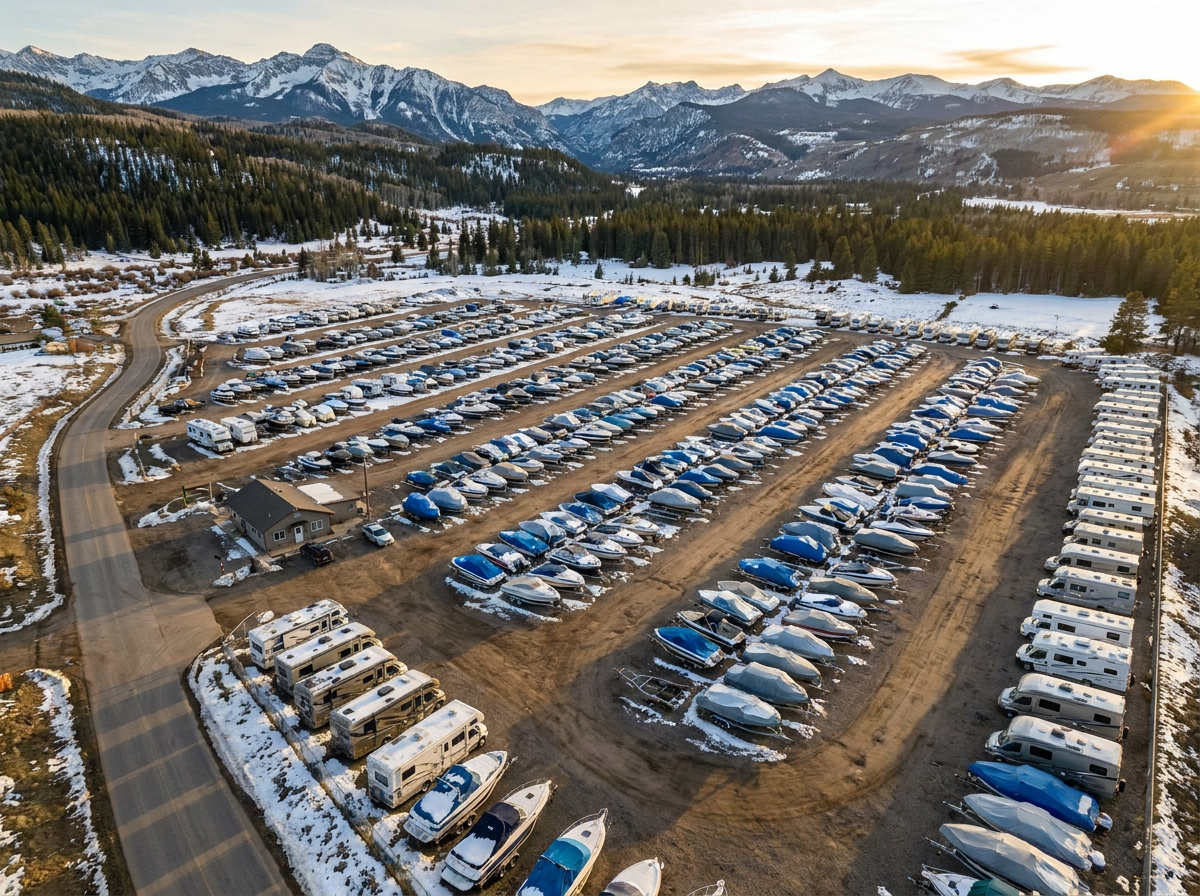
Outdoor uncovered storage costs significantly less than covered options, making it attractive for budget-conscious owners or those storing vehicles short-term. A 10x20 outdoor space in Eagle County typically runs around $150 monthly, representing savings of $80 to $310 compared to covered alternatives.
According to Extra Space Storage research, outdoor storage works adequately for vehicles designed for outdoor exposure, such as enclosed cargo trailers, utility trailers with no sensitive components, or vehicles stored for less than 30 days between uses.
Outdoor Storage Limitations in Colorado
The cost savings of outdoor storage come with measurable risks in Eagle County's climate. UV radiation at high altitude contains 25% more damaging rays than at sea level, according to National Oceanic and Atmospheric Administration (NOAA) research. This accelerated UV exposure causes rubber seals to crack within 2 to 3 years, fades paint and graphics, and degrades fiberglass gel coats.
Snow accumulation presents structural risks for outdoor-stored vehicles. RV roofs not designed for heavy snow loads can develop leaks, delamination, or complete failure under 3 to 4 feet of accumulated snow. Boat covers collapse under snow weight, allowing moisture intrusion that promotes mold growth and interior damage.
Temperature cycling in outdoor storage causes condensation inside enclosed spaces. Water vapor condenses on cold surfaces overnight, then evaporates during daytime warming. This daily cycle promotes rust on metal components, mildew on fabrics, and corrosion of electrical connections.
Vehicles Suitable for Outdoor Storage
Certain vehicle types tolerate outdoor storage better than others. Enclosed steel cargo trailers with no windows resist UV and moisture damage effectively. Utility trailers carrying equipment like ATVs or lawn tractors face minimal risk from weather exposure. Vehicles used frequently (weekly or bi-weekly) spend limited time exposed to cumulative damage.
Vehicles that should avoid outdoor storage in Eagle County include fiberglass boats, RVs with rubber roofs, campers with canvas or vinyl components, and any vehicle with exposed upholstery or electronics. The repair costs from weather damage typically exceed several years of covered storage premiums.
Comparing Total Cost of Ownership
The monthly price difference between covered and outdoor storage tells only part of the financial story. A comprehensive analysis must include repair costs, depreciation, and replacement expenses that outdoor exposure accelerates.
Five-Year Cost Analysis: Covered vs Outdoor
Consider a 28-foot travel trailer valued at $35,000. Over five years, the storage choice creates dramatically different financial outcomes.
| Cost Category | Covered Storage | Outdoor Storage |
|---|---|---|
| Monthly Storage (60 months) | $17,400 ($290/mo) | $9,000 ($150/mo) |
| Roof Repairs/Replacement | $0 to $500 | $2,000 to $8,000 |
| Seal Replacement | $200 to $400 | $800 to $1,500 |
| Exterior Restoration | $0 to $300 | $1,500 to $3,000 |
| Tire Replacement (UV damage) | $600 to $800 | $1,200 to $1,600 |
| Battery Replacement | $300 to $500 | $600 to $1,000 |
| Resale Value Loss | 15% to 20% | 30% to 40% |
| Estimated 5-Year Total | $18,500 to $19,900 | $15,100 to $24,100 |
The analysis reveals that covered storage often costs less over time despite higher monthly rates. The Vansmith RV Storage Cost Guide confirms that protected storage preserves 10% to 15% more resale value compared to outdoor-stored equivalents.
Location Factors for Eagle County Storage
Storage facility location affects convenience, accessibility, and practical usability. Eagle County stretches from Vail and Minturn in the east to Gypsum and Eagle in the west, with I-70 serving as the primary transportation corridor.
Proximity to Launch Points and Destinations
Boat owners should consider storage location relative to popular reservoirs. Dillon Reservoir, Ruedi Reservoir, and Wolford Mountain Reservoir all sit within 45 to 90 minutes of Gypsum. Storing near the I-70 corridor minimizes towing distance to multiple water access points.
RV and camper owners benefit from storage near their typical departure routes. Facilities near Eagle County Regional Airport (EGE) offer convenient access for seasonal residents who fly in, retrieve their vehicles, and head to campgrounds throughout the region.
Access Hours and Flexibility
Storage facilities vary significantly in access policies. Some restrict entry to business hours (8 AM to 6 PM), while others provide true 24/7 access. For active users who depart early for fishing trips or return late from camping weekends, unrestricted access proves essential.
Gate systems range from shared codes (security risk) to individualized entry codes that log each access event. Individual codes provide accountability and help identify unauthorized entry attempts. The Eagle Canopy FAQ page details their 24/7 access system with personalized codes.
Preparing Vehicles for Storage in Eagle County
Proper preparation maximizes the protective benefits of any storage type. Colorado's climate demands specific steps beyond standard storage procedures used in milder regions.
Winterization Requirements
Any vehicle with plumbing systems requires winterization before storage in Eagle County. Overnight temperatures drop below freezing from October through May, with extreme lows reaching minus 20 degrees Fahrenheit in January. Water left in tanks, lines, or fixtures will freeze, expand, and crack pipes, fittings, and holding tanks.
Professional winterization services typically cost $150 to $300 depending on system complexity. The process includes draining fresh water tanks, blowing out water lines with compressed air, adding RV antifreeze to drain traps, and bypassing water heaters. RV winterization services in the Vail Valley handle these tasks for owners who prefer professional assistance.
Battery Maintenance Strategies
Cold temperatures reduce battery capacity by 20% at 32 degrees Fahrenheit and 50% at zero degrees. Batteries left discharged in freezing conditions can freeze solid, cracking cases and destroying internal plates. The electrolyte in a fully charged battery freezes at minus 75 degrees Fahrenheit, while a discharged battery freezes at 20 degrees Fahrenheit.
Storage with electric hookups enables continuous trickle charging that maintains batteries at optimal charge levels. Smart chargers cycle on and off to prevent overcharging while compensating for natural discharge and cold-weather capacity loss. This approach extends battery life from 2 to 3 years (typical for outdoor-stored vehicles) to 5 to 7 years.
Tire Protection Measures
According to Americana Tire industry guidance, UV exposure causes tire sidewall cracking (dry rot) that compromises structural integrity. Tires on outdoor-stored vehicles in Colorado typically show significant UV damage within 18 to 24 months, while covered storage extends tire life to 5 to 7 years.
Additional tire protection includes inflating to maximum sidewall pressure before storage (reduces flat-spotting), using tire covers for any exposed areas, and placing vehicles on boards or tire cradles to prevent ground moisture contact.
Security Considerations for Stored Vehicles
Vehicle theft and vandalism occur even in rural mountain communities. The Recreation Vehicle Industry Association (RVIA) reports that RV theft claims average $35,000 to $50,000, making security a critical storage selection factor.
Essential Security Features
Effective storage facility security includes multiple layers. Perimeter fencing of 6 feet or higher with barbed wire or anti-climb features deters casual intruders. Gated entry with individual access codes creates accountability and prevents tailgating. Surveillance cameras with recording capability provide evidence for insurance claims and law enforcement.
Lighting throughout the facility discourages nighttime criminal activity. LED flood lighting provides consistent illumination without the maintenance issues of older lighting technologies. Well-lit facilities also improve safety for owners accessing vehicles during early morning or evening hours.
Insurance and Protection Plans
Standard auto insurance policies often exclude or limit coverage for vehicles in storage. Comprehensive coverage typically applies, but deductibles may exceed damage amounts for minor incidents. Review your policy's storage provisions before assuming coverage exists.
Many storage facilities offer tenant protection plans that cover theft, fire, vandalism, and certain weather damage. These plans typically cost $15 to $50 monthly depending on coverage limits and fill gaps in personal insurance policies.
Seasonal Storage Patterns in Eagle County
Eagle County's recreation calendar creates predictable storage demand cycles. Understanding these patterns helps owners secure optimal spaces and potentially negotiate better rates.
Peak Demand Periods
Boat storage demand peaks from September through May when reservoirs freeze or water levels drop. Competition for covered spaces intensifies in late August as owners prepare for winter storage. Reserving spaces 30 to 60 days before the season ends improves selection.
RV and camper storage follows the inverse pattern. Demand peaks from November through April when mountain roads become hazardous and campgrounds close. Summer sees reduced demand as owners actively use their vehicles, creating opportunities for short-term or overflow storage.
Month-to-Month vs Long-Term Agreements
Storage facilities offer varying contract structures. Long-term agreements (6 to 12 months) sometimes include discounted rates of 5% to 15% but lock owners into commitments that may not match usage patterns. Month-to-month agreements provide flexibility for seasonal residents or owners with unpredictable schedules.
Facilities requiring deposits or setup fees add to initial costs. No-deposit, month-to-month options eliminate these barriers and allow owners to test facilities before committing. The ability to rent online and move in immediately serves owners facing sudden storage needs from weather events or life changes.
Making the Right Choice for Your Vehicle
The covered versus outdoor decision depends on vehicle type, storage duration, budget constraints, and risk tolerance. Use this decision framework to identify your optimal choice.
Choose Covered Storage If:
- Your vehicle has a rubber or fiberglass roof
- Storage duration exceeds 3 months continuously
- Vehicle value exceeds $20,000
- You plan to keep the vehicle more than 5 years
- The vehicle contains electronics, upholstery, or wood components
- You need electric hookups for battery maintenance
- Resale value preservation matters for your financial planning
Consider Outdoor Storage If:
- Storing an enclosed steel trailer with no windows
- Storage periods are less than 30 days between uses
- Vehicle is older with limited remaining value
- Budget constraints make covered storage impossible
- You can add aftermarket covers and protection
For most boat, trailer, and camper owners in Eagle County, covered storage provides superior long-term value despite higher monthly costs. The combination of snow protection, UV reduction, and electric hookups addresses the specific challenges of Colorado mountain storage that outdoor facilities cannot match.
Finding Storage Near Gypsum and the Vail Valley
Covered RV storage in Colorado options concentrate along the I-70 corridor between Eagle and Vail. Gypsum offers particular advantages including lower land costs (reflected in storage rates), proximity to Costco for pre-trip provisioning, and direct access to both I-70 and Highway 6.
The area near Vail Eagle Airport (EGE) serves seasonal residents who fly in, retrieve stored vehicles, and depart for adventures throughout the Rocky Mountain region. Storage facilities in this zone provide convenient staging for trips to destinations like Dillon Reservoir or Tiger Run Resort near Breckenridge.
Before selecting a facility, visit in person to inspect pavement condition, canopy construction quality, lighting adequacy, and overall maintenance standards. Request references from current tenants if possible, and verify that security systems actually function rather than serving as mere deterrents.
|