RV Storage Cost Per Month in 2024: Complete Pricing Guide |
| HOW MUCH DOES RV STORAGE COST PER MONTH IN 2024
⏱ 12 min read ·
📄 #2,243 words
RV storage costs $50-460 per month in 2024 depending on type and location. Compare outdoor, covered, and indoor rates with our complete pricing breakdown.
|
R V storage costs between $50 and $460 per month in 2024. Outdoor uncovered storage runs $50 to $150 monthly, covered storage ranges from $150 to $300, and fully enclosed indoor storage costs $200 to $460 or more. Your final price depends on location, RV length, amenities, and security features.
| Key Points: | |
|---|---|
| • | Outdoor uncovered RV storage: $50 to $150 per month nationally |
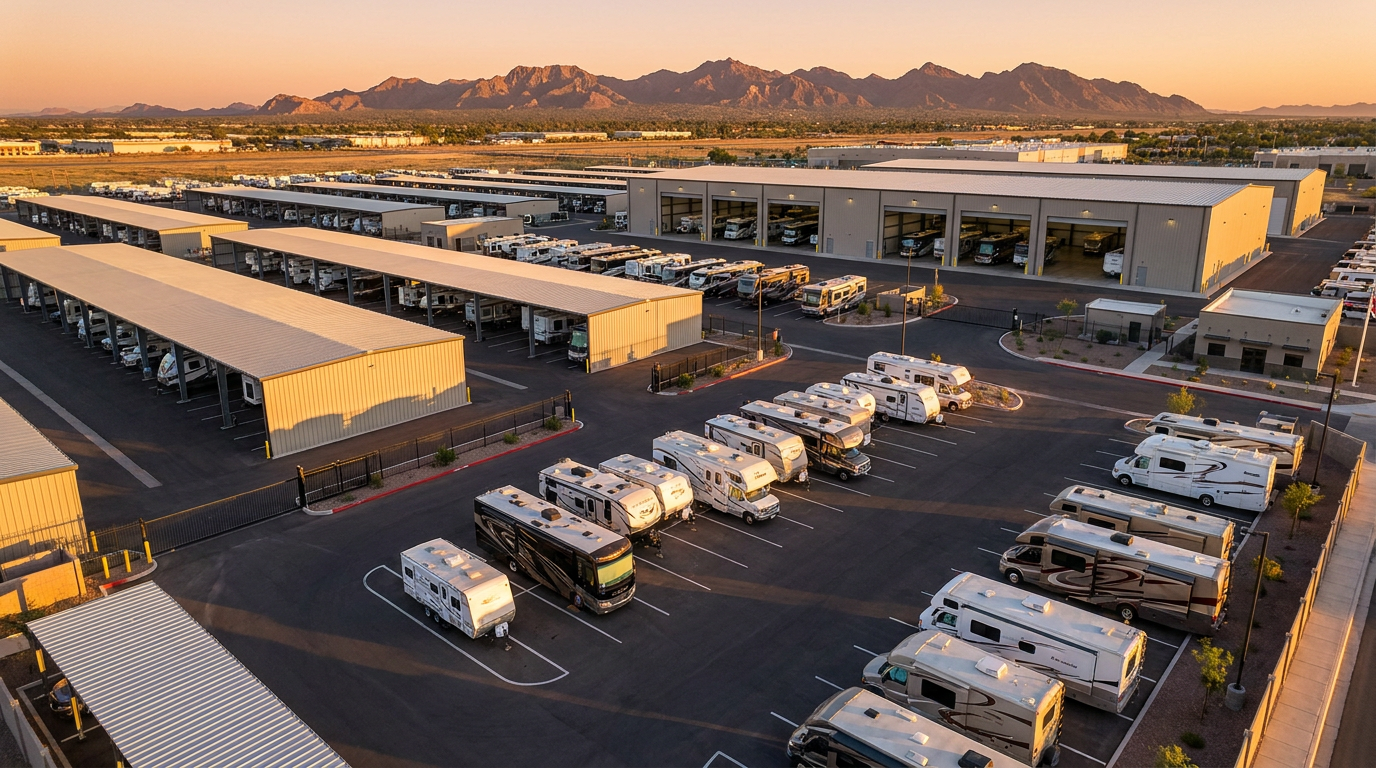
| • | Covered canopy storage: $150 to $300 per month with weather protection |
| • | Indoor enclosed storage: $200 to $460+ per month for maximum security |
| • | Price per linear foot ranges from $3 to $12 depending on storage type |
| • | Mountain and coastal resort areas charge 20 to 40 percent premiums |
2024 RV Storage Cost Breakdown by Type
According to Extra Space Storage's 2024 pricing guide, RV storage prices range from $35 to $582 per month depending on storage type and location. The wide range reflects significant differences between basic outdoor lots and premium indoor facilities with climate control.
Understanding these three storage tiers helps you match your budget to your RV's protection needs. Each tier offers distinct advantages for different climates and vehicle values.
| Storage Type | Monthly Cost Range | Best For | Protection Level |
|---|---|---|---|
| Outdoor Uncovered | $50 to $150 | Budget storage, mild climates | Basic security only |
| Covered Canopy | $150 to $300 | Snow, hail, UV protection | Weather protection |
| Indoor Enclosed | $200 to $460+ | High-value RVs, extreme climates | Maximum protection |
Outdoor Uncovered Storage: $50 to $150 Per Month
Outdoor uncovered storage offers the lowest entry point for RV owners on a budget. According to HomeGuide's 2024 pricing data, outdoor storage costs $75 to $150 per month for average-sized RVs. Peer-to-peer platforms like Neighbor show listings starting as low as $43 per month in some markets.
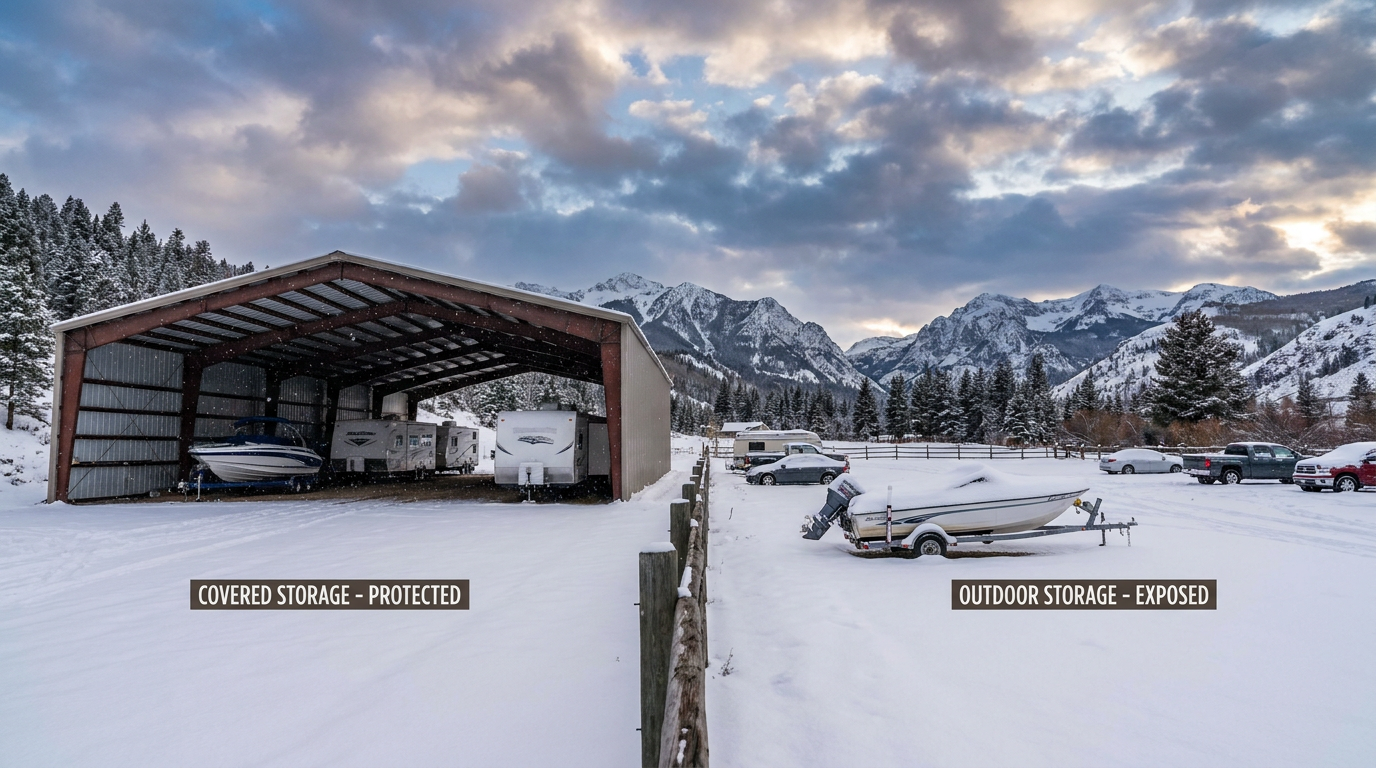
This option works well in mild climates where extreme temperatures, hail, and heavy snow are rare. However, prolonged sun exposure degrades roof seals, fades exterior finishes, and damages tires over 12 to 24 months. Budget an additional $200 to $500 annually for protective covers and tire treatments if choosing uncovered storage.
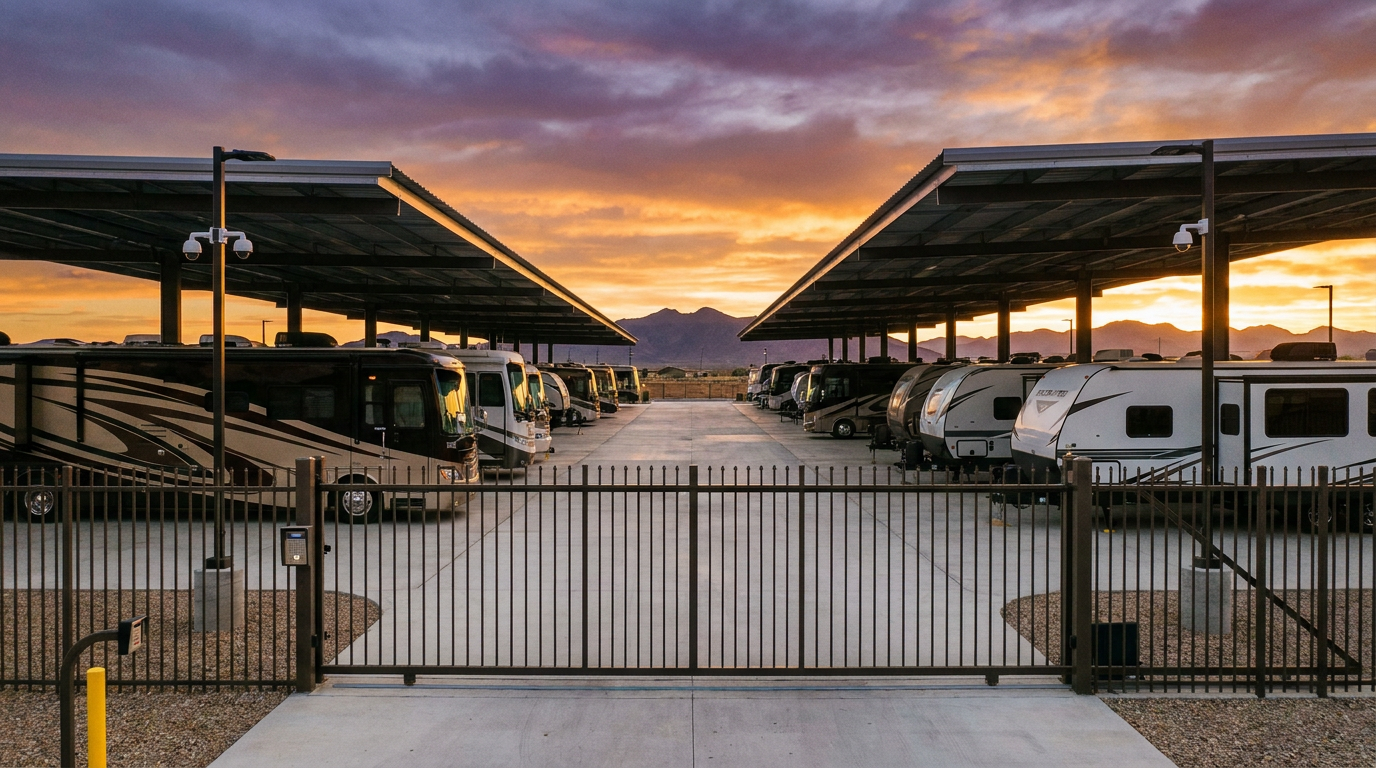
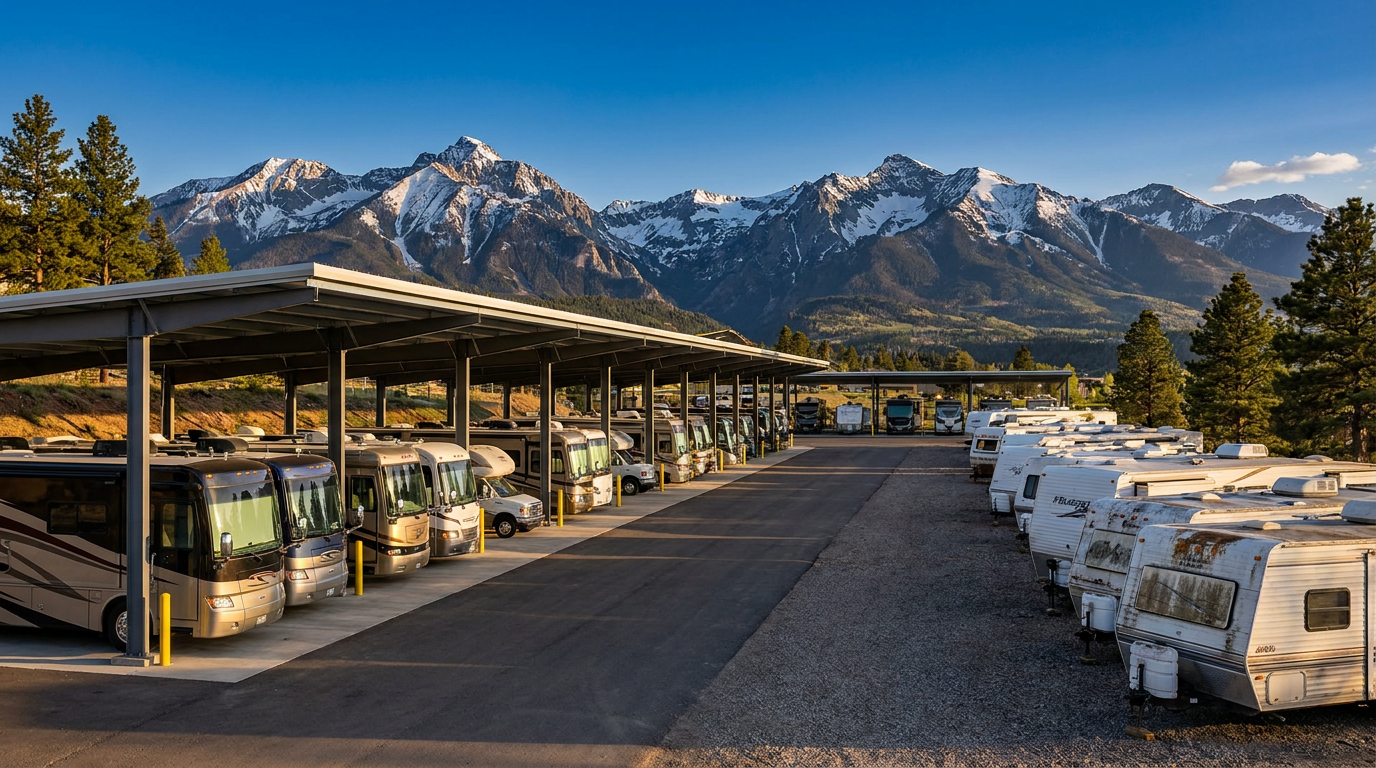
Covered Canopy Storage: $150 to $300 Per Month
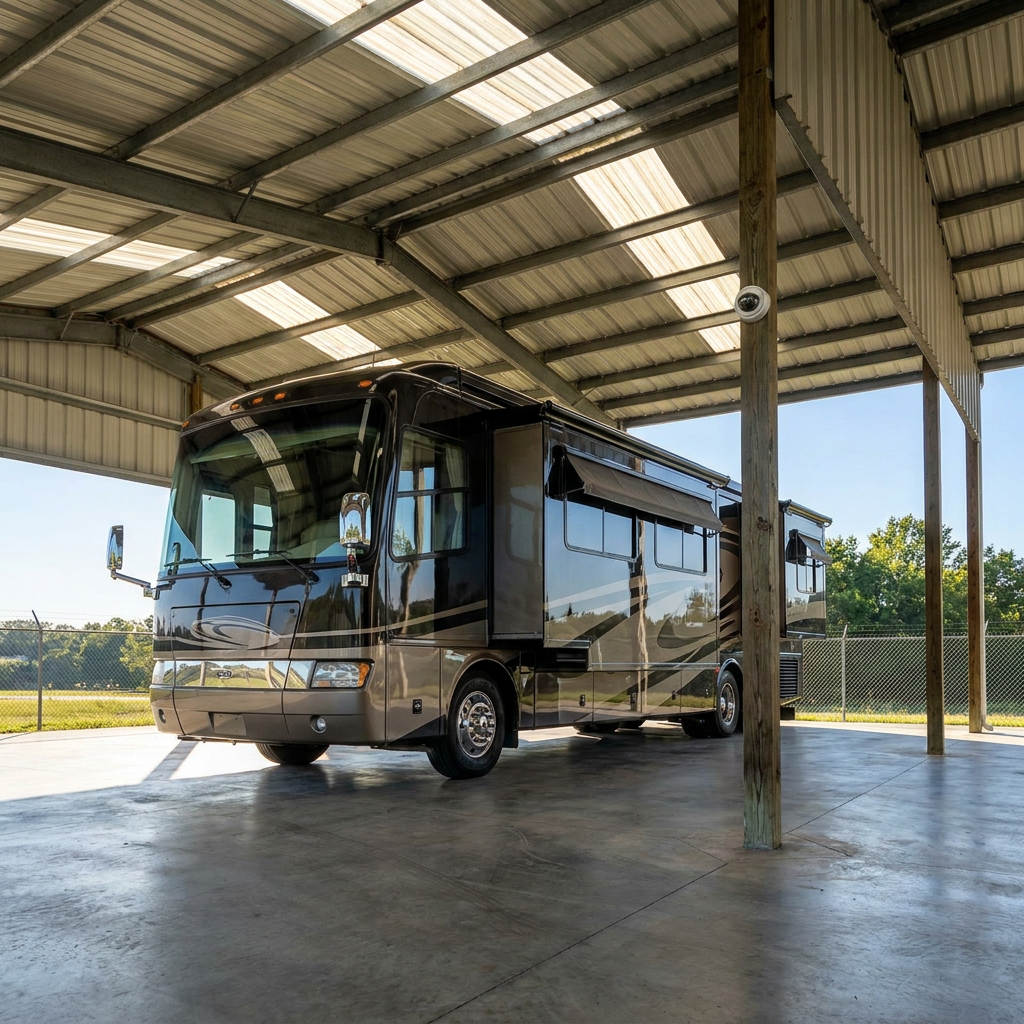
Covered storage provides overhead protection from sun, rain, snow, and hail while maintaining open-air access. This tier typically costs 20 to 40 percent more than uncovered options in the same market. For a 35-foot RV, expect to pay $230 to $320 monthly at most covered facilities.
The investment pays off in regions with harsh weather. Colorado mountain facilities, for example, must handle snow loads exceeding 90 pounds per square foot. Covered RV storage in Colorado protects against hail damage that can cost $5,000 to $15,000 to repair on a single Class A motorhome.
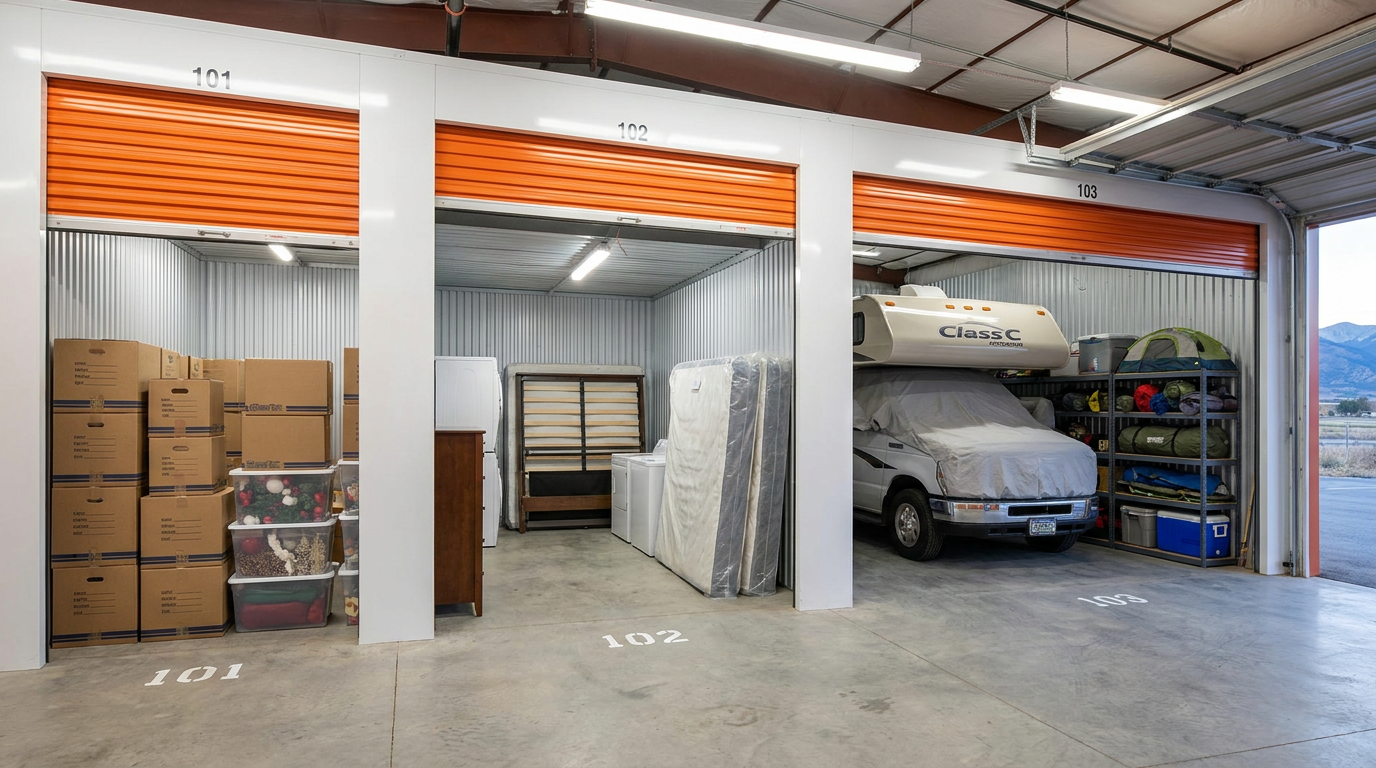
Indoor Enclosed Storage: $200 to $460+ Per Month
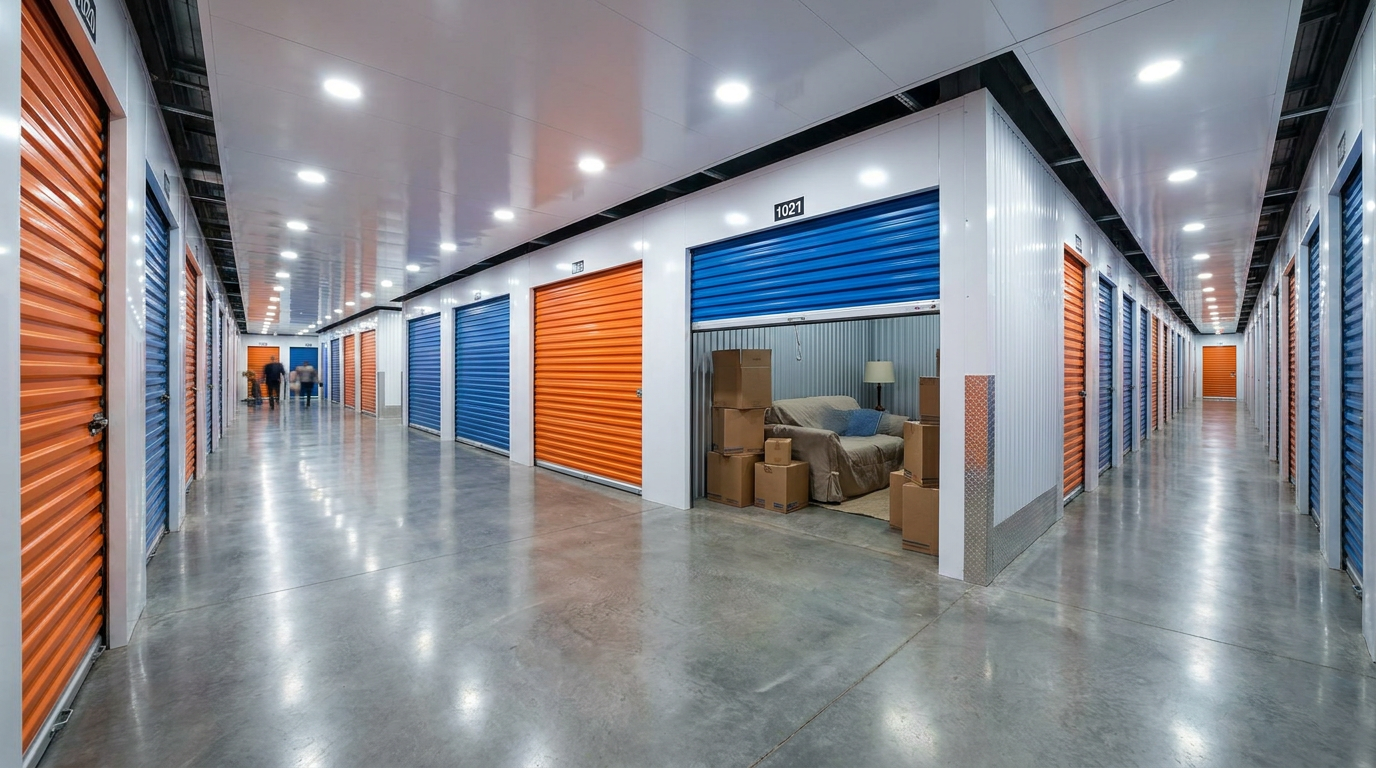
Indoor storage provides maximum protection with full enclosure from weather, pests, and vandalism. According to SecureSpace's pricing analysis, indoor RV storage ranges from $100 to $300 for long-term contracts, with premium facilities charging $400 to $500 monthly.
Climate-controlled indoor storage maintains temperatures between 55 and 80 degrees Fahrenheit, protecting electronics, leather interiors, and plumbing systems. This option makes sense for Class A diesel pushers valued at $200,000 or more, vintage coaches, and RVs stored in extreme heat or humidity.
What Determines RV Storage Prices?
Five primary factors influence your monthly storage cost. Understanding these variables helps you negotiate better rates and identify facilities offering genuine value versus those charging premiums without justification.
Location and Regional Demand
Geographic location creates the largest price variation in RV storage. Urban areas near major metros charge 30 to 50 percent more than rural facilities 30 miles away. Vacation destinations like the Florida Gulf Coast, Southern California, and Colorado ski corridors command premium rates due to high seasonal demand.
Data from Los Alamos County, New Mexico shows public RV storage lots charging $1.50 per square foot monthly. For a 10x30 space (300 square feet), that translates to $450 per month. Private facilities in less regulated markets often undercut municipal rates by 20 to 40 percent.
RV Length and Space Size
Storage facilities price by space dimensions, making RV length the second-largest cost factor. A 25-foot travel trailer requires a 12x25 space costing $150 to $270 monthly. A 45-foot Class A motorhome needs a 12x50 space running $350 to $460 monthly.
Calculate cost per linear foot to compare facilities accurately. A $140 monthly rate for a 40-foot space equals $3.50 per foot. A $120 rate for a 30-foot space equals $4.00 per foot. The larger space actually delivers better value despite the higher total cost. Check the FAQ page for RV storage sizing guidance to determine the right space for your rig.
Security Features and Access
Security infrastructure adds $25 to $75 monthly to base storage rates. Essential security features include perimeter fencing (minimum 6 feet with barbed wire), individual gate access codes, and 24/7 video surveillance with at least 720p resolution.
Facilities with 16 or more UHD security cameras, motion-activated LED lighting, and on-site management justify premium pricing. These features reduce theft and vandalism claims by 60 to 80 percent according to Self Storage Association data. Learn more about secure RV storage facility features when evaluating options.
Amenities and Power Access
Electric hookups for battery trickle charging add $15 to $30 monthly to storage costs. A 20-amp outlet handles most RV battery maintenance needs. A 50-amp hookup supports larger rigs with multiple battery banks and costs $30 to $50 extra monthly.
Additional amenities affecting price include paved surfaces (reduces tire flat spots and undercarriage damage), wide drive aisles (easier maneuvering for large rigs), dump station access, and on-site air for tire inflation. WiFi access and wash stations appear at premium facilities charging $300 or more monthly.
Lease Terms and Contracts
Month-to-month leases typically cost 10 to 15 percent more than 6 or 12-month contracts. However, the flexibility proves valuable for seasonal RV owners who travel 4 to 6 months annually. Avoid facilities requiring deposits exceeding one month's rent or charging excessive early termination fees.
Some facilities offer prepaid annual discounts of 5 to 10 percent. Calculate the break-even point carefully. A $250 monthly rate with 10 percent annual prepay discount saves $300 yearly but locks up $2,700 in capital. For most owners, month-to-month flexibility outweighs marginal prepay savings.
RV Storage Costs by State and Region
Regional pricing varies significantly across the United States. The following data reflects 2024 averages from major storage marketplaces and facility surveys.
| Region | Outdoor Range | Covered Range | Key Factors |
|---|---|---|---|
| Texas | $75 to $150 | $125 to $225 | High supply, moderate demand |
| Florida | $100 to $200 | $175 to $300 | Hurricane season, snowbird demand |
| Colorado | $100 to $175 | $200 to $400 | Mountain weather, resort proximity |
| California | $125 to $250 | $225 to $400 | High land costs, regulations |
| Midwest | $50 to $125 | $100 to $200 | Lower land costs, seasonal use |
According to Neighbor's RV storage cost guide, the average monthly cost for outdoor RV storage nationally falls between $75 and $200. Premium markets in coastal California and mountain resort towns push covered storage above $350 monthly for standard 35-foot spaces.
How to Calculate True RV Storage Value
Comparing storage facilities requires looking beyond the monthly rate. Use this four-step framework to identify the best value for your specific situation.
Step 1: Calculate Cost Per Foot
Divide the monthly rate by your RV's length to get cost per linear foot. This normalizes comparisons across different space sizes. A facility charging $320 for a 35-foot covered space costs $9.14 per foot. A competing facility at $380 for a 45-foot space costs $8.44 per foot, making it better value despite the higher total.
Step 2: Factor in Drive Time
Every 10 minutes of additional drive time costs approximately $5 in fuel and 20 minutes round trip. Over 24 trips annually, a facility 15 minutes farther away costs an extra $240 in fuel and 12 hours of time. A "cheaper" distant facility often costs more than a premium location near your home or travel route.
Step 3: Assess Weather Protection Value
In harsh climates, covered storage prevents damage that far exceeds the monthly premium. Hail damage averages $3,000 to $8,000 per incident on RV exteriors. UV degradation requires $1,500 to $4,000 in roof seal replacement every 3 to 5 years on uncovered rigs. Snow load damage can crack fiberglass caps and damage slide mechanisms.
Step 4: Verify Security ROI
RV theft and vandalism claims average $15,000 to $45,000. A facility with robust security charging $50 more monthly ($600 annually) provides significant insurance value. Check if your RV insurance offers premium discounts of 5 to 15 percent for storing at facilities with verified security features. Consider adding tenant protection coverage for additional peace of mind.
Frequently Asked Questions About RV Storage Costs
What Is the Average Monthly Cost to Store an RV?
The national average for RV storage falls between $100 and $200 per month for outdoor spaces accommodating 25 to 35-foot rigs. Covered storage averages $175 to $275 monthly. Indoor storage averages $250 to $400 monthly. These figures represent mid-market pricing; budget and premium options exist above and below these ranges.
Can You Write Off RV Storage Fees?
RV storage fees are tax-deductible only if you use the RV for business purposes. Self-employed individuals using an RV as a mobile office or for business travel can deduct storage as a business expense proportional to business use. Personal RV storage for recreational use is not deductible. Consult a CPA for guidance on your specific situation.
How Much Does It Cost to Store a 20-Foot Trailer?
A 20-foot travel trailer typically requires a 12x20 or 10x25 storage space. Outdoor storage for this size runs $50 to $100 monthly in most markets. Covered storage costs $125 to $250 monthly. The smaller footprint makes trailers significantly cheaper to store than Class A motorhomes requiring 45 to 50-foot spaces.
What Is the Cheapest Way to Store an RV?
Peer-to-peer storage platforms offer the lowest rates, with some listings starting at $40 to $60 monthly for driveway or farm storage. However, these options typically lack security cameras, gated access, and liability coverage. The cheapest commercial option is outdoor uncovered storage at rural facilities 20 to 30 miles from urban centers, typically $50 to $100 monthly.
Is Covered RV Storage Worth the Extra Cost?
Covered storage is worth the 20 to 40 percent premium in climates with heavy snow, frequent hail, or intense UV exposure. Colorado, Arizona, Texas Panhandle, and Florida experience conditions that accelerate RV deterioration. The $50 to $100 monthly premium prevents $2,000 to $10,000 in weather-related damage over a typical 5-year ownership period.

RV Storage Cost Comparison: Colorado Mountain Region
The Colorado Rocky Mountain corridor presents unique storage challenges that affect pricing. Facilities near Vail, Breckenridge, and Aspen charge premium rates due to limited land, extreme weather demands, and high seasonal demand from ski-season visitors.
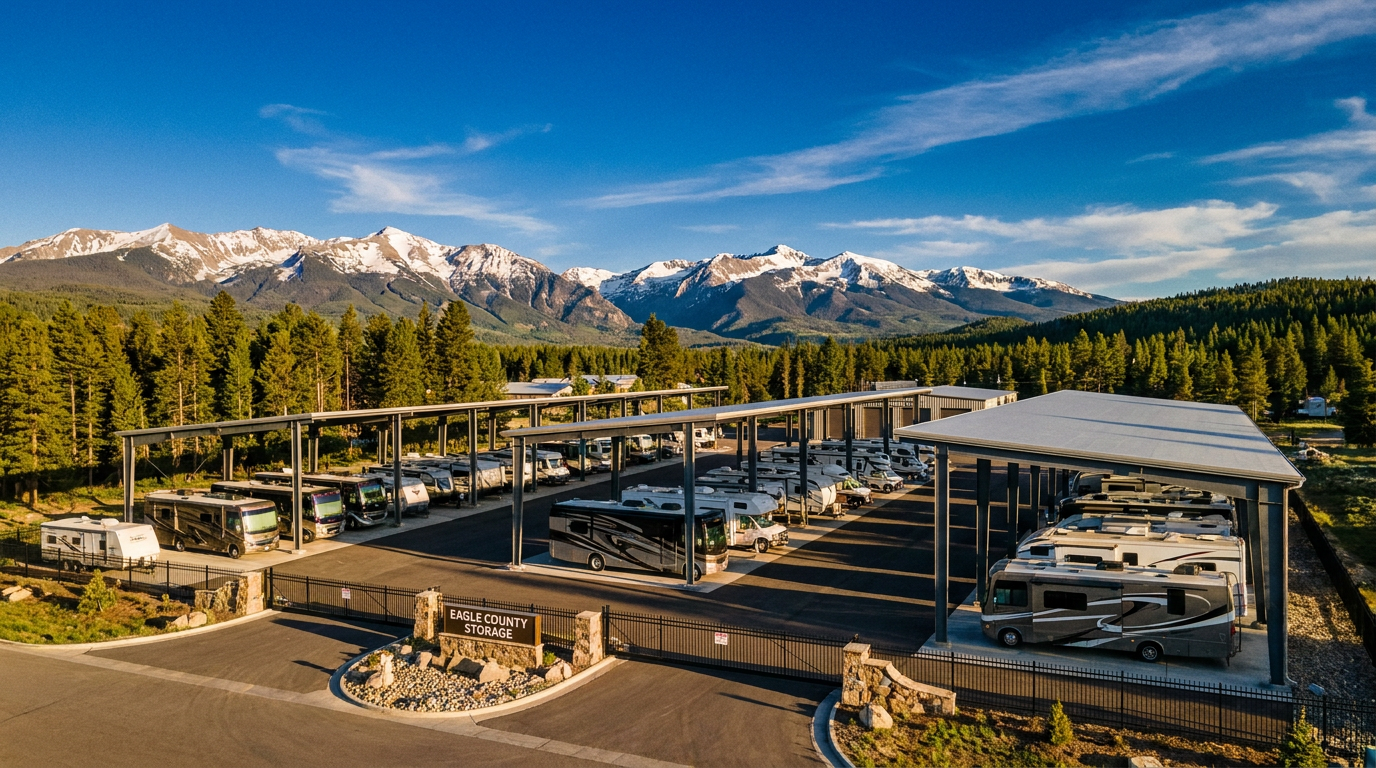
Covered storage in the Eagle County and Summit County areas ranges from $230 to $460 monthly depending on space size and amenities. Facilities near Eagle County Regional Airport (EGE) offer convenient access for owners flying in to retrieve their RVs for camping trips to destinations like Dillon Reservoir or Tiger Run Resort near Breckenridge.
Mountain storage facilities must engineer canopy structures to handle 90+ pound per square foot snow loads. This structural requirement increases construction costs by 40 to 60 percent compared to facilities in milder climates. The investment protects RVs from roof collapse, ice dam damage, and freeze-related plumbing failures that plague uncovered storage in high-altitude locations.
Hidden Costs to Watch For
Beyond the advertised monthly rate, several fees can increase your total storage cost by 15 to 30 percent. Request a complete fee schedule before signing any storage agreement.
Administrative fees: One-time charges of $25 to $75 for processing rental agreements and setting up access codes. Some facilities waive these for online rentals.
Insurance requirements: Many facilities require proof of RV insurance or purchase of on-site coverage adding $15 to $45 monthly. Verify your existing RV policy covers storage-related incidents before paying for duplicate coverage.
Late payment fees: Typically $25 to $50 or 10 percent of monthly rent, whichever is greater. Set up autopay to avoid these charges.
Access fees: Some facilities charge $5 to $15 per entry beyond a monthly limit. Verify 24/7 access is included without per-visit charges.
Electric usage: Power hookups may include a flat fee ($15 to $30 monthly) or meter actual usage. Heavy charging or running appliances during visits can exceed flat-rate allowances.
When to Book RV Storage
Timing affects both availability and pricing. Peak demand seasons vary by region but generally follow predictable patterns.
Book 30 to 60 days before winter in northern states and mountain regions. Facilities fill quickly as owners prepare for snow season. October through November sees the highest demand and lowest availability.
Book 30 to 60 days before summer in southern states where owners store RVs to escape extreme heat. May through June represents peak booking season in Arizona, Texas, and Florida.
Negotiate rates in off-peak months. Facilities often discount 10 to 20 percent during low-demand periods to maintain occupancy. January through March in warm climates and June through August in cold climates offer the best negotiating leverage.
Before storing your RV for an extended period, consider scheduling professional RV winterization services to protect plumbing, batteries, and mechanical systems during storage.
|