Boat and Trailer Storage Near Eagle and Vail: Complete Guide |
| BOAT AND TRAILER STORAGE NEAR EAGLE AND VAIL: WHAT TO KNOW
⏱ 9 min read ·
📄 #1,800 words
Find secure boat and trailer storage near Eagle and Vail, CO. Compare covered vs open storage, pricing from $150/month, and essential features for mountain storage.
|
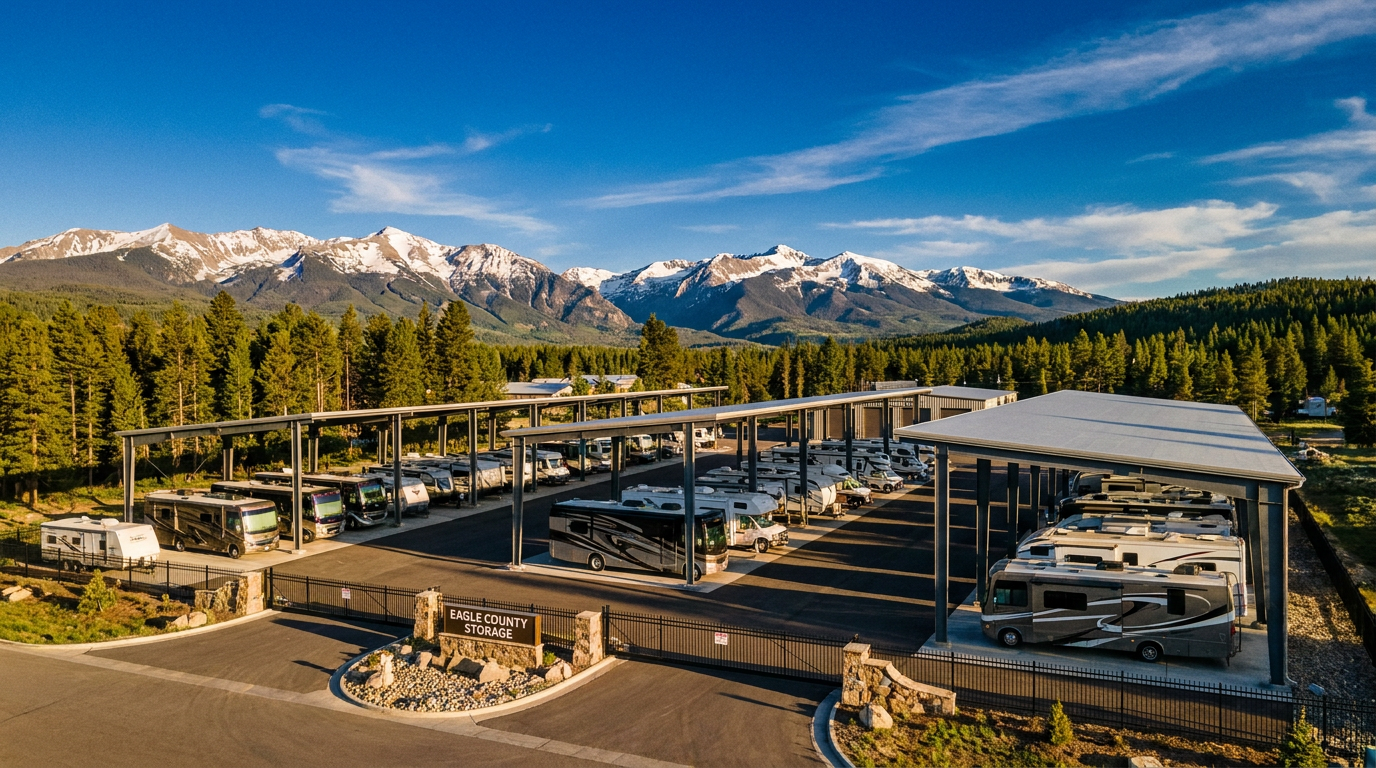
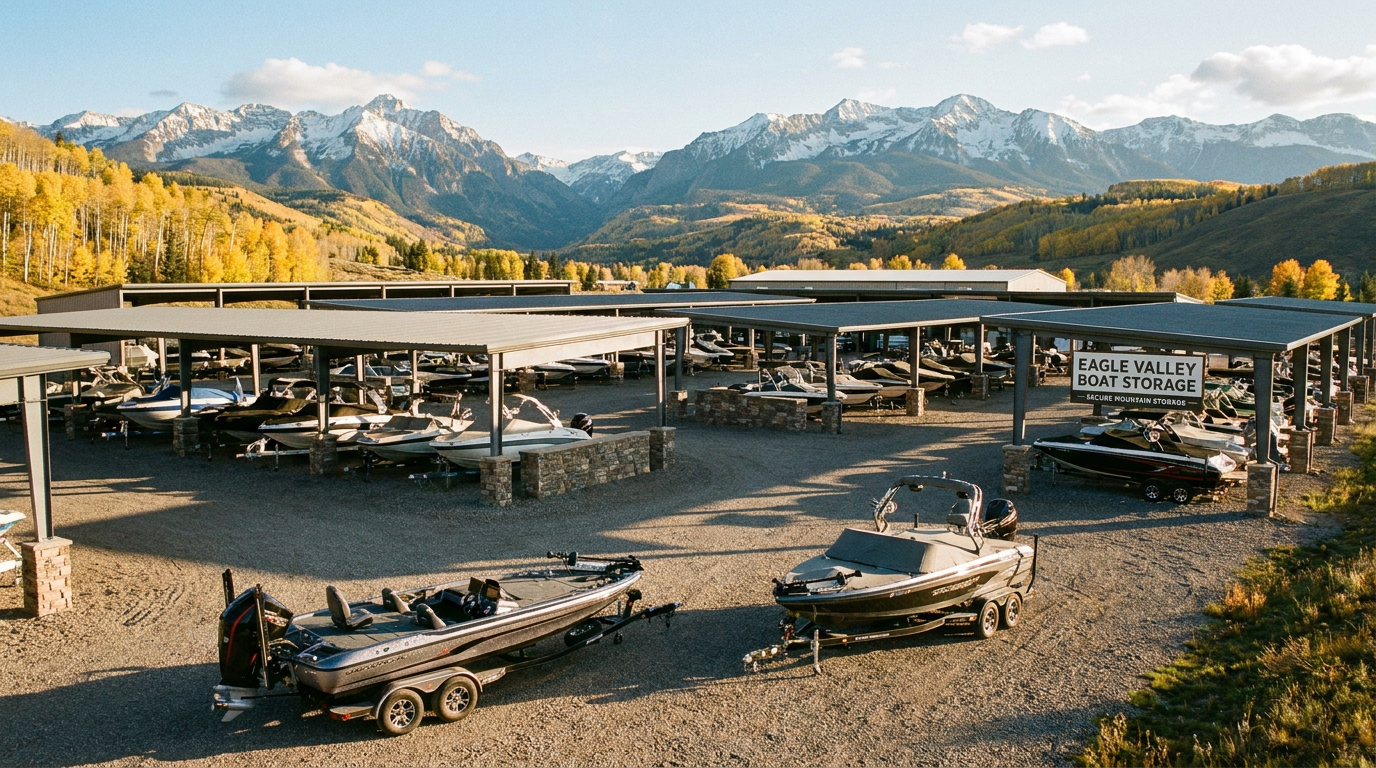
B oat and trailer storage near Eagle and Vail requires covered protection, 24/7 access, and facilities built for Colorado's extreme mountain weather. Storage options in the Gypsum and Eagle County area range from $150 to $460 per month depending on space size and coverage type, with covered canopy spaces offering the best protection against snow loads exceeding 90 pounds per square foot, intense UV radiation at 6,500+ feet elevation, and frequent summer hailstorms.
| Key Points: | |
|---|---|
| • | Covered storage spaces near Eagle range from $230 to $460 per month for sizes 12x15 to 12x50 feet |
| • | Open-air parking starts at $150 per month but exposes boats and trailers to Colorado's harsh UV and hail |
| • | Electric hookups (20-amp or 50-amp) cost $20 per month extra and prevent battery drain during storage |
| • | Month-to-month leases eliminate long-term commitment, ideal for seasonal Vail Valley residents |
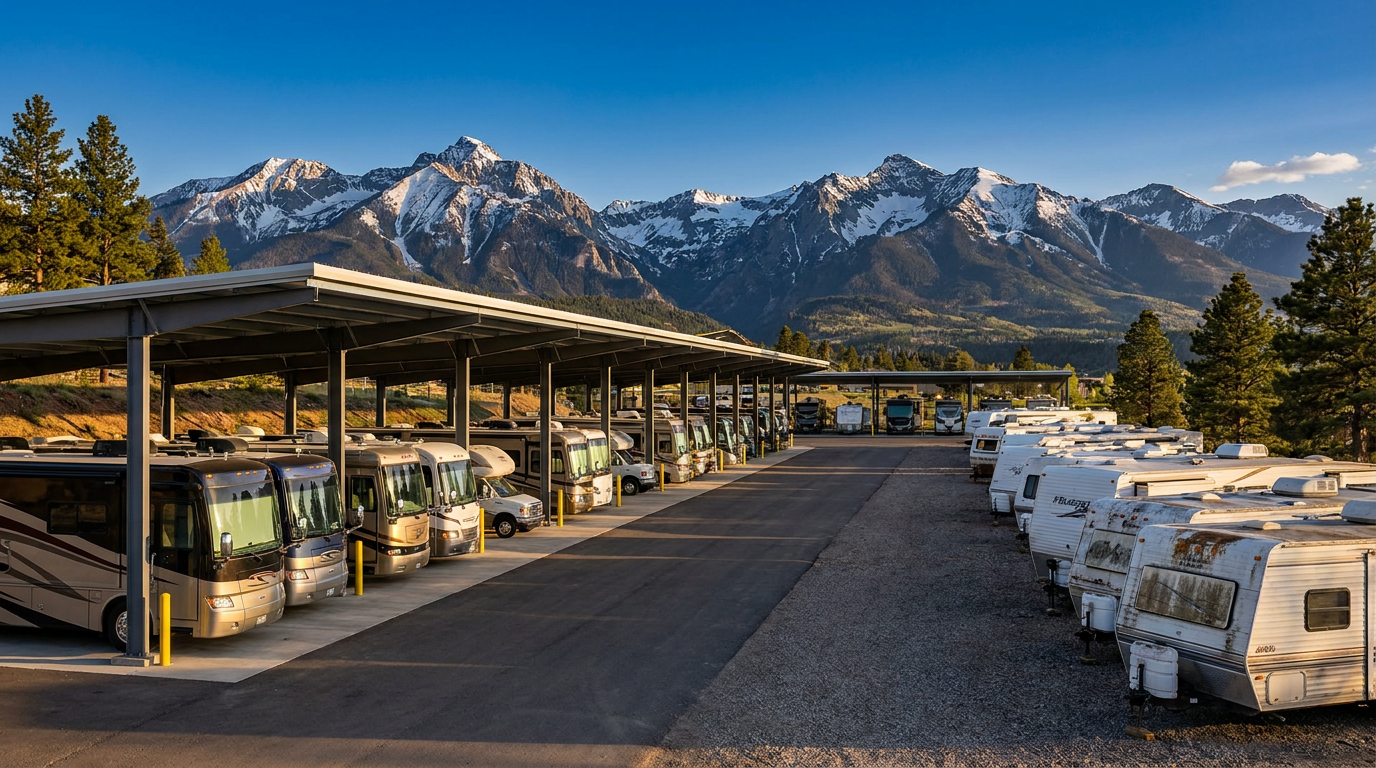
| • | Paved asphalt surfaces prevent tire flat-spotting and undercarriage damage common with gravel lots |
Why Mountain Storage Differs from Standard Facilities
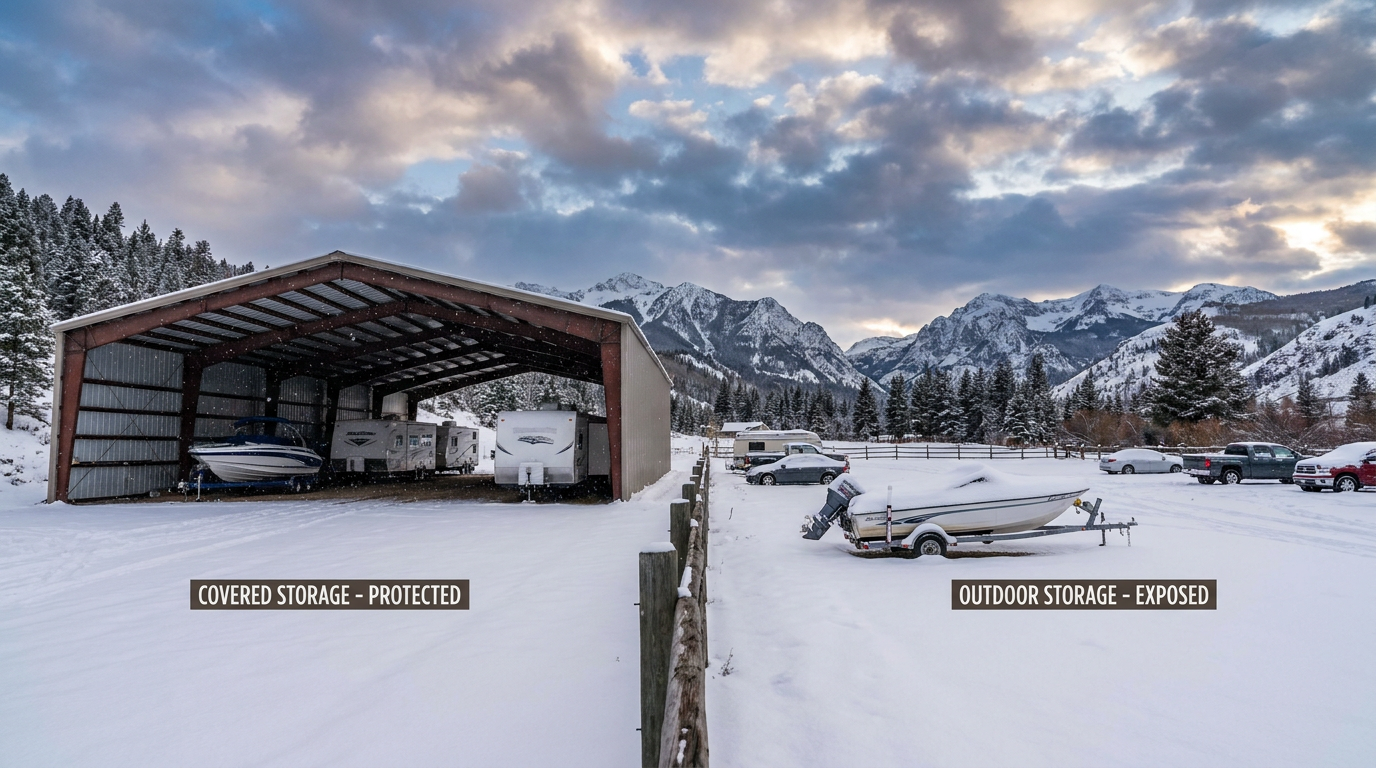
Storing boats and trailers in Eagle County presents challenges that standard storage facilities in lower elevations simply do not face. According to the National Weather Service, the Vail Valley receives an average of 150 inches of snow annually, with individual storms capable of depositing 2 to 3 feet in 24 hours. This snow accumulation creates structural stress on uncovered vehicles that can damage fiberglass hulls, canvas covers, and trailer frames.
UV radiation intensity increases approximately 4% for every 1,000 feet of elevation gain. At Gypsum's 6,500-foot elevation, boats and trailers receive roughly 26% more UV exposure than vehicles stored at sea level. This accelerated UV damage causes gel coat oxidation on boat hulls, rubber seal degradation, and premature cracking of vinyl seats and covers.
Summer hailstorms strike the Vail Valley an average of 8 to 12 times per season between May and September. The National Oceanic and Atmospheric Administration reports that Colorado ranks among the top five states for hail damage claims, with average repair costs exceeding $3,000 per incident for recreational vehicles.
Storage Options Comparison: Covered vs Open
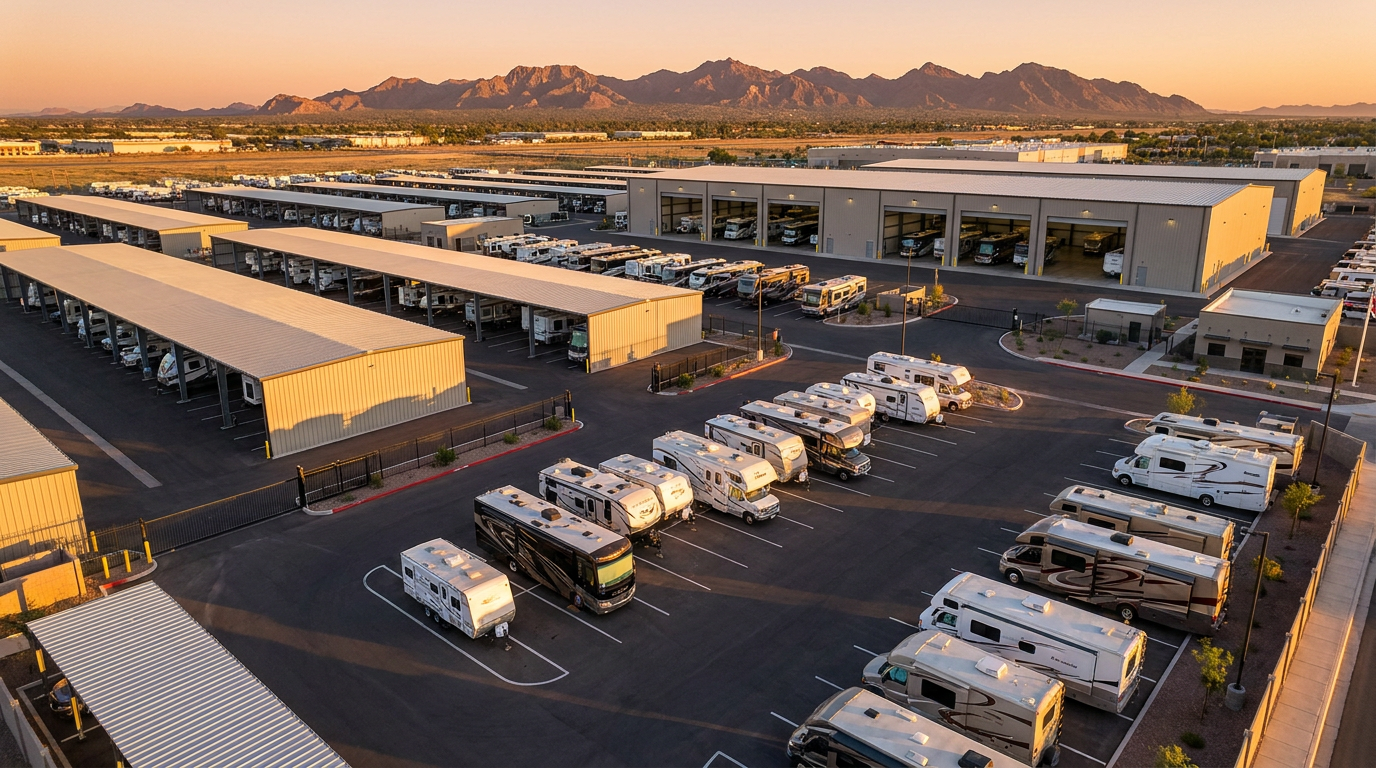
The decision between covered and open storage affects both your monthly costs and long-term vehicle preservation. Facilities near Eagle County Regional Airport (EGE) offer both options, each with distinct advantages for different storage needs and budgets.
| Feature | Covered Canopy Storage | Open-Air Storage |
|---|---|---|
| Monthly Cost (12x20 space) | $250 | $150 |
| Snow Protection | Full overhead coverage, 90+ lbs/sq ft rated | None; requires owner snow removal |
| Hail Protection | Steel canopy deflects hail damage | Fully exposed |
| UV Protection | Partial shade reduces gel coat fade | Direct sun exposure year-round |
| Electric Hookups | Available at every space (20-amp or 50-amp) | Typically not available |
| Best For | Boats, enclosed trailers, vintage vehicles | Utility trailers, short-term overflow |
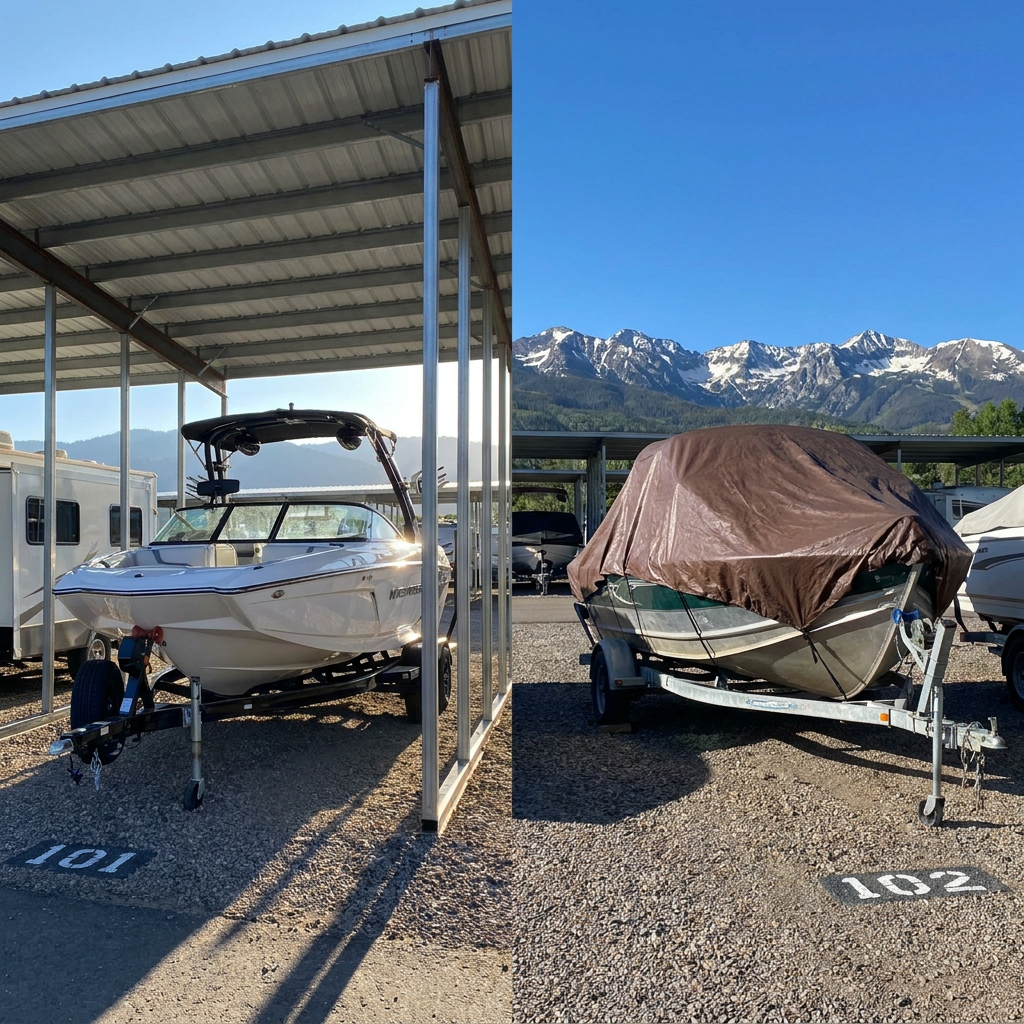
For boat owners specifically, covered storage prevents the gel coat damage that costs $800 to $2,500 to professionally restore. Trailer owners storing enclosed cargo trailers benefit from reduced roof seal deterioration, which typically fails 40% faster under direct Colorado sun exposure.
Space Sizing Guide for Boats and Trailers
Selecting the correct storage space size prevents costly upgrades mid-lease and ensures adequate clearance for safe maneuvering. Most boat and trailer combinations require spaces between 12x25 and 12x45 feet, depending on total length including tongue and hitch.
Measure your boat and trailer from the front of the tongue to the rear of the motor or swim platform. Add 3 to 4 feet for comfortable access and tie-down clearance. A 21-foot bass boat on a single-axle trailer typically measures 26 to 28 feet total, requiring a 12x30 space at minimum.
Common Boat and Trailer Sizes
| Vehicle Type | Typical Length | Recommended Space | Monthly Cost |
|---|---|---|---|
| PWC/Jet Ski on trailer | 12-15 feet | 12x15 or 12x20 | $230-$250 |
| 16-18 ft fishing boat | 20-24 feet | 12x25 | $270 |
| 20-22 ft deck boat | 26-30 feet | 12x30 or 12x35 | $290-$320 |
| 24-26 ft wakeboard boat | 32-38 feet | 12x40 | $380 |
| Enclosed cargo trailer | 16-24 feet | 12x25 or 12x30 | $270-$290 |
| Toy hauler trailer | 28-40 feet | 12x35 to 12x45 | $320-$390 |
For detailed information about available space sizes and current availability, visit the frequently asked questions page which covers sizing recommendations and the rental process.
Essential Features for Mountain Storage Facilities
Not all storage facilities in the Eagle and Vail area offer the same level of protection and convenience. When evaluating options, prioritize these features that directly impact vehicle preservation and access convenience.
Electric Hookups for Battery Maintenance
Boat and trailer batteries discharge naturally at a rate of 1% to 5% per month, even when disconnected. Cold temperatures accelerate this discharge, and batteries stored below 50% charge can suffer permanent sulfation damage within 30 to 60 days. Electric hookups allow connection of trickle chargers or battery maintainers that keep batteries at optimal charge levels throughout storage.
Facilities offering 20-amp hookups accommodate standard battery maintainers and small appliances. Those with 50-amp service support larger RV-style systems and multiple battery banks. At Eagle Canopy RV Storage, electric hookups cost just $20 per month and are available at every covered space.
Paved Surface Requirements
Gravel and dirt storage lots create three significant problems for boats and trailers. First, tires develop flat spots when parked on uneven surfaces for extended periods, requiring replacement at $150 to $400 per tire. Second, moisture wicking through gravel accelerates undercarriage rust on trailer frames. Third, dust and debris contaminate boat covers and work into mechanical components.
Fully paved asphalt surfaces eliminate these issues and provide stable, level parking that prevents trailer frame stress. The RV Industry Association recommends paved storage surfaces for any vehicle stored longer than 30 days.
Security Features to Evaluate
Boat and trailer theft in Colorado increased 12% between 2023 and 2025, according to the National Insurance Crime Bureau. Essential security features include perimeter fencing at least 6 feet tall, individual access codes rather than shared gate codes, and continuous video surveillance with recording capabilities.
Facilities with LED flood lighting throughout the property deter opportunistic theft and improve safety during early morning or evening access. The locally owned Eagle Canopy facility features 16 UHD security cameras, a 9-foot barbed wire perimeter fence, and individualized gate access codes for each tenant.
Location Advantages: Gypsum and the I-70 Corridor
Storage facilities located in Gypsum offer strategic advantages for boat and trailer owners throughout Eagle County. The town sits at the intersection of Interstate 70 and Highway 6, providing direct access to both the Vail Valley and destinations west toward Grand Junction.
Proximity to Eagle County Regional Airport (EGE) benefits seasonal residents who fly into Vail for skiing or summer recreation. Storing boats and trailers near the airport eliminates the need to tow vehicles from distant facilities, saving 45 to 90 minutes of drive time each trip. For travelers needing parking near Eagle County Regional Airport, covered storage provides a secure option for extended trips.
The Costco location adjacent to many Gypsum storage facilities allows convenient provisioning before heading to campgrounds or marinas. Popular boating destinations within 90 minutes include Green Mountain Reservoir, Dillon Reservoir, and Wolford Mountain Reservoir.
Preparing Your Boat or Trailer for Storage
Proper preparation before storage prevents costly repairs and ensures your vehicle is ready for immediate use when retrieved. Complete these steps before parking your boat or trailer for any period longer than 30 days.
Boat Preparation Checklist
Drain all water from the engine, livewell, and bilge to prevent freeze damage. In Gypsum, overnight temperatures drop below freezing an average of 180 nights per year, making winterization essential even for fall storage. Stabilize fuel with a product like Sta-Bil and run the engine for 10 minutes to circulate treated fuel through the system.
Remove all food, drinks, and organic materials that attract rodents. Apply rodent deterrent around the engine compartment and storage areas. Disconnect the battery if no electric hookup is available, or connect a battery maintainer if hookups are provided.
For comprehensive winterization services, including engine fogging, antifreeze treatment, and battery conditioning, review the RV winterization services in the Vail Valley that also accommodate boat systems.
Trailer Maintenance Before Storage
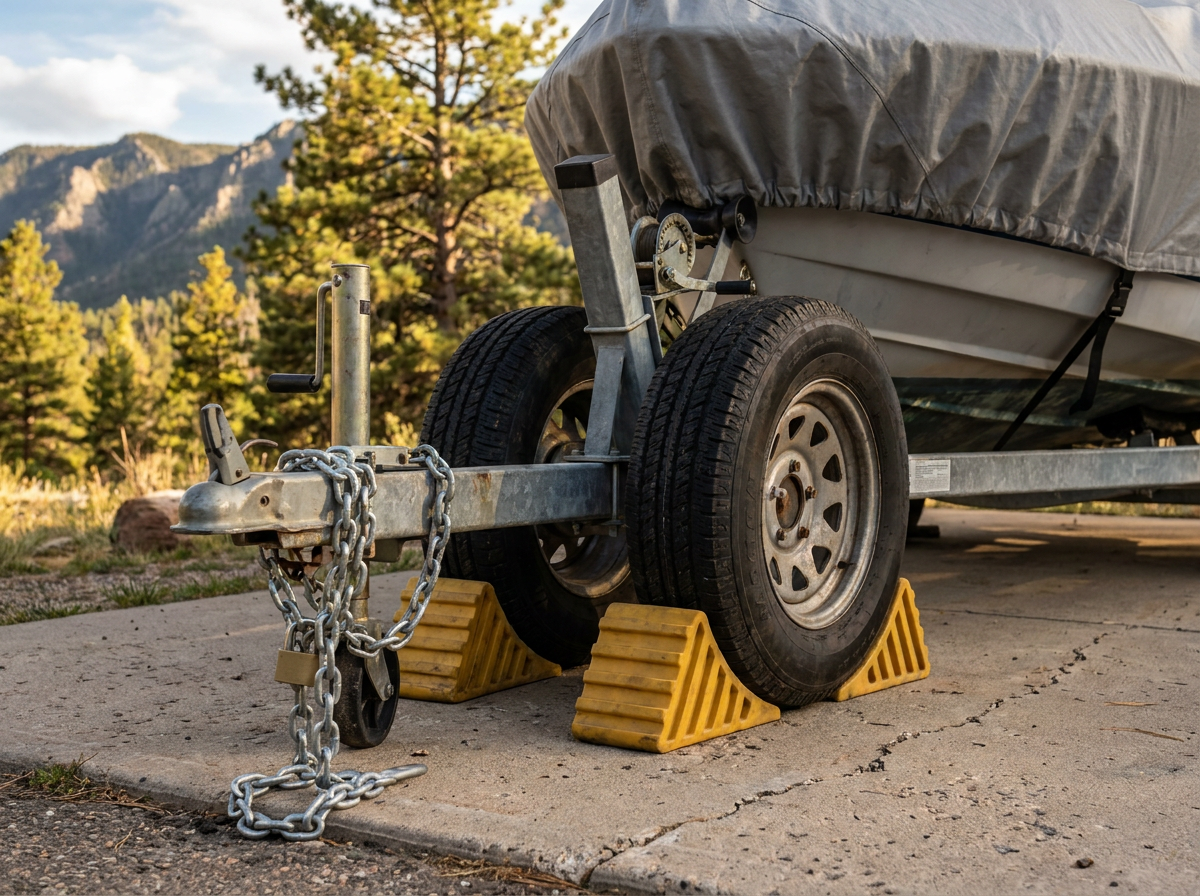
Inspect tire pressure and inflate to the manufacturer's recommended PSI, typically found on the tire sidewall. Underinflated tires develop flat spots faster and may crack at the sidewalls. Consider tire covers to block UV exposure if storing in open-air spaces.
Grease wheel bearings and inspect brake components for wear or corrosion. Apply a light coating of WD-40 or similar protectant to the coupler, jack mechanism, and any exposed metal surfaces. Check that all lights function properly and replace any corroded bulb sockets before storage.
Understanding Lease Terms and Flexibility
Storage lease structures vary significantly between facilities. Annual contracts may offer 5% to 15% discounts but lock owners into payments during months they may not need storage. Month-to-month leases provide flexibility for seasonal users who only need storage during specific periods.
Most facilities in the Eagle and Vail area require first month payment plus a security deposit equal to one month's rent. Some facilities waive deposit requirements entirely, reducing upfront costs by $150 to $460 depending on space size. Facilities offering online rental with immediate move-in capability eliminate waiting periods and allow same-day access.
For protection against unexpected damage during storage, consider a tenant protection plan that covers burglary, fire, water damage, and other incidents not covered by standard homeowner's or auto insurance policies.
Frequently Asked Questions
Can I access my boat or trailer at any time?
Facilities with 24/7 gated access allow retrieval at any hour, which is essential for early morning fishing trips or last-minute weekend plans. Verify that access codes work independently and are not shared among all tenants, as individual codes improve both security and accountability.
Do I need insurance for stored boats and trailers?
Most storage facilities require proof of insurance or purchase of a tenant protection plan. Standard boat insurance policies typically cover stored vehicles, but verify with your provider that off-premises storage is included. Gaps in coverage can leave owners responsible for theft or weather damage claims.
How far in advance should I reserve a space?
Peak demand for boat and trailer storage occurs in September and October as owners prepare for winter. Covered spaces at popular facilities often maintain waitlists during these months. Reserving 4 to 6 weeks before your intended move-in date ensures availability, particularly for larger spaces (12x40 and above).
What happens if I need to switch to a different size space?
Month-to-month leases typically allow size changes with 30 days notice, subject to availability. Facilities with multiple space sizes on the same property make transitions easier than those with limited options. Confirm the facility's transfer policy before signing any lease agreement.
|