RV Storage in Eagle, CO: Covered vs Outdoor Storage Guide |
| RV STORAGE IN EAGLE, CO: COVERED VS OUTDOOR STORAGE GUIDE
⏱ 11 min read ·
📄 #2,068 words
Compare covered vs outdoor RV storage in Eagle and Gypsum, CO. Learn costs, weather protection benefits, and what Colorado mountain climate demands for your RV.
|
C overed RV storage in Eagle County, Colorado costs $230 to $460 per month depending on space size, while outdoor parking runs approximately $150 per month. At 6,500 feet elevation, covered storage reduces UV damage by blocking direct sunlight, prevents snow accumulation on your roof, and protects against hail that causes an average of $4,500 in RV repairs per incident in Colorado mountain communities.
| Key Points: | |
|---|---|
| • | Covered storage in Eagle/Gypsum ranges from $230 to $460 monthly; outdoor parking starts at $150 monthly |
| • | UV radiation at 6,500 feet is 25% stronger than sea level, accelerating seal and tire degradation |
| • | Steel canopy structures rated for 90+ lbs/sq ft snow loads protect against Colorado's heavy winter storms |
| • | Electric hookups ($20/month extra) allow battery trickle charging, preventing cold weather battery failure |
| • | Month-to-month leases with no deposit provide flexibility for seasonal RV owners |
Why Eagle County's Climate Demands Careful Storage Decisions
Eagle and Gypsum sit at elevations between 6,300 and 6,500 feet in Colorado's Rocky Mountain corridor. This high-altitude location creates storage challenges that differ significantly from lower elevation markets. According to the Carefree of Colorado RV storage guide, proper seasonal storage preparation is critical in mountain environments where temperature swings of 50 degrees can occur within 24 hours.
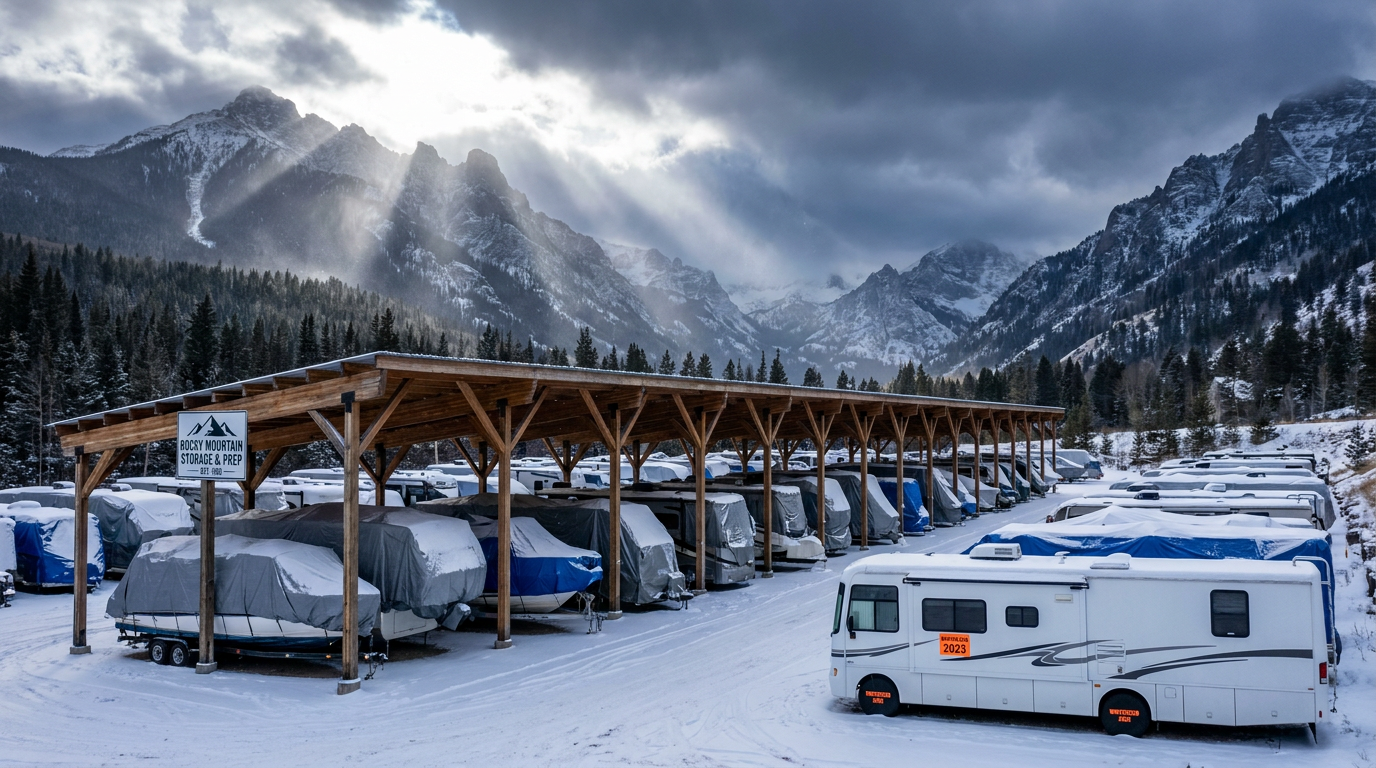
The National Weather Service reports Eagle County receives an average of 67 inches of snow annually. Winter storms can dump 12 to 18 inches in a single event, creating snow loads that stress RV roofs, seals, and slide-out mechanisms. Freeze-thaw cycles between November and April cause expansion and contraction that degrades caulking and weatherstripping faster than in stable climates.
Summer brings its own challenges. The Colorado sun at this elevation delivers UV radiation approximately 25% more intense than at sea level. This accelerated UV exposure causes rubber seals to crack, exterior paint to fade, tire sidewalls to deteriorate, and decals to peel within 2 to 3 years of continuous outdoor exposure.
Covered vs Outdoor RV Storage: Complete Comparison
Understanding the specific differences between covered and outdoor storage helps you make an informed decision based on your RV's value, your budget, and how long you plan to store.
| Factor | Covered Storage | Outdoor Storage |
|---|---|---|
| Monthly Cost (Eagle/Gypsum) | $230 to $460 | $150 |
| UV Protection | Blocks direct sunlight; extends seal life 3 to 5 years | Full exposure; seals degrade 40% faster at elevation |
| Snow Load Protection | Canopy rated 90+ lbs/sq ft; snow stays off RV roof | Snow accumulates; requires manual removal |
| Hail Protection | Steel roof deflects hail damage | Exposed to hail; average repair cost $4,500 |
| Electric Hookups | Available at most covered facilities; 20 or 50 amp | Rarely available |
| Best For | Newer RVs, full-body paint, long-term storage | Older rigs, tight budgets, short-term storage |
Covered RV Storage: Benefits and Limitations
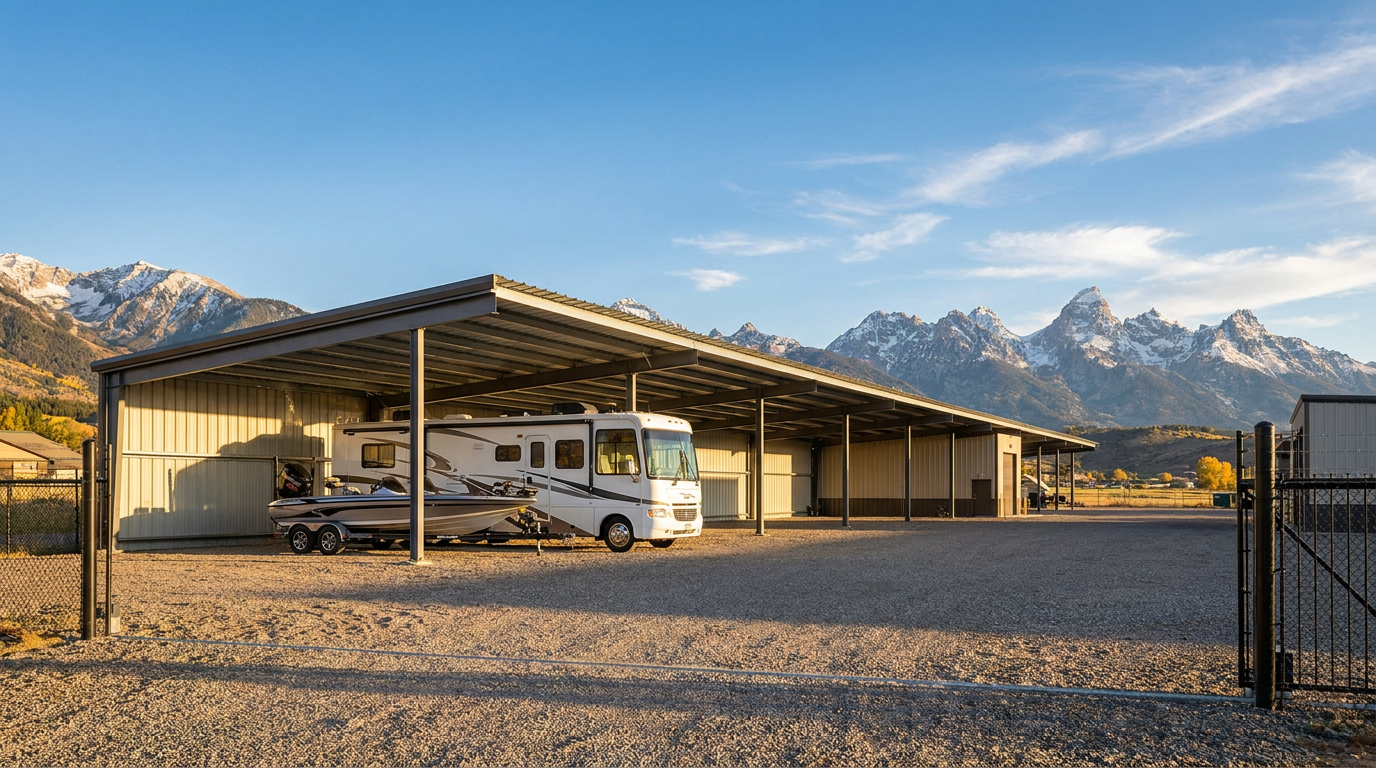
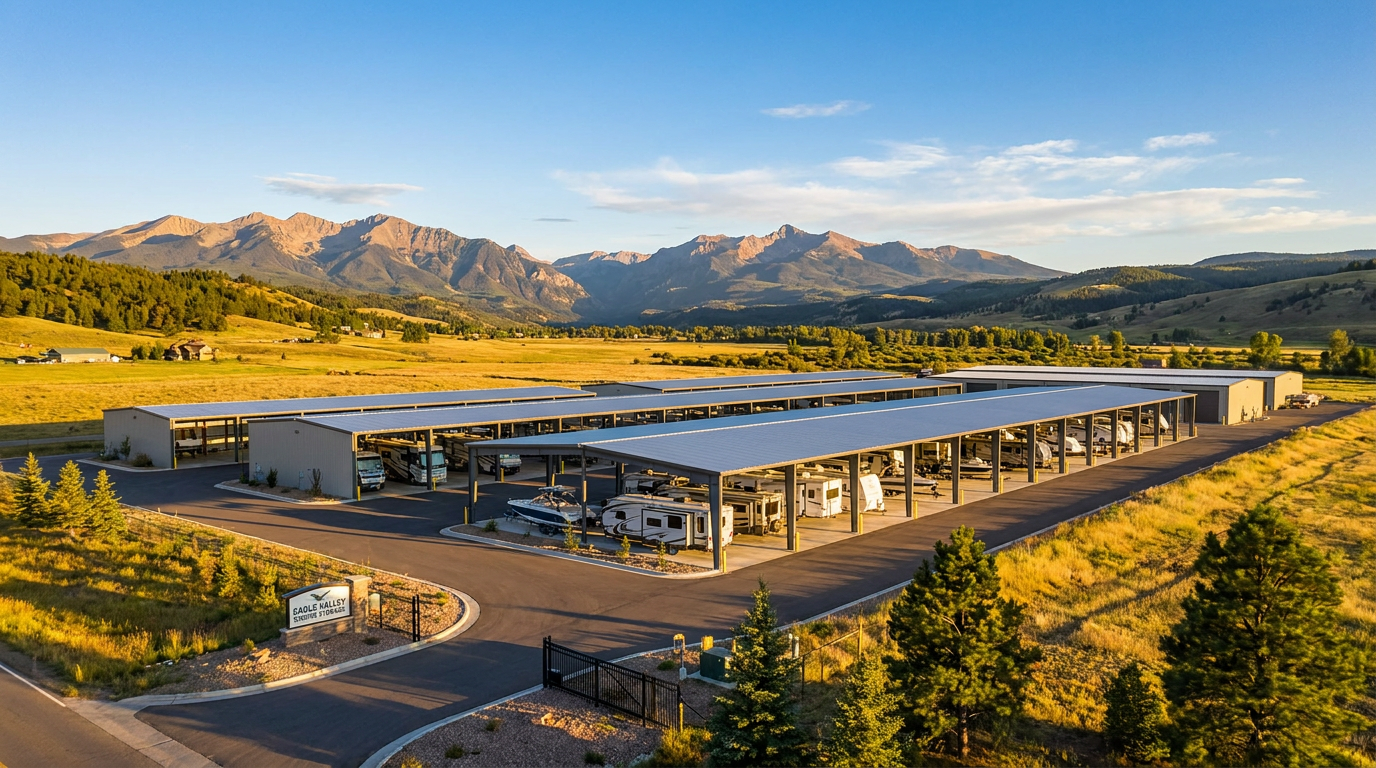
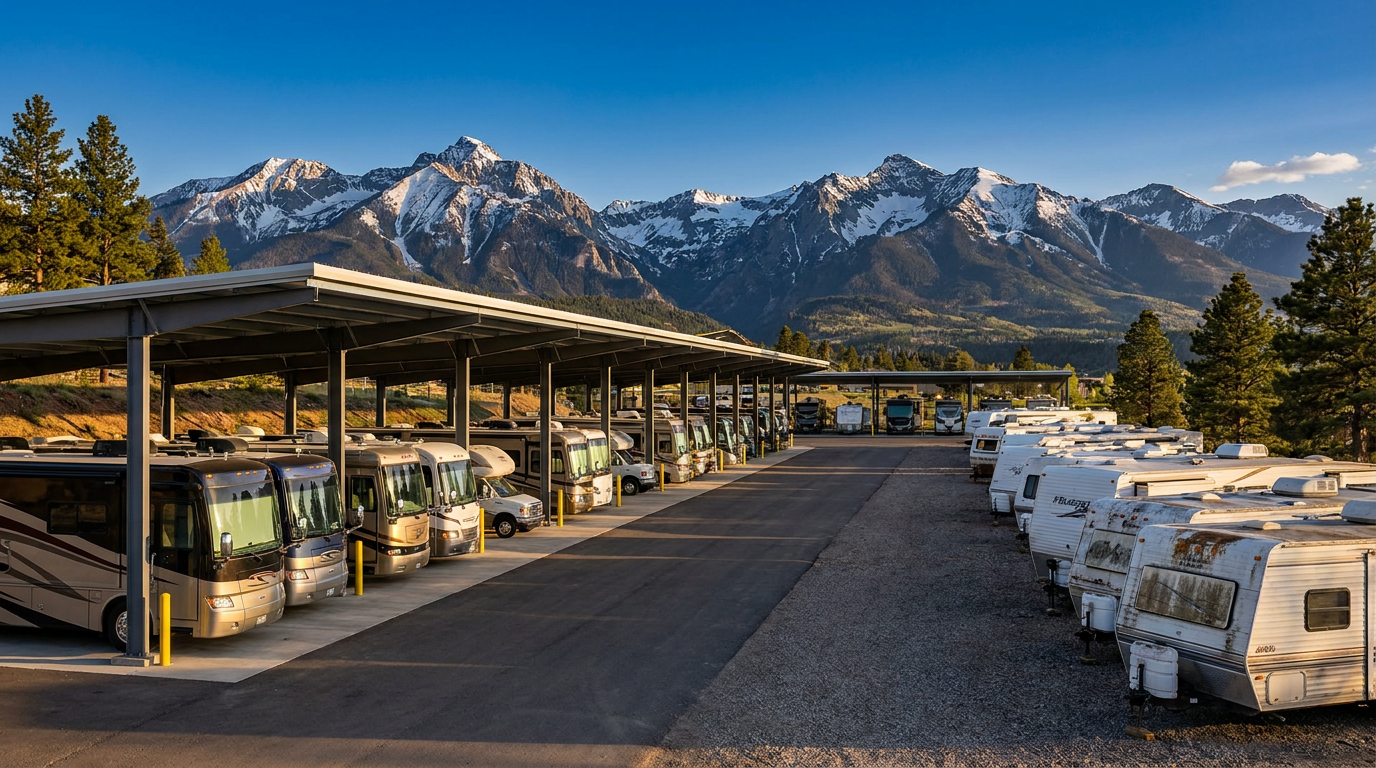
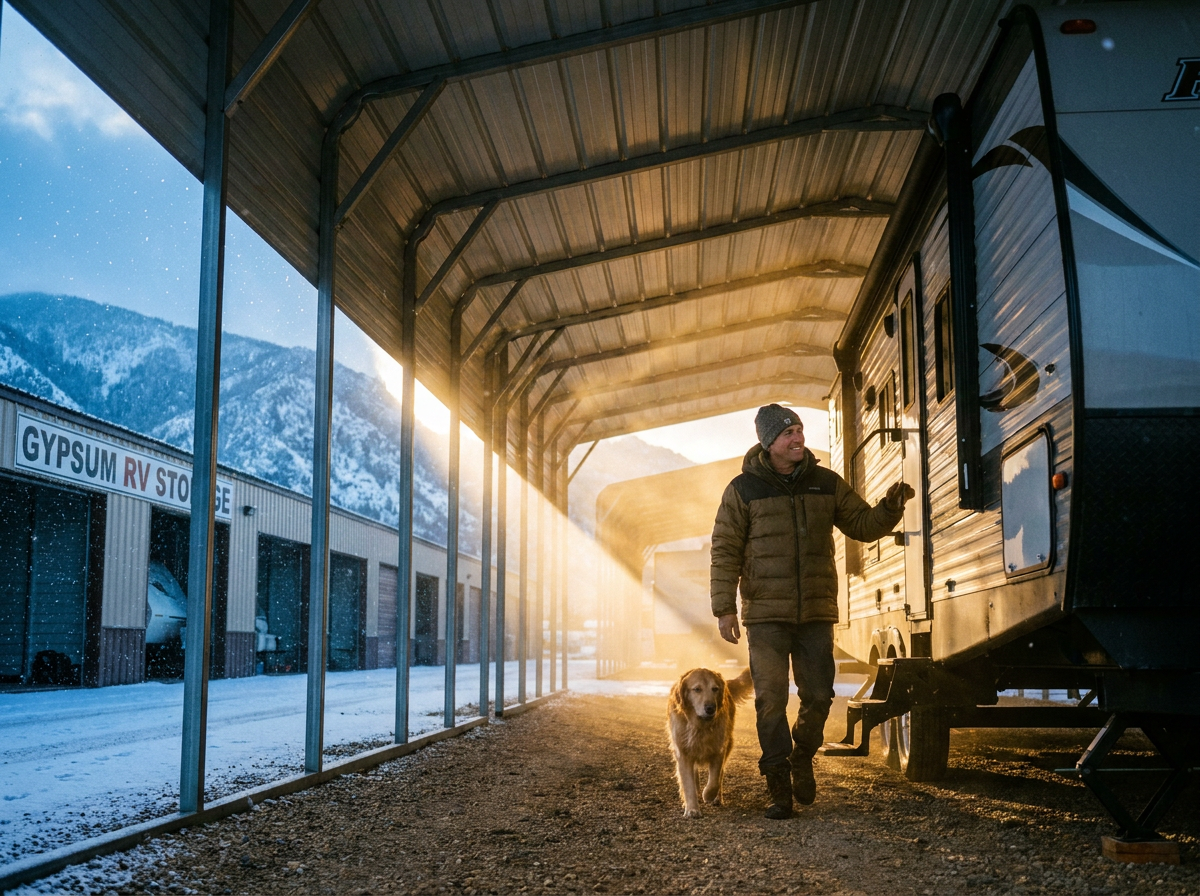
Steel canopy structures provide the middle ground between fully enclosed indoor storage (which is rare and expensive in Eagle County) and open-air lots. According to Lockaway Storage's comparison guide, covered parking offers approximately 70% of indoor storage protection at 40% to 60% of the cost.
Weather Protection at High Elevation
Heavy-duty steel canopies in the Gypsum area are engineered to handle snow loads exceeding 90 pounds per square foot. This structural capacity means the canopy absorbs winter storm weight rather than your RV's roof membrane. For context, a 30-foot Class C motorhome roof can accumulate 2,000 to 3,000 pounds of snow during a major storm, stressing seams and potentially causing leaks.
Hail protection represents another significant advantage. Eagle County experiences 3 to 5 significant hail events annually between May and August. A single severe hailstorm can cause $4,500 to $12,000 in damage to an unprotected RV, including dented aluminum siding, cracked fiberglass, and destroyed rooftop AC units. Steel canopy coverage eliminates this risk.
Long-Term Value Preservation
RV owners who store under cover report 30% to 50% less frequent exterior maintenance compared to outdoor storage. Reduced UV exposure means less frequent waxing (annually vs quarterly), longer intervals between roof resealing (5 to 7 years vs 2 to 3 years), and extended tire life (6 to 8 years vs 3 to 4 years).
For a $150,000 Class A diesel pusher or a $75,000 fifth wheel, these maintenance savings compound significantly over a 10-year ownership period. The premium for covered storage often pays for itself through reduced repair and replacement costs.
Potential Limitations
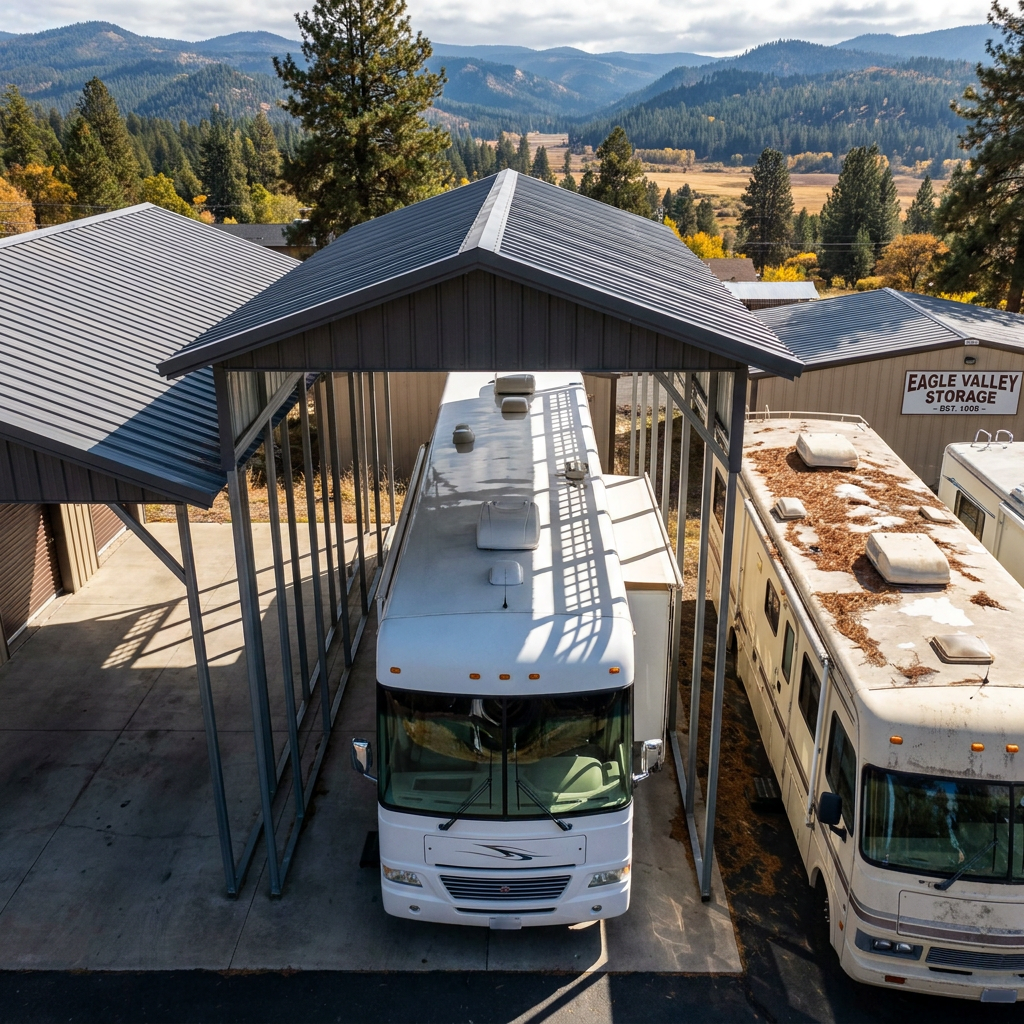
Covered storage does have constraints. Canopy heights typically range from 14 to 16 feet, which accommodates most RVs but may challenge certain tall fifth wheels with roof-mounted satellite dishes or extra AC units. Always measure your RV's total height including rooftop accessories before reserving a covered space.
Availability can also be limited. Covered spaces in the Eagle/Gypsum market often fill during fall as owners prepare for ski season storage. Reserving 4 to 6 weeks before your intended move-in date increases your chances of securing your preferred space size.
Outdoor RV Storage: When It Makes Sense
Outdoor parking remains the most affordable option and serves specific needs well. As SpareFoot's Eagle, CO listings show, uncovered spaces provide basic security and accessibility at the lowest price point.
Budget-Conscious Storage
At $150 per month versus $230 to $460 for covered options, outdoor storage saves $960 to $3,720 annually. For owners of older RVs (10+ years) where cosmetic aging is less concerning, this savings may outweigh weather protection benefits.
Short-term storage between trips also suits outdoor lots. If you're storing for 2 to 4 weeks between camping excursions during summer months, weather exposure is minimal and covered premiums may not be justified.
Maintenance Requirements
Outdoor storage demands more active owner involvement. Plan for quarterly inspections to check roof seams, window seals, and tire condition. Budget for washing and waxing every 2 to 3 months during summer to combat UV damage. In winter, you may need to visit after major storms to clear snow from the roof and around slide-outs.
These maintenance tasks require 4 to 8 hours monthly during peak seasons. Factor this time investment into your decision alongside the monthly cost savings.
Space Sizes and What Fits
Choosing the correct space size prevents damage from tight maneuvering and ensures you're not overpaying for unused square footage. The Eagle Canopy FAQ page provides detailed guidance on measuring your RV and selecting appropriate dimensions.
| Space Size | Best For | Typical Monthly Cost |
|---|---|---|
| 12x15 to 12x20 | Pop-up campers, small trailers, boats under 18 feet | $230 to $250 |
| 12x25 to 12x30 | Travel trailers 20 to 26 feet, Class B vans | $270 to $290 |
| 12x35 to 12x40 | Class C motorhomes, fifth wheels 28 to 35 feet | $320 to $380 |
| 12x45 to 12x50 | Class A motorhomes, large fifth wheels 38 to 45 feet | $390 to $460 |
Measure your RV from the front of the hitch or tow bar to the rear bumper, adding 2 to 3 feet for comfortable access. Height measurements should include rooftop AC units, antennas, and any satellite dishes.
Electric Hookups: Why They Matter in Cold Climates
Battery maintenance represents a critical concern for RVs stored through Colorado winters. Lead-acid and AGM batteries lose 10% to 15% of their charge monthly when sitting idle. In temperatures below 32°F, a discharged battery can freeze and crack, requiring $200 to $600 replacement.
Electric hookups allow you to connect a battery tender or trickle charger that maintains optimal charge levels throughout storage. At Eagle Canopy's covered RV storage facility, every covered space includes 20-amp electrical service for $20 monthly, with 50-amp options available for larger rigs requiring more power.
Beyond battery maintenance, electric access enables running a small dehumidifier to prevent interior moisture buildup, powering a block heater for diesel engines during extreme cold, and keeping refrigerator seals from sticking by running the unit periodically.
Security Features to Evaluate
RV theft and break-ins occur in Eagle County, though less frequently than in urban markets. The Insurance Information Institute reports RV theft claims average $32,000 nationally. Proper facility security significantly reduces risk.
Essential Security Elements
Gated access with individualized entry codes prevents unauthorized visitors and creates an access log. Look for facilities using keypads or app-based systems rather than shared padlock combinations. 24/7 camera surveillance with UHD recording quality provides evidence if incidents occur and deters opportunistic theft.
Perimeter fencing should be at least 6 feet tall with barbed wire or similar deterrents. Well-lit facilities with LED flood lighting eliminate dark corners where break-ins might go unnoticed. The Eagle Canopy facility in Gypsum features 16 UHD security cameras, a 9-foot barbed wire perimeter fence, and individualized gate codes for each tenant.
Insurance and Protection Plans
Your RV insurance policy may have storage limitations or exclusions. Review your coverage with your insurance agent before selecting a storage facility. Many facilities offer tenant protection plans that cover burglary, fire, water damage, and other incidents at rates of $15 to $30 monthly.
Location Convenience: I-70 Corridor Access
Eagle and Gypsum's position along the I-70 corridor provides strategic advantages for RV owners. Facilities near Exit 147 (Gypsum) offer quick access to both eastbound routes toward Denver and westbound routes to Grand Junction and Utah destinations.
Proximity to Eagle County Regional Airport (EGE) matters for seasonal residents who fly into Vail and pick up their stored RV. Storage facilities within 5 minutes of EGE eliminate lengthy shuttle rides or rental car logistics. The airport serves over 500,000 passengers annually, with peak traffic during ski season (December through March) and summer months.
Access to services like Costco (fuel, supplies), propane filling stations, and RV service providers within a 10-minute drive simplifies pre-trip preparation. Before heading to Dillon Reservoir for camping or Tiger Run Resort in Breckenridge, you can stock up without significant detours.
Preparing Your RV for Storage in Eagle County
Proper preparation extends your RV's lifespan regardless of whether you choose covered or outdoor storage. Before storing for winter, schedule professional RV winterization services to protect plumbing systems from freeze damage.
Pre-Storage Checklist
Wash and wax the exterior to create a protective barrier against whatever exposure your storage type allows. Clean the interior thoroughly, removing all food to prevent pest attraction. Run the air conditioner for 30 minutes to dry internal components before storage.
Inflate tires to the maximum PSI listed on the sidewall (not the RV's recommended driving pressure) to prevent flat spots during extended parking. Consider tire covers even under a canopy, as reflected UV still causes degradation. Disconnect the battery if you don't have access to electric hookups, and store it in a climate-controlled location.
Before storing, visit a dump station near Gypsum to empty holding tanks completely. Residual waste in tanks during freezing temperatures causes cracked tanks and expensive repairs.
Frequently Asked Questions
Is covered RV storage worth the extra cost in Eagle County?
For RVs valued over $50,000 or those you plan to keep for 5+ years, covered storage typically pays for itself through reduced maintenance and avoided hail damage. The $80 to $310 monthly premium over outdoor parking prevents $500 to $1,500 in annual maintenance costs and eliminates hail damage risk averaging $4,500 per incident.
How far in advance should I reserve storage for ski season?
Reserve covered spaces by early October for winter storage. Demand peaks as seasonal residents arrive and local RV owners prepare for snow. Outdoor spaces remain available longer but still fill by late November in most years.
Can I access my RV during winter storage?
Facilities with 24/7 gated access allow visits anytime. However, after heavy snowfall, you may need to clear snow around your RV before accessing doors or compartments. Covered storage reduces this burden significantly since snow doesn't accumulate directly on or around your vehicle.
Do I need special insurance for stored RVs?
Most comprehensive RV insurance policies cover stored vehicles, but verify with your agent. Some policies require notification if storage exceeds 30 days or have exclusions for certain damage types during storage. Facility-offered protection plans provide supplemental coverage for $15 to $30 monthly.
What size space do I need for my RV?
Measure your RV's total length including hitch, bumper, and any rear-mounted accessories. Add 2 to 3 feet for comfortable access. A 32-foot fifth wheel typically needs a 12x35 space minimum. When uncertain, choose the next size up; the $30 to $50 monthly difference prevents door dings and tight maneuvering stress.
|