Questions to Ask When Choosing RV Storage: Complete Guide |
| WHAT QUESTIONS TO ASK WHEN CHOOSING RV STORAGE FACILITY
⏱ 9 min read ·
📄 #1,718 words
Discover the essential questions to ask when choosing an RV storage facility. Learn about security, access, pricing, and climate protection for your RV.
|
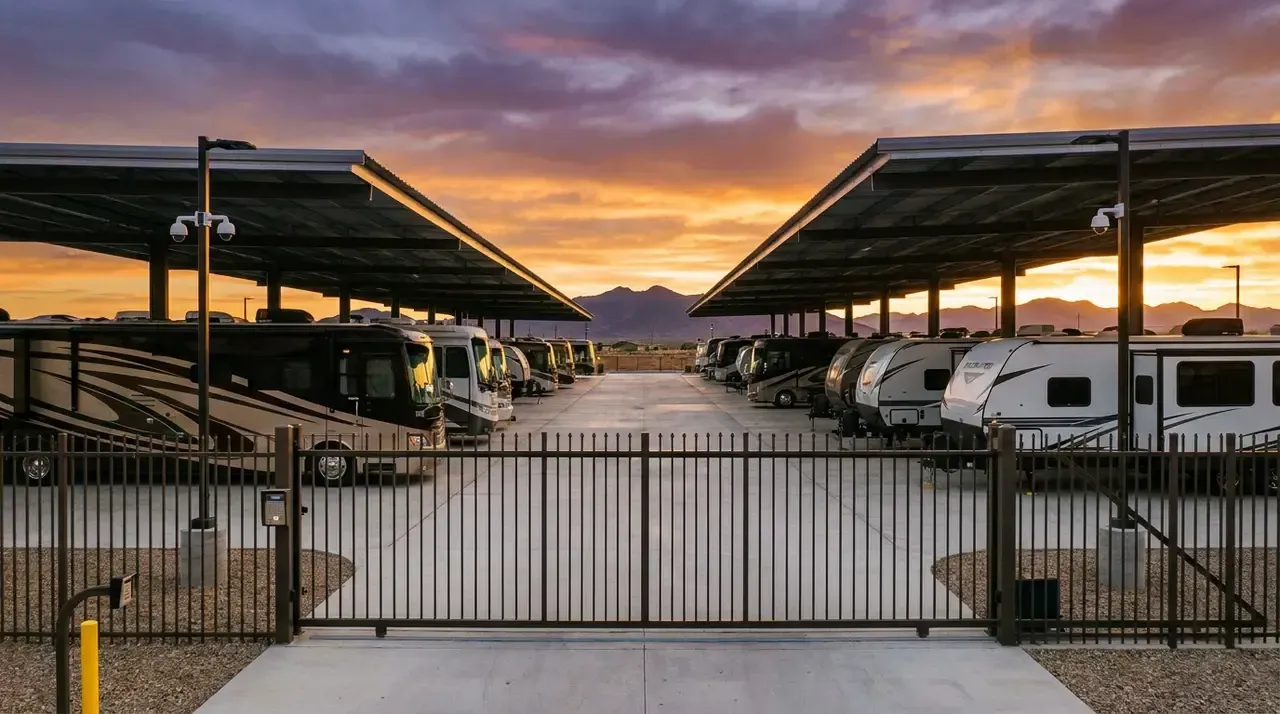
A sk about security features, access hours, covered versus outdoor options, electric hookups, surface type, contract terms, and insurance requirements before signing any RV storage agreement. These seven categories determine whether your RV stays protected, accessible, and fairly priced during storage.
| Key Points: | |
|---|---|
| • | Security questions should cover gate access, camera coverage, lighting, and incident history |
| • | Covered storage reduces UV damage by up to 40% and prevents hail damage entirely |
| • | Electric hookups for battery maintenance cost $15 to $50 per month extra at most facilities |
| • | Month-to-month leases offer flexibility; annual contracts typically save 10% to 15% |
| • | Paved surfaces prevent tire flat-spotting and undercarriage damage from gravel or mud |
Security Questions Every RV Owner Must Ask
Security ranks as the top concern for RV owners, according to a survey by Motorhome FAQs. Your RV represents a $50,000 to $500,000 investment that sits unattended for weeks or months. Asking detailed security questions protects that investment.
Start with physical barriers. Ask whether the facility has perimeter fencing, what height it reaches, and whether barbed wire or other deterrents top the fence line. A 9-foot fence with barbed wire creates significantly more protection than a 6-foot chain-link fence alone.
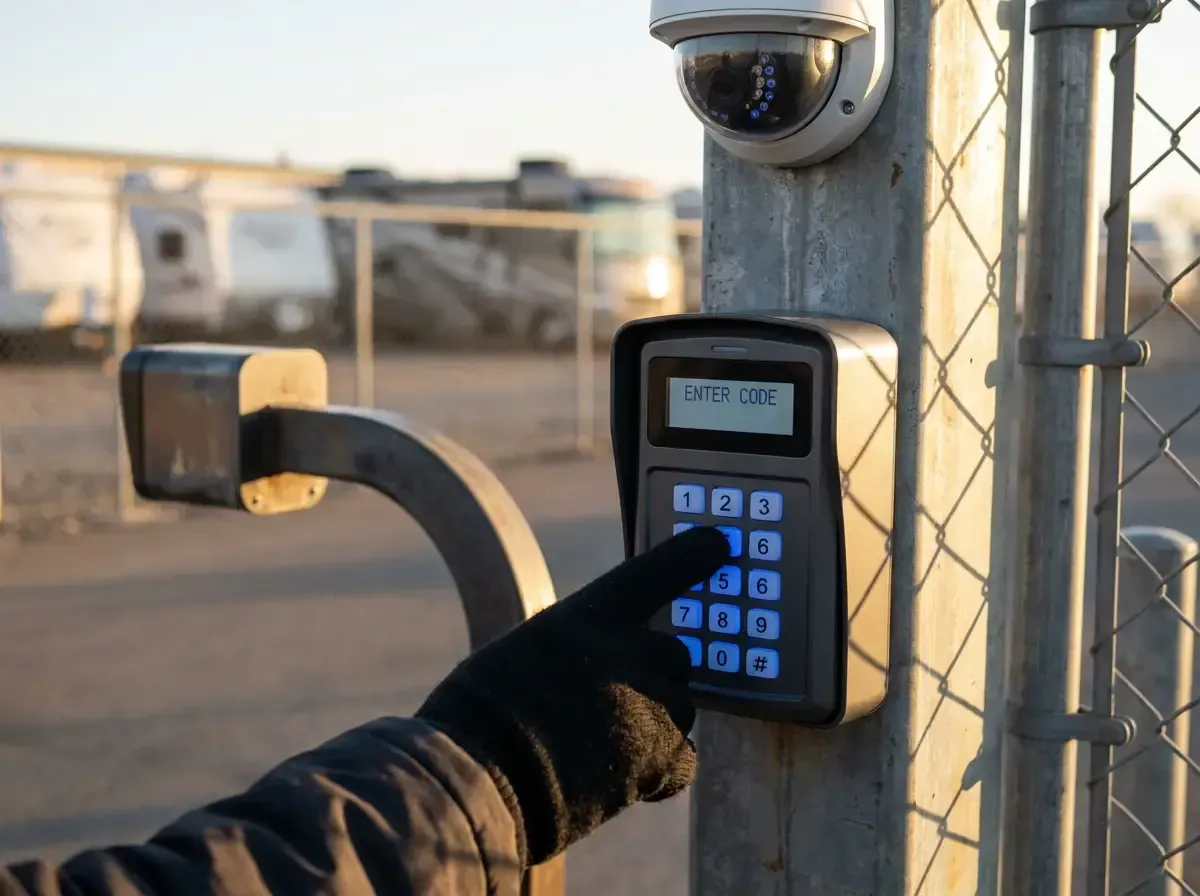
Gate access matters equally. Individual access codes provide accountability that shared codes cannot. Ask how many people have your code and whether the facility tracks entry and exit times. Facilities using smart-lock or app-based entry systems can provide detailed access logs.
Video surveillance requires specific questions. Ask how many cameras cover the property, whether they record in HD or UHD quality, how long footage is stored, and who monitors the feeds. A facility with 16 UHD cameras covering all angles provides better evidence if incidents occur than one with four standard-definition cameras.
Security Questions Checklist
| Question | What to Look For |
|---|---|
| What type of fencing surrounds the property? | 8-foot minimum height, barbed wire, full enclosure |
| How does gate access work? | Individual codes, entry/exit logging, 24/7 availability |
| How many security cameras cover the facility? | HD or UHD quality, coverage of all rows and entrances |
| How long is video footage retained? | Minimum 30 days, preferably 60 to 90 days |
| Have there been theft or vandalism incidents? | Honest disclosure, changes made after incidents |
Access and Convenience Questions
True 24/7 access differs from advertised 24/7 access at many facilities. Some locations restrict late-night entry or require advance notice for weekend access. Ask specifically whether any blackout periods, holidays, or staffing limitations affect when you can retrieve your RV.
Maneuvering space becomes critical for Class A motorhomes, fifth wheels, and trailers exceeding 35 feet. Ask about drive aisle widths, turning radius requirements, and whether your specific RV length fits comfortably. Pull-through spaces eliminate backing challenges but cost 10% to 20% more than back-in spots at most facilities.
Location convenience affects how often you use your RV. A facility 45 minutes from home creates friction that a 15-minute drive does not. For Colorado mountain residents, proximity to I-70 and Highway 6 simplifies weekend trips to destinations like Dillon Reservoir or Breckenridge.
Storage Type and Amenities Questions
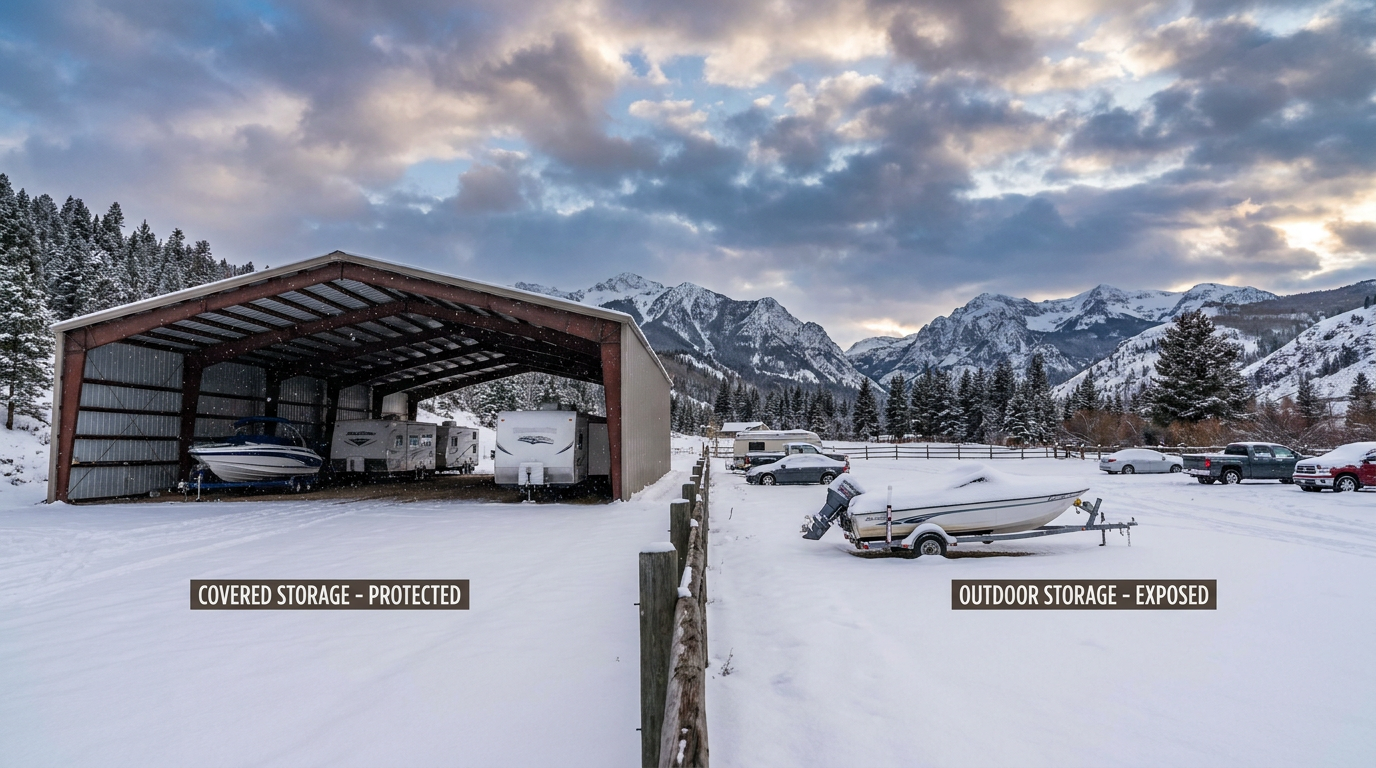
The choice between outdoor, covered, and indoor storage affects both price and protection. According to RV Lifestyle, outdoor storage costs $50 to $150 per month, covered storage runs $150 to $400, and fully enclosed indoor storage ranges from $300 to $800 depending on location and RV size.
Outdoor vs. Covered vs. Indoor Storage
| Storage Type | Monthly Cost | Protection Level | Best For |
|---|---|---|---|
| Outdoor (uncovered) | $50 to $150 | Minimal | Short-term, mild climates |
| Covered canopy | $150 to $400 | High | Snow, hail, UV protection |
| Fully enclosed indoor | $300 to $800 | Maximum | Classic RVs, extreme climates |
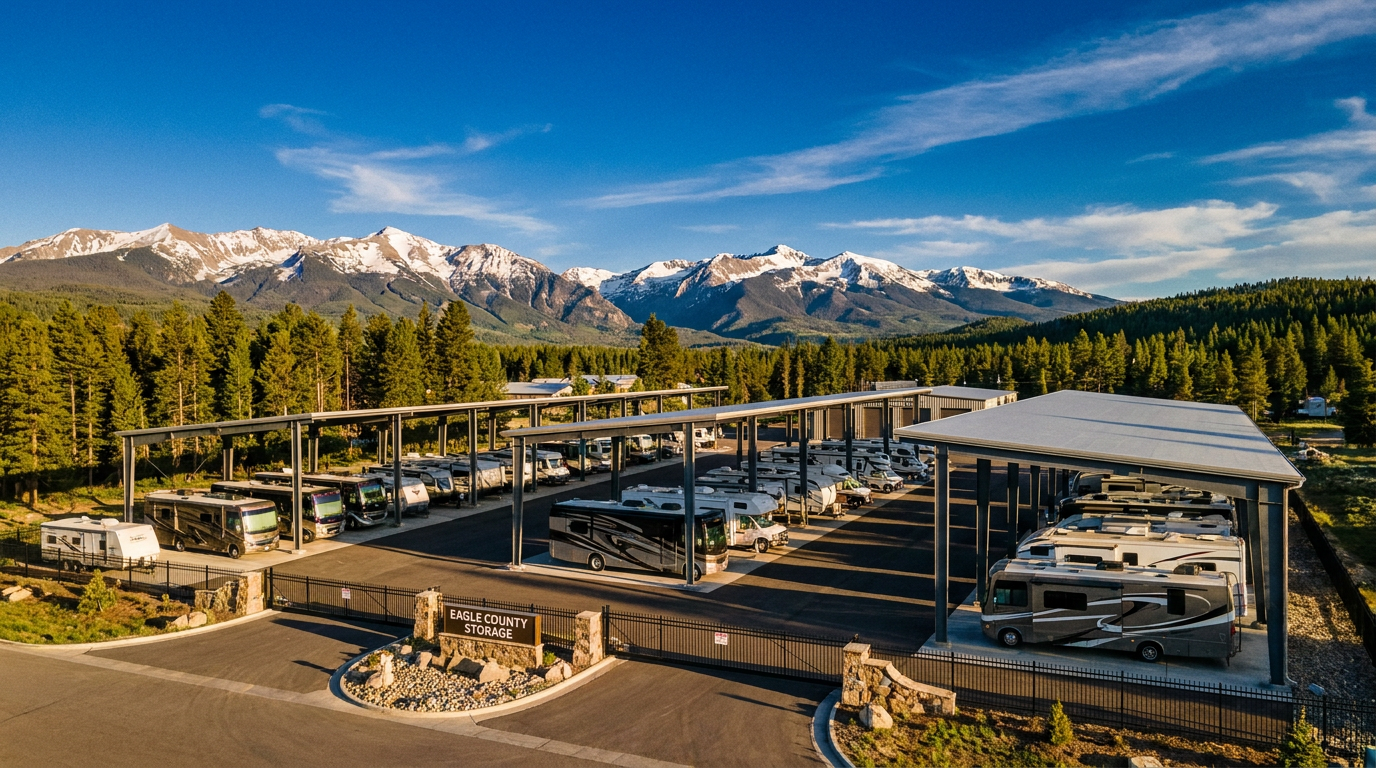
Electric hookups deserve detailed questions. Ask about amperage options (15A, 20A, 30A, or 50A), whether continuous trickle charging is permitted, and the monthly cost. Battery maintenance during storage prevents the $200 to $800 replacement cost of dead batteries. Facilities like Eagle Canopy RV Storage include 20-amp hookups at every covered space for just $20 per month.
Space sizing requires measuring your RV accurately. Include tongue length for trailers and any accessories like bike racks or ladder extensions. A 35-foot RV needs a 40-foot space to allow comfortable access. Ask whether the quoted dimensions include usable space or just lot markings.
Site Maintenance and Climate Protection Questions
Surface type affects your RV more than most owners realize. Gravel lots allow rocks to damage undercarriages and create uneven surfaces that stress frames. Dirt lots turn to mud during rain and create dust that infiltrates seals. Fully paved asphalt surfaces eliminate these risks and prevent tire flat-spotting during long-term storage.
Snow removal practices matter significantly in mountain climates. Ask how quickly lots are plowed after storms, where snow gets piled (to avoid blocking your space), and whether ice melt is applied to drive aisles. At 6,500 feet elevation in Colorado's Vail Valley, facilities must handle snow loads exceeding 90 pounds per square foot.
Drainage and storm management prevent water damage even to covered RVs. Ask where water flows during heavy rain or rapid snowmelt, whether spaces are graded to prevent standing water, and how the facility handles debris from wind storms. According to Young Farts RV Parts, poor drainage causes more storage-related damage claims than theft.
Climate-Specific Questions for Mountain Storage
High-altitude UV radiation accelerates roof and sealant deterioration 30% to 40% faster than sea-level exposure. Covered storage with steel canopy structures blocks this damage entirely. Ask about the canopy construction material, snow load ratings, and whether side coverage protects against wind-driven precipitation.
Hail damage represents a significant risk in Colorado, where the National Weather Service records an average of 8 to 10 severe hail events annually along the Front Range and mountain corridors. Heavy-duty steel canopies rated for 90-plus pounds per square foot provide protection that insurance deductibles cannot match.
Contract, Pricing, and Policy Questions
Pricing transparency separates reputable facilities from those hiding fees. Ask for a complete breakdown including base rent, taxes, administrative fees, and any required deposits. Some facilities charge $25 to $75 setup fees that never appear in advertised rates.
Contract terms affect flexibility and cost. Month-to-month leases allow seasonal RV owners to avoid paying during months they travel. Annual contracts typically offer 10% to 15% discounts but lock you in regardless of circumstances. Ask about the notice period for move-out, typically 10 to 30 days at most facilities.
Late payment policies vary dramatically. Some facilities restrict gate access after 5 days late; others wait 30 days. Ask when late fees begin, how much they cost (typically $20 to $50), and what happens if you miss multiple payments. Understanding these policies prevents unpleasant surprises.
Review the frequently asked questions for any facility you consider. Reputable storage providers publish their policies openly rather than burying them in fine print.
Insurance and Liability Questions
Most RV owners assume storage facilities cover damage to their vehicles. In reality, standard rental agreements disclaim responsibility for theft, weather damage, rodent damage, and accidents caused by other tenants. Ask specifically what the facility's liability policy covers and what it excludes.
Insurance requirements vary by facility. Some require proof of active RV insurance with minimum liability limits. Others offer third-party storage insurance through providers like SafeLease, typically costing $10 to $30 per month. A tenant protection plan can cover burglary, fire, water damage, and other incidents your personal policy might exclude during storage.
Documentation procedures matter if damage occurs. Ask how the facility documents incidents, whether camera footage is available to support insurance claims, and whether staff will provide written statements. These details become critical when filing claims worth thousands of dollars.
Services, Support, and Reputation Questions
Ownership structure affects service quality. Locally owned facilities typically respond faster to issues, know local weather patterns, and offer more flexible arrangements than national chains following corporate policies. Ask whether the facility has an on-site manager and how quickly they respond to problems.
Additional services add convenience. Ask about on-site amenities like air compressors, water access, WiFi, and dump station proximity. Some facilities offer RV winterization and de-winterization services that simplify seasonal storage transitions.
Online reviews provide insight that facility tours cannot. Check Google Reviews, Facebook, and RV forums for patterns in customer feedback. A facility with 4.5 stars and 200 reviews provides more reliable information than one with 5 stars and 10 reviews. Ask current tenants about their experience if you see them during your tour.
Frequently Asked Questions
What are the 4 D's of self-storage?
The 4 D's refer to Death, Divorce, Dislocation, and Downsizing. These life events drive most storage demand. For RV storage specifically, seasonal use patterns and HOA restrictions create additional demand beyond these traditional drivers.
What are common self-storage mistakes?
The most common mistakes include choosing the cheapest option without considering protection, failing to maintain insurance coverage, not preparing the RV properly for storage, and selecting a facility too far from home. Skipping the facility tour before signing ranks among the costliest errors.
What are the common problems with storage buildings?
Common problems include inadequate drainage causing flooding, insufficient security leading to theft, poor maintenance creating pest infestations, and undersized spaces that damage RVs during maneuvering. Gravel or dirt surfaces cause tire and undercarriage damage over time.
What should I look for in a storage facility?
Prioritize security features, surface type, coverage options, access hours, and contract flexibility. For RV storage specifically, also evaluate electric hookups, maneuvering space, and climate protection. Visit during different times of day to assess lighting and activity levels.
Is covered RV storage worth the extra cost?
Covered storage costs $100 to $250 more per month than outdoor parking but prevents UV damage, hail damage, and snow accumulation that cause $2,000 to $10,000 in repairs. Over 5 years of storage, covered protection typically saves money compared to the repair costs of uncovered storage.
How do I prepare my RV for long-term storage?
Preparation includes winterizing plumbing systems, disconnecting batteries or connecting to trickle chargers, covering tires or using tire covers, cleaning interior surfaces to prevent mold, and emptying holding tanks. Professional winterization services cost $150 to $300 and prevent freeze damage worth thousands.
|